Dinner · Part 2 of 3: Instructions
Slow Cooker Creamy Parmesan White Beans Step-by-step instructions
- Prep
- Cook
- Total
- Serves
- 4
Before you start
Before starting, ensure the slow cooker insert is clean and dry. Drain the white beans thoroughly in a colander and rinse them under cool running water to remove any residue.
Finely mince the shallots to ensure they soften completely without leaving large chunks in the final sauce. Have the heavy cream and freshly grated parmesan measured and ready for immediate assembly so the cooking process can begin without delay.
Ingredients at a glance (4)
- 2 cans drained white beans
- 2 tbsp minced shallots
- 1/2 cup grated parmesan
- 1/2 cup heavy cream
Instructions
Layering the Base
- Combine IngredientsPlace the drained white beans into the base of the slow cooker. Scatter the minced shallots evenly over the beans to ensure consistent flavor distribution throughout the dish as it heats up.Look for Beans should be spread in an even layer at the bottom of the slow cooker insert.Tip Ensure the beans are thoroughly drained to prevent the final sauce from becoming too watery.
The beans and shallots should be arranged in an even, organized layer at the bottom of the slow cooker.
Check that the shallots are distributed across the surface of the beans, which will allow them to soften evenly as the heat builds. The slow cooker insert should be clean and ready to receive the liquids.
Adding Aromatics and Cream
- Add Aromatics and CreamSprinkle the grated parmesan cheese over the layer of beans and shallots. Pour the heavy cream over the top of the mixture, ensuring it reaches all areas of the slow cooker insert.Look for The cream should settle around the beans and cheese, creating a base for the sauce.Tip Do not stir the ingredients yet; let them layer naturally to allow the cream to infuse the beans slowly.
The parmesan and cream should be added carefully to form a consistent covering over the bean layer. The cream should settle into the gaps, and the cheese should be spread evenly to ensure it melts uniformly. Check that the slow cooker lid is properly sealed to maintain the necessary moisture and heat.
Slow Cooking and Finishing
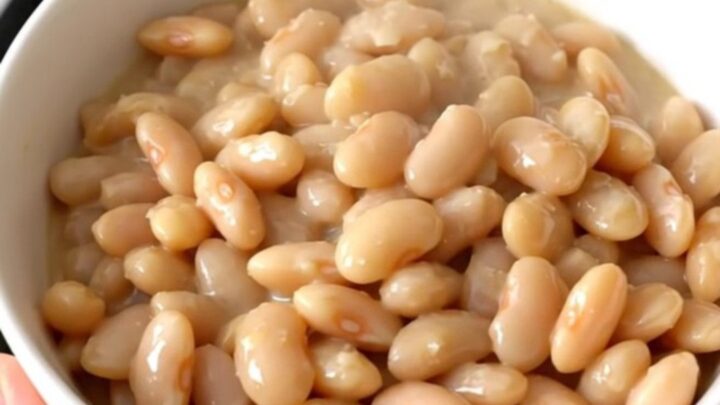
- Slow Cook and ServeCover the slow cooker and cook on low for 4 hours until the sauce has thickened and the beans are tender. Once done, gently stir the mixture to combine the creamy sauce before serving warm in bowls.Look for The sauce should appear glossy and thick, coating the beans uniformly.Tip Allow the dish to rest for five minutes after turning off the heat to let the sauce set perfectly.
The final dish should look creamy and smell fragrant, with the shallots fully cooked and the sauce thickened. After stirring, the beans should be coated in a glossy, uniform sauce. Check that the dish is heated thoroughly before transferring it to serving bowls for immediate consumption while still warm.
Common mistakes
A common mistake is failing to drain the beans properly, which introduces too much extra water and prevents the cream and parmesan from thickening into a rich sauce. Another error is stirring the ingredients too early; keeping them layered allows the flavors to meld properly during the long cooking cycle.
Avoid using pre-shredded cheese, as the anti-caking agents can prevent the sauce from becoming perfectly smooth and creamy, leading to a gritty or grainy texture in the final dish.
How to tell it’s done
The dish is considered done when the sauce has achieved a glossy, thick consistency that coats the back of a spoon. The beans should be tender but not mushy, and the shallots should be completely translucent and soft.
The internal temperature of the mixture should be hot throughout, ideally reaching at least 165°F (74°C) to ensure all components are heated evenly. If the sauce appears too thin after the recommended time, you may cook it uncovered for an additional 15 minutes to allow for further reduction.
Up next · Part 3 of 3
2 variations · storage & make-ahead · 3 answers · printable card
Tips, FAQ & printable recipe (Part 3)← Back to the ingredients (Part 1)