Dinner · Part 2 of 3: Instructions
Slow Cooker Creamy Garlic and Thyme Rabbit Step-by-step instructions
- Prep
- Cook
- Total
- Serves
- 4
Before you start
Before beginning, ensure your slow cooker is clean and placed on a stable, heat-resistant surface. Have all ingredients measured and ready to go, as the assembly process is very quick.
If your rabbit pieces were frozen, ensure they are completely thawed in the refrigerator before starting, as cooking from frozen can lead to uneven temperatures and food safety concerns.
Take the meat out of the refrigerator about 20 minutes before you begin to take the chill off, which helps the rabbit cook more evenly throughout the slow braising process.
Ingredients at a glance (4)
- 2 lb rabbit pieces, bone-in
- 8 cloves garlic cloves, peeled
- 1 tbsp dried thyme
- 1/2 cup dry white wine
Instructions
Preparation and assembly
- Prepare the slow cookerPlace the raw rabbit pieces into the bottom of the slow cooker basin in an even layer. Ensure the rabbit is distributed to allow for uniform cooking throughout the process.Look for The rabbit pieces should sit flat on the bottom of the cooker.Tip Pat the rabbit dry with paper towels before placing it in the cooker for better browning.
The rabbit pieces are arranged in a single layer at the bottom of the slow cooker. The garlic is scattered evenly, the dried thyme is distributed over the meat, and the white wine is poured over the top, creating a base for the braising process to begin effectively.
Slow cooking phase
- Add aromatics and liquidScatter the peeled garlic cloves evenly over the rabbit pieces. Sprinkle the dried thyme over the garlic and meat, then pour the dry white wine over the entire mixture to provide moisture.Look for The wine should pool slightly at the bottom of the slow cooker.Tip Use a dry white wine like Sauvignon Blanc or Pinot Grigio for the best flavor balance.
The slow cooker is sealed and operating on the low setting. During this time, the kitchen will begin to fill with the savory, herbal aroma of the thyme and garlic. The wine and meat juices combine to form a flavorful braising liquid that steadily cooks the rabbit.
Final resting and serving
- Cook and serveCover the slow cooker and cook on low for four hours. Once finished, check that the meat reaches 145°F (63°C) internally. Let the rabbit rest for 5 minutes before serving to ensure the juices redistribute properly.Look for The meat should be tender enough to pull away from the bone easily with a fork.Safe temperature 145°F (63°C) internal temperature (steaks, chops and roasts)Tip Keep the lid closed during cooking to maintain consistent temperature and moisture levels.
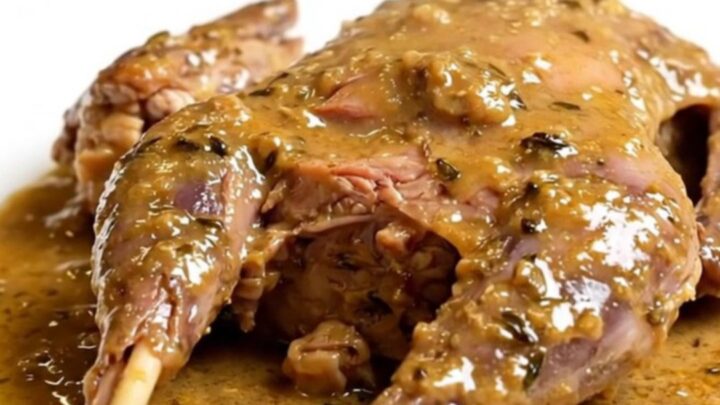
The rabbit is tender, the internal temperature has been verified to be at least 145°F (63°C), and the sauce has reached a glossy, consistent texture. After resting for 5 minutes, the dish is ready to be plated and served, with the meat falling away from the bone.
Common mistakes
A common mistake is overcrowding the slow cooker, which can prevent the liquid from circulating effectively and lead to uneven cooking. Ensure there is enough space for the wine to reach all pieces.
Another frequent error is opening the lid too often; every time the lid is lifted, heat and moisture escape, which significantly increases the cooking time. Resist the urge to check on the progress until the suggested time has passed. Finally, avoid using high heat settings, as this can toughen the rabbit meat quickly.
How to tell it’s done
The rabbit is fully cooked when the meat is extremely tender and pulls away from the bone with minimal resistance. Use an instant-read meat thermometer to verify that the thickest parts of the meat have reached an internal temperature of at least 145°F (63°C).
The sauce should be slightly thickened and glossy, with the garlic cloves softened to the point of being spreadable. Always allow the meat to rest for at least 5 minutes before serving to ensure the juices settle and the meat retains its moisture.
- Steaks, chops and roasts: 145°F (63°C) in the thickest part, then a 3-minute rest
Up next · Part 3 of 3
2 variations · storage & make-ahead · 3 answers · printable card
Tips, FAQ & printable recipe (Part 3)← Back to the ingredients (Part 1)