Dinner · Part 2 of 3: Instructions
Slow Cooker Creamy Beef Stroganoff Soup for Busy Weeknights Step-by-step instructions
- Prep
- Cook
- Total
- Serves
- 6
Before you start
Before starting, ensure the slow cooker is placed on a heat-resistant surface with adequate space for air circulation. Prepare the beef by trimming any excess gristle if necessary and ensure the mushrooms are sliced evenly. Have all ingredients measured and ready to go.
Since this is a slow cooker dish, there is no need for advanced preparation beyond basic chopping, allowing for a stress-free start to the cooking process. Verify that the slow cooker lid fits snugly to ensure heat and moisture are retained during the long cooking time.
Ingredients at a glance (6)
- 2 lbs stew beef chunks
- 16 oz sliced mushrooms
- 1 packet onion soup mix
- 4 cups beef broth
- 8 oz egg noodles, cooked
- 1/2 cup heavy cream
Instructions
Initial assembly
- Assemble ingredients in the slow cookerPlace the stew beef chunks into the bottom of the slow cooker. Scatter the sliced mushrooms evenly over the beef. Sprinkle the contents of the onion soup mix packet over the mushrooms and pour the beef broth over everything to submerge the ingredients.Look for Ensure the beef is at the bottom to cook thoroughly.Tip Layering the ingredients helps the flavors meld together perfectly during the long, slow cooking process.
The ingredients are layered properly in the slow cooker, with the beef at the base and the broth covering the mushrooms and seasoning. Ensure the beef is evenly distributed to promote consistent heat penetration throughout the cooking cycle.
Slow cooking process
- Slow cook until tenderCover the slow cooker and cook on low for 6 to 8 hours or on high for 3 to 4 hours. The beef is done when it reaches an internal temperature of 145°F (63°C). Let the beef rest for at least 3 minutes before serving.Look for The beef should be fork-tender and falling apart.Safe temperature 145°F (63°C) internal temperature (steaks, chops and roasts)Tip Avoid opening the slow cooker lid frequently, as this releases heat and increases the required cooking time.
The beef should be tender and the broth dark and flavorful. The kitchen will be filled with the savory aroma of the onion soup mix. Verify the beef reaches 145°F (63°C) before proceeding to the final step of the recipe.
Final enrichment
- Finish the soupAbout 20 minutes before serving, boil the egg noodles in a separate pot according to package instructions. Stir the heavy cream into the slow cooker to create a rich, velvety base. Serve the hot soup over the cooked egg noodles in individual bowls.Look for The soup should appear creamy and uniform in color.Tip Stirring in the cream at the very end prevents it from curdling or separating during the long cooking time.
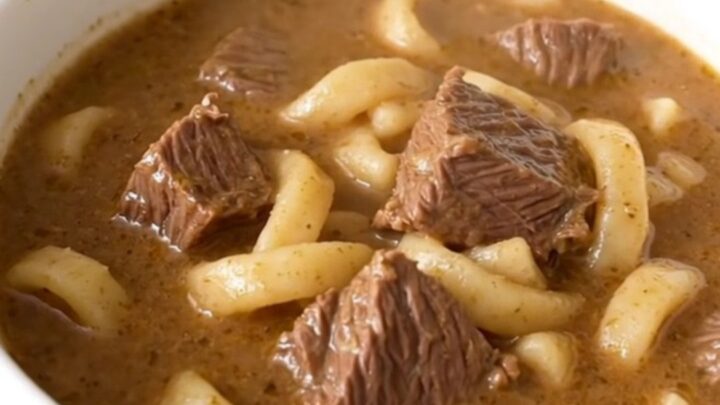
The soup is now thick, creamy, and ready to be served. The noodles are cooked to an al dente texture and are prepared to be combined with the hot, savory beef soup base for a perfect, hearty meal.
Common mistakes
Avoid overcooking the egg noodles by boiling them in the slow cooker with the soup. Always cook the noodles separately on the stovetop to ensure they maintain the correct firmness.
Another common error is adding the heavy cream too early, which can cause the dairy to curdle or separate under high heat for an extended period.
Stir the cream in only at the very end of the process to maintain the desired velvety consistency and delicate flavor profile of the finished soup.
How to tell it’s done
The beef is perfectly cooked when it reaches an internal temperature of 145°F (63°C) and is fork-tender. The meat should be easily pierced with a fork and show signs of falling apart, indicating the collagen has properly broken down.
The broth should be rich and aromatic, with the mushrooms softened and fully integrated into the soup. The final addition of heavy cream should be stirred until the soup is uniform in color and texture, creating a smooth and luxurious finish.
- Steaks, chops and roasts: 145°F (63°C) in the thickest part, then a 3-minute rest
Up next · Part 3 of 3
2 variations · storage & make-ahead · 3 answers · printable card
Tips, FAQ & printable recipe (Part 3)← Back to the ingredients (Part 1)