Dinner · Part 2 of 3: Instructions
Cowboy Butter Ribeye Bites with Carrots and Potatoes Step-by-step instructions
- Prep
- Cook
- Total
- Serves
- 6
Before you start
Before starting, cut the ribeye into 1-inch cubes and pat them dry with paper towels. Quarter the red potatoes and measure the baby carrots. Soften the cowboy butter if it's cold—leaving it at room temperature for 15 minutes makes it easier to place on top.
Have the au jus mix measured and ready. A 7-quart slow cooker is ideal; if using a smaller one, ensure the ingredients fit without packing too tightly.
Ingredients at a glance (5)
- 2 lb ribeye steak, cut into 1-inch cubes
- 1 lb baby carrots
- 1 1/2 lb red bliss potatoes, quartered
- 2 sticks garlic-herb cowboy butter, softened
- 1 oz au jus mix
Instructions
Layer and Set
- Layer the IngredientsPlace the cubed ribeye bites in the bottom of a 7-quart slow cooker in an even layer. Scatter the baby carrots and quartered red bliss potatoes over the beef, distributing them evenly. Place the two sticks of garlic-herb cowboy butter on top of the beef and vegetables. Sprinkle the au jus mix evenly over everything.Look for The slow cooker should be about two-thirds full, with the butter and au jus mix visible on top.Tip No need to stir—the slow cooker will blend the flavors as it cooks.
- Cover and CookCover the slow cooker with its lid. Cook on LOW for 6 to 8 hours, or on HIGH for 3 to 4 hours, until the beef is fork-tender and the potatoes are easily pierced with a knife. Avoid opening the lid during cooking to keep the heat steady. Let it rest for 3 minutes before slicing.Look for The aroma of garlic and herbs will fill the kitchen as it cooks.Safe temperature 145°F (63°C) internal temperature (steaks, chops and roasts)Tip If using a smaller slow cooker, reduce the amounts slightly to avoid overcrowding.
At the start, the slow cooker contains raw beef, carrots, potatoes, butter, and au jus mix. The butter is visible on top, and the ingredients are layered but not mixed. The scene is neat and colorful—red beef, orange carrots, and red potatoes.
There's no aroma yet, but the promise of a rich meal is in the air. Before cooking, ensure the lid fits securely and the slow cooker is set to the desired temperature.
Slow-Cook to Tender
- Check for DonenessAfter the minimum cooking time, check the beef by cutting into a cube. It should be tender and easily pull apart. The internal temperature should read at least 145°F (63°C) on an instant-read thermometer. If not done, continue cooking in 30-minute increments. Let it rest for 3 minutes before slicing.Look for The beef should be moist and tender, not dry or tough.Safe temperature 145°F (63°C) internal temperature (steaks, chops and roasts)Tip For extra tenderness, cook on LOW for the full 8 hours.
- Rest the MeatOnce the beef reaches 145°F (63°C), turn off the slow cooker and let the meat rest in the warm gravy for at least 3 minutes. This allows the juices to redistribute, keeping the bites moist and flavorful.Look for The gravy will thicken slightly as it rests.Safe temperature 145°F (63°C) internal temperature (steaks, chops and roasts)Tip Resting is essential—don't skip it, even though it's tempting to serve right away.
After several hours, the slow cooker emits a fragrant steam of garlic, herbs, and beef. The butter has melted into a golden sauce, and the au jus has dissolved, creating a savory broth.
The beef is visibly darker and tender, the carrots have softened, and the potatoes are fork-tender. The sauce bubbles gently around the edges. The kitchen smells warm and inviting. Check the beef temperature to confirm it's at least 145°F (63°C).
Rest and Serve
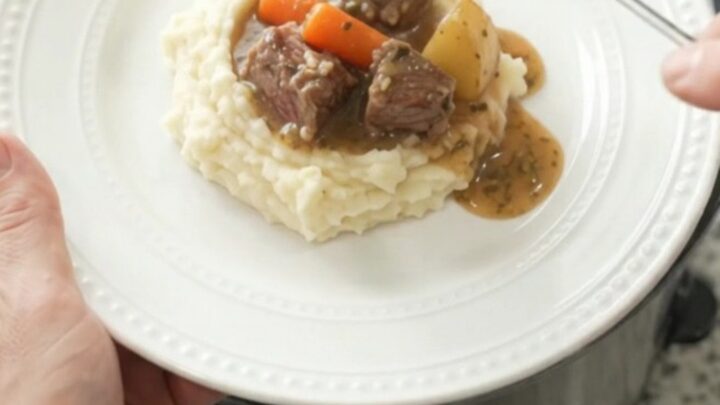
- Serve with Mashed PotatoesSpoon the ribeye bites, carrots, and potatoes over creamy whipped mashed potatoes on a plate. Ladle extra garlic-herb butter au jus over the top. Serve hot.Look for The gravy should be glossy and coat the back of a spoon.Tip For a lighter option, serve over rice or with crusty bread to soak up the sauce.
Once cooked, the dish rests in the warm slow cooker, allowing the flavors to meld. The gravy is glossy and coats the spoon. When served over mashed potatoes, the beef is moist and buttery, the carrots are sweet, and the potatoes are creamy. Each bite is rich with garlic-herb flavor. The plate looks hearty and comforting, with a deep brown sauce pooling around the ingredients.
Common mistakes
One common mistake is opening the slow cooker lid too often, which releases heat and extends cooking time. Another is cutting the beef into uneven pieces, leading to some overcooked and some undercooked bites.
Overcrowding the slow cooker can cause uneven cooking, so leave some space. Finally, don't skip the rest time—cutting the meat immediately can cause it to dry out. Follow the recipe's proportions for the best outcome.
How to tell it’s done
The dish is done when the beef is fork-tender and reaches an internal temperature of at least 145°F (63°C). The potatoes should be easily pierced with a knife, and the carrots should be soft but not mushy. The gravy will be bubbling and slightly thickened. For the most tender result, cook on LOW for 8 hours. Always let the beef rest for at least 3 minutes before serving to allow the juices to redistribute.
- Steaks, chops and roasts: 145°F (63°C) in the thickest part, then a 3-minute rest
Up next · Part 3 of 3
4 variations · storage & make-ahead · 5 answers · printable card
Tips, FAQ & printable recipe (Part 3)← Back to the ingredients (Part 1)