Dinner · Part 2 of 3: Instructions
Slow Cooker Cornbread Sage Stuffing for Easy Holiday Sides Step-by-step instructions
- Prep
- Cook
- Total
- Serves
- 8
Before you start
Before beginning, ensure all vegetables are finely diced to ensure they soften at the same rate as the cornbread. If the cornbread is very fresh, cube it and leave it on a baking sheet for at least two hours to dry out.
Prepare your slow cooker by ensuring the ceramic insert is clean and dry. Measure all ingredients ahead of time to make the assembly process efficient and organized, allowing you to focus on the layers as you add them to the slow cooker.
Ingredients at a glance (5)
- 6 cups cornbread, cubed and slightly stale
- 1 cup celery, diced
- 1 cup onion, diced
- 1 tbsp dried sage
- 1 1/2 cups chicken broth
Instructions
Layering the ingredients
- Assemble the basePlace the cubed cornbread into the slow cooker insert. Ensure the cubes are evenly distributed to allow for consistent moisture absorption during the cooking process.Look for Cornbread fills the bottom of the slow cooker.Tip Use slightly stale cornbread to prevent the final dish from becoming too mushy.
At the start, you should have a neatly filled slow cooker. The cornbread cubes should be distributed evenly across the base, providing a stable foundation for the aromatics. Check that the cubes are not packed too tightly, which allows for better steam circulation. Everything should look clean and ready for the seasoning phase, with the aromatics and herbs appearing as a fresh, colorful topping waiting to be incorporated into the bread base.
Adding aromatics and liquid
- Add aromatics and seasoningScatter the diced celery and onion over the top of the cornbread. Sprinkle the dried sage evenly across the vegetables and bread to distribute the flavor profile.Look for Vegetables and herbs are spread across the surface.Tip Finely dicing the aromatics ensures they cook through and soften perfectly within the slow cooker's environment.
Once the celery, onion, sage, and broth are added, the mixture will begin to look more like a cohesive stuffing. The broth should be poured slowly and evenly to ensure all bread cubes have an opportunity to soak up the liquid. At this stage, the ingredients should look well-distributed, and the sage should be visible as small flecks throughout the mixture, promising a deep, aromatic flavor profile once the cooking process is complete.
Cooking to perfection
- Moisten and cookPour the chicken broth over the mixture. Cover the slow cooker and cook on low for 3 hours. The stuffing should be soft, moist, and aromatic when finished.Look for Steam rises and the texture is soft and cohesive.Tip Avoid over-stirring once the broth is added to maintain the structure of the cornbread cubes.
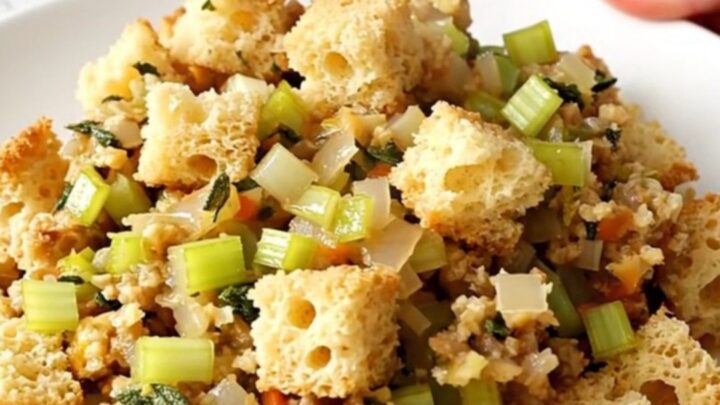
After the three-hour cooking period, the stuffing should appear soft, moist, and steaming. The celery and onions should be tender, and the cornbread should have absorbed the broth completely without becoming overly saturated or soupy.
The overall texture should be soft and inviting, with the sage fragrance filling the air. Test a piece of celery to ensure it is cooked through and soft, then give the mixture a final, gentle stir before serving.
Common mistakes
A common mistake is using bread that is too fresh, which can lead to a mushy texture rather than a soft, fluffy one. Another frequent error is forgetting to dice the aromatics finely enough; large chunks of onion or celery may not soften sufficiently during the three-hour cook time.
Additionally, avoid lifting the lid frequently during the cooking process, as this releases the trapped steam necessary for keeping the stuffing moist and flavorful. Finally, ensure you do not over-mix, as this can break down the cornbread cubes.
How to tell it’s done
The stuffing is done when the liquid has been fully absorbed by the cornbread cubes, and the vegetables are tender to the touch. The surface should look moist, and a gentle stir should reveal a cohesive mixture where the bread is soft but not falling apart into a paste.
The aroma should be distinctly savory with a clear fragrance of toasted sage and softened onions. If the edges appear too dry, add a small splash of additional broth and let it sit for a few more minutes.
Up next · Part 3 of 3
2 variations · storage & make-ahead · 3 answers · printable card
Tips, FAQ & printable recipe (Part 3)← Back to the ingredients (Part 1)