Dinner · Part 2 of 3: Instructions
Slow Cooker Coq au Vin: Easy Red Wine Chicken Thighs Step-by-step instructions
- Prep
- Cook
- Total
- Serves
- 6
Before you start
Before beginning the assembly, ensure the work surface is clean and all ingredients are prepared. Wash the fresh thyme and pat it dry gently.
Peel the baby carrots if they are not pre-peeled, and slice the mushrooms into uniform, quarter-inch thick pieces to ensure they cook at the same rate.
Keep the chicken refrigerated until the very last moment before placing it into the slow cooker basin. Have all measured ingredients ready to facilitate a seamless assembly process.
Ingredients at a glance (6)
- 6 pieces boneless skinless chicken thighs
- 8 oz sliced mushrooms
- 2 cups baby carrots
- 1 tbsp fresh thyme
- 3 cloves garlic, minced
- 1 1/2 cups red wine
Instructions
Initial Assembly
- Assemble the IngredientsPlace the boneless skinless chicken thighs into the basin of the slow cooker, arranging them in an even layer. Scatter the sliced mushrooms and baby carrots over the top of the chicken pieces.Look for The chicken should be fanned out to cover the bottom of the slow cooker base.Tip Ensure the chicken is raw and cold from the refrigerator before starting the process.
The chicken pieces should be arranged in a single layer covering the bottom of the slow cooker ceramic insert. The mushrooms and carrots should be distributed evenly over the top of the chicken to ensure they are exposed to the heat and wine during the braising phase.
Seasoning and Braising
- Season and BraiseAdd the minced garlic and fresh thyme over the vegetable and chicken mixture. Pour the red wine evenly over the entire assembly until the ingredients are partially submerged in the liquid.Look for The liquid should pool around the base of the chicken and vegetables.Tip Use a dry red wine such as a Pinot Noir or Merlot for the best flavor profile.
The garlic and thyme should be evenly distributed over the vegetables and chicken. The red wine should be poured carefully to ensure it reaches the bottom of the pot, creating a flavorful braising liquid that will slowly cook the ingredients over the next several hours.
Slow Cooking
- Cook and ServeCover the slow cooker and cook on low heat for 6 hours until the chicken reaches an internal temperature of 165°F (74°C). Allow the chicken to rest for 5 minutes before serving the dish warm with the sauce.Look for The chicken should be tender and easily pull apart with a fork.Safe temperature 165°F (74°C) internal temperature (poultry)Tip Check the internal temperature with a meat thermometer to ensure safety and perfect texture.
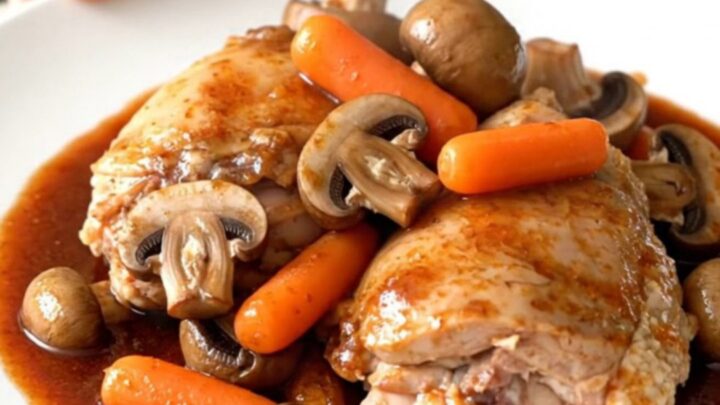
The chicken should be fully cooked, tender, and succulent, with an internal temperature of 165°F (74°C). The sauce should be aromatic and deep in color. The vegetables should be soft and tender, having absorbed the flavors of the wine, herbs, and chicken juices.
Common mistakes
A common mistake is overcrowding the slow cooker, which prevents the heat from circulating properly and can result in unevenly cooked chicken. Ensure the thighs are arranged in a single layer at the bottom of the pot.
Another error is using a low-quality cooking wine that may have an overly acidic or harsh profile, which can unbalance the final sauce. Finally, avoid lifting the lid frequently during the cooking cycle, as this releases heat and steam, significantly extending the required cooking time.
How to tell it’s done
The chicken is perfectly cooked when it is fork-tender and reaches an internal temperature of 165°F (74°C). The sauce should be rich, dark, and slightly thickened by the juices released from the mushrooms and carrots.
When tested, the meat should offer no resistance to a fork and appear opaque throughout. If the meat still feels firm or the juices do not run clear, continue cooking for an additional thirty minutes before re-checking the temperature.
- Poultry: 165°F (74°C) in the thickest part
Up next · Part 3 of 3
2 variations · storage & make-ahead · 3 answers · printable card
Tips, FAQ & printable recipe (Part 3)← Back to the ingredients (Part 1)