Dinner · Part 2 of 3: Instructions
Slow Cooker Coq au Riesling for an Easy Weeknight Dinner Step-by-step instructions
- Prep
- Cook
- Total
- Serves
- 4
Before you start
Before beginning, ensure that your slow cooker is clean and placed on a stable surface. Prepare the chicken by trimming any excess fat if desired, and slice the mushrooms and shallots into uniform pieces to ensure consistent cooking.
Have your bouillon cube and wine ready to be added immediately after the chicken. Do not leave raw chicken at room temperature for more than 30 minutes; prepare the ingredients quickly and start the cooking process promptly to maintain food safety standards.
Ingredients at a glance (5)
- 2 lbs chicken pieces, bone-in and skin-on
- 8 oz mushrooms, sliced
- 3 shallots, thinly sliced
- 1 bouillon cube, crumbled
- 1 cup dry Riesling
Instructions
Layering the Ingredients
- Assemble the IngredientsPlace the raw chicken pieces into the bottom of the slow cooker. Scatter the sliced mushrooms and shallots evenly over the chicken, ensuring they are well distributed.Look for Ingredients are layered in the cookerTip Keep the skin side of the chicken facing up for better texture.
The ingredients are properly arranged with the chicken at the base and the mushrooms, shallots, and bouillon layered on top. This setup ensures that the chicken is fully exposed to the heat and the aromatic elements are positioned to infuse the sauce as they cook down.
Adding Liquids and Seasoning
- Season and Add LiquidsCrumble the bouillon cube over the chicken and vegetables. Pour the Riesling over the entire mixture to provide the base for the aromatic sauce.Look for Wine is poured over the ingredientsTip Ensure the bouillon is crumbled finely to dissolve evenly during the cooking process.
The wine has been poured over the ingredients, creating the necessary liquid base for the braising process. The bouillon is distributed across the surface, preparing to dissolve and season the liquid as the temperature rises within the slow cooker.
Braising and Finishing
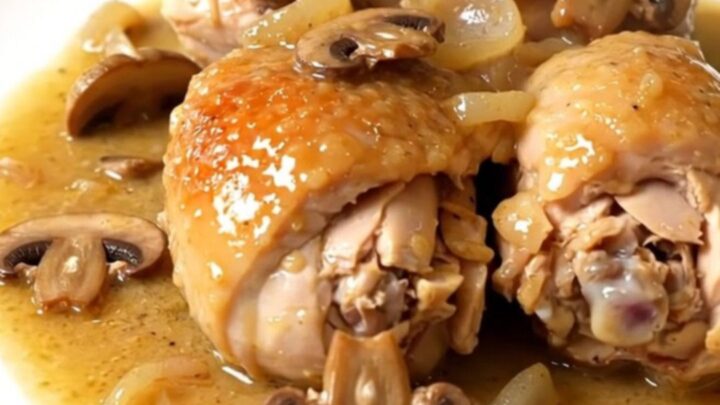
- Cook and ServeCover the slow cooker and cook on low for 4 to 6 hours. Once finished, ensure the chicken reaches an internal temperature of 165°F (74°C). Allow the dish to rest for at least 5 minutes before serving.Look for Chicken is tender and sauce is glossySafe temperature 165°F (74°C) internal temperature (poultry)Tip The residual heat of the sauce will continue to develop flavors during the short rest.
The chicken has reached the necessary tenderness and the sauce has become glossy and aromatic. The vegetables have softened completely into the wine sauce, and the entire dish is ready for service after a brief rest to stabilize the juices.
Common mistakes
A common mistake is using a wine that is too sweet, which can overwhelm the savory components of the bouillon and shallots. Always opt for a dry white wine to maintain the balance of the sauce.
Another error is overcooking the chicken, especially if using boneless breasts; monitor the internal temperature carefully.
Finally, ensure the slow cooker lid remains closed for the majority of the cooking time to keep the heat and moisture inside, which is essential for the braising process.
How to tell it’s done
The dish is considered done when the chicken is tender and reaches a minimum internal temperature of 165°F (74°C). You can verify this by inserting a digital meat thermometer into the thickest part of the chicken, ensuring it does not touch the bone.
The sauce should appear glossy and have reduced slightly, coating the back of a spoon. Let the chicken rest for 5 minutes before serving to allow the juices to redistribute throughout the meat, ensuring every bite is moist and flavorful.
- Poultry: 165°F (74°C) in the thickest part
Up next · Part 3 of 3
2 variations · storage & make-ahead · 3 answers · printable card
Tips, FAQ & printable recipe (Part 3)← Back to the ingredients (Part 1)