Dinner · Part 2 of 3: Instructions
Slow-Cooker Colorado Green Pork Chili with Sharp Cheddar Step-by-step instructions
- Prep
- Cook
- Total
- Serves
- 6
Before you start
Before beginning the cooking process, ensure all ingredients are properly measured and prepared. Trim excess fat from the pork butt if necessary, although some marbling adds flavor. Dice the pork into uniform, bite-sized pieces to ensure they cook evenly.
Ensure the green chiles are chopped consistently to distribute their heat throughout the stew. Have the cornstarch slurry prepared in a small bowl, ready to be whisked in at the final stage. Having all components organized near the slow cooker will make the assembly process smooth and efficient.
Ingredients at a glance (13)
- 3 lb pork butt, cubed
- 3 cups roasted green chiles, chopped
- 1 can fire-roasted diced tomatoes
- 3 cups pork broth
- 2 tbsp garlic, minced
- 1 tbsp ground cumin
- 2 tbsp cornstarch, mixed with 2 tbsp water
- 1 cup sharp yellow cheddar, shredded
- flour tortillas, for serving
- 1 avocado, diced
- 1/2 cup sour cream
- fresh cilantro, for serving
- 1 lime, cut into wedges
Instructions
Preparation and assembly
- Combine ingredientsPlace the cubed pork butt, roasted green chiles, fire-roasted diced tomatoes, pork broth, garlic, and cumin into the slow cooker. Stir well to combine all the ingredients thoroughly.Look for The mixture should be well integrated with the liquid covering most of the meat pieces.Tip Ensure the pork cubes are relatively uniform in size to promote even cooking throughout the process.
The raw ingredients are combined in the slow cooker, with the pork pieces evenly distributed among the green chiles, tomatoes, and aromatic spices.
The mixture should look colorful and well-balanced, with enough liquid to submerge the meat, ensuring that the slow-cooking environment remains moist and flavorful throughout the long simmer.
Slow simmering
- Slow cookCover the slow cooker and cook on low for seven hours. After seven hours, stir in the cornstarch slurry to thicken the sauce. Continue to cook for another 15 minutes until the pork reaches an internal temperature of 145°F (63°C). Once done, remove from heat and let the meat rest at least 3 minutes before serving.Look for The sauce should appear thick, glossy, and rich, and the pork should be tender enough to pull apart easily.Safe temperature 145°F (63°C) internal temperature (steaks, chops and roasts)Tip Do not remove the lid frequently during the cooking time to maintain a consistent temperature inside the pot.
During the seven-hour cook, the kitchen will fill with the savory aroma of roasted chiles and cumin. The pork will slowly transform into tender chunks, and the liquid will reduce slightly, concentrating the flavors. Before adding the slurry, check that the meat is tender and the sauce has developed a deep, complex foundation.
Thickening and garnish
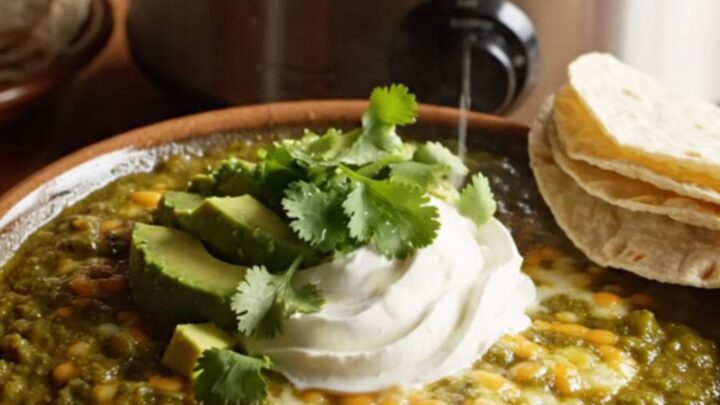
- Final assemblyTurn off the slow cooker. Sprinkle the shredded sharp yellow cheddar over the top of the hot chili and cover for a few minutes until the cheese is melted. Serve hot with flour tortillas, diced avocado, a swirl of sour cream, fresh cilantro, and a squeeze of lime.Look for The cheddar should be completely molten and glossy across the surface of the chili.Tip Let the chili rest for five minutes after turning off the heat to allow the flavors to settle before serving.
After the slurry is stirred in, the chili will quickly thicken into a rich, velvety consistency. Once the cheese is added, the surface should look glossy and inviting. Ensure the heat is turned off so the cheese melts gently without becoming oily, creating the perfect finish for this hearty Southwestern stew.
Common mistakes
Avoid using a high heat setting for the initial cook, as this can cause the pork to toughen rather than become tender. Resist the urge to lift the lid too often, as this releases heat and moisture, which can significantly extend the cooking time.
Ensure the cornstarch slurry is fully incorporated into the liquid before adding it to the pot to prevent clumping. Finally, do not add the cheese too early; it should only be added once the cooking cycle is complete to ensure it melts properly without separating.
How to tell it’s done
The chili is done when the pork is fork-tender and pulls apart with minimal pressure, reaching an internal temperature of 145°F (63°C). The sauce should be thick and glossy, coating the back of a spoon.
If the sauce seems too thin, let it simmer uncovered for an additional ten minutes. The cheese should be completely melted and bubbly on top, creating a rich, creamy layer. Taste the chili to ensure the seasoning is balanced, adding more salt or lime juice if needed before serving.
- Steaks, chops and roasts: 145°F (63°C) in the thickest part, then a 3-minute rest
Up next · Part 3 of 3
2 variations · storage & make-ahead · 3 answers · printable card
Tips, FAQ & printable recipe (Part 3)← Back to the ingredients (Part 1)