Dinner · Part 1 of 3: Ingredients
Slow-Cooker Colby-Jack Red Potato Bake
- Prep
- Cook
- Total
- Serves
- 8
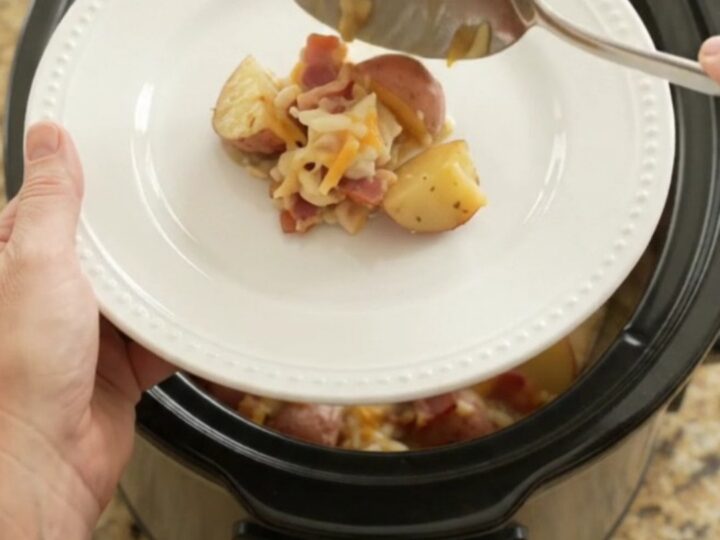
This slow-cooker potato bake is the ultimate set-it-and-forget-it side dish. Tender red bliss potatoes, smoky bacon, and sweet caramelized onions are enveloped in a rich roasted garlic cream sauce, then topped with cream cheese and Colby-Jack.
After a few hours of gentle simmering, you're rewarded with a bubbling, cheesy casserole that's perfect for weeknight dinners, potlucks, or holiday gatherings. The hands-off method means you can go about your day while the slow cooker does the work.
This slow-cooker recipe delivers all the flavor of a loaded baked potato casserole without the fuss. The combination of red bliss potatoes, smoky bacon, caramelized onions, and a garlicky cream sauce creates a deeply savory dish that's both satisfying and versatile.
The slow cooker melds the ingredients into a creamy, cheesy bake that's perfect for busy evenings when you want a home-cooked meal with minimal effort. Simply layer the ingredients, set the timer, and come back to a bubbling pot of comfort. Serve it as a side or a main course—it's sure to become a family favorite.
Ingredients
- 3 lb baby red bliss potatoes, quartered
- 8 oz smoked bacon, diced
- 2 medium yellow onions, caramelized
- 1 1/2 cups roasted garlic cream sauce
- 8 oz cream cheese, softened
- 2 cups shredded Colby-Jack cheese
Why this recipe works
The slow cooker creates a gentle, even heat that slowly tenderizes the potatoes without breaking them down. This method allows the potatoes to absorb the flavors of the bacon, onions, and garlic cream sauce, resulting in a dish that's both creamy and hearty. The low-and-slow cooking also renders the bacon fat, which infuses the entire dish with a smoky richness.
The combination of cream cheese and Colby-Jack cheese melts into a velvety sauce that clings to every potato piece. The cream cheese adds tang and body, while the Colby-Jack brings a mild, buttery flavor and excellent meltability. Because the cheeses are added on top and not stirred in initially, they form a golden, bubbly crust that's both visually appealing and texturally delightful.
Notes and substitutions
For the best texture, use baby red bliss potatoes—they hold their shape well during long cooking and have a creamy interior. If you can't find them, Yukon Gold potatoes are a good substitute.
The bacon should be smoked for maximum flavor; regular bacon works too, but the smoky variety adds depth. Pre-caramelizing the onions is worth the extra step—it brings out their natural sweetness and adds complexity.
Roasted garlic cream sauce is available in many grocery stores, but you can also make your own by blending roasted garlic with heavy cream and a pinch of salt. If you prefer a lower-fat option, use half-and-half or whole milk, though the sauce will be slightly thinner.
Colby-Jack cheese melts beautifully, but you can swap in sharp cheddar, Monterey Jack, or a blend of your favorites. Always use full-fat cream cheese for the creamiest result.
- baby red bliss potatoes: Yukon Gold potatoes, quartered
- smoked bacon: Turkey bacon, diced (cook before adding)
- roasted garlic cream sauce: Heavy cream mixed with 2 teaspoons roasted garlic paste
- Colby-Jack cheese: Sharp cheddar or Monterey Jack cheese
Equipment
- 6-quart slow cooker
- Cutting board
- Chef's knife
- Measuring cups and spoons
- Mixing spoon
- Serving spoon
Up next · Part 2 of 3
6 steps · 4 h of cooking · what to look for at each stage
Step-by-step instructions (Part 2)