Dinner · Part 2 of 3: Instructions
Slow Cooker Coffee Rubbed Barbecue Baby Back Ribs Step-by-step instructions
- Prep
- Cook
- Total
- Serves
- 4
Before you start
Prepare your workspace by clearing enough room on the counter for the slow cooker and the ingredients. Ensure your ribs are clean and patted dry with paper towels to help the rub adhere better.
Have your measuring tools ready and verify that your slow cooker is clean and plugged into a stable power outlet before starting the assembly process.
Ingredients at a glance (4)
- 2 lb baby back ribs, halved
- 1/4 cup dark brown sugar
- 2 tbsp ground coffee steak seasoning
- 1 cup smoky barbecue sauce
Instructions
Seasoning and Setup
- Assemble the RibsPlace the halved baby back ribs upright into the bowl of your slow cooker, ensuring they are arranged to fit comfortably. Sprinkle the dark brown sugar evenly over the meat, followed by the ground coffee steak seasoning to ensure a consistent crust.Look for The ribs should be standing upright around the perimeter of the slow cooker bowl.Tip Aligning the ribs vertically helps them cook more evenly in the confined space of the slow cooker.
At this stage, the ribs should be securely positioned in the slow cooker with the rub and sugar evenly distributed. The aroma of the coffee seasoning should be prominent, indicating that the flavors are well-applied and ready to meld once the sauce is added and the heat begins to work its magic.
Slow Cooking
- Add Sauce and Slow CookPour the smoky barbecue sauce over the seasoned ribs, making sure the sauce coats the meat thoroughly as it settles into the bottom of the slow cooker. Cover and cook on low for 6 hours until the meat is fork-tender, reaches an internal temperature of 145°F (63°C), and let the meat rest at least 3 minutes.Look for The sauce will bubble and thicken slightly as the ribs release their juices.Safe temperature 145°F (63°C) internal temperature (steaks, chops and roasts)Tip Resist the urge to open the lid frequently, as this releases the necessary heat for consistent cooking.
The ribs are cooking in the slow cooker, and the kitchen should start to smell like a barbecue smokehouse. The sauce is bubbling gently, and the ribs are becoming increasingly tender.
Check that the lid is tightly sealed to maintain the consistent temperature required for breaking down the tough fibers effectively.
Resting and Serving
- Rest and ServeCarefully remove the ribs from the slow cooker and transfer them to a platter. Allow the meat to rest for at least 10 minutes to ensure the juices redistribute throughout the fibers, maintaining a succulent texture before serving to your guests.Look for The ribs are ready when the meat is extremely tender and easily pierced with a fork.Tip Use wide tongs to handle the ribs gently to prevent them from falling apart before reaching the plate.
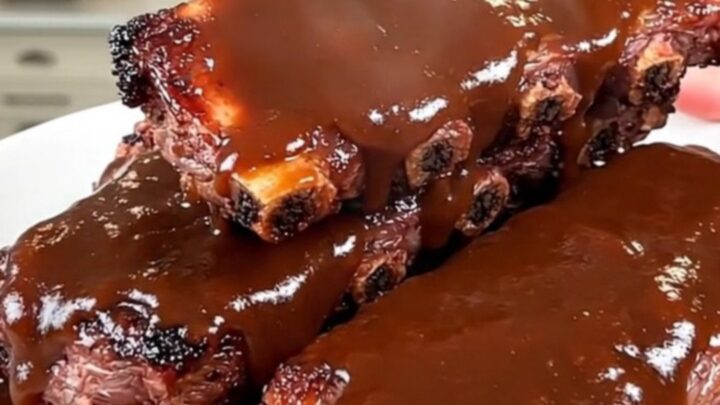
The ribs are now fully cooked and tender. The sauce has reduced into a thick, glossy glaze that coats the meat beautifully. Before serving, ensure the ribs have rested for the recommended time to allow the internal juices to settle, resulting in the perfect eating experience for every guest.
Common mistakes
A common mistake is overcrowding the slow cooker, which prevents even heat distribution and can result in unevenly cooked ribs. Another error is using a sauce that is too thin, which may leave the ribs feeling watery rather than glazed.
Always ensure the ribs are positioned vertically to allow the rendered fat and juices to drip down, basting the meat in flavor throughout the extended cooking time.
How to tell it’s done
The ribs are perfectly done when the meat pulls away from the bone with just a gentle tug of a fork. The internal temperature of the thickest part of the meat should reach 145°F (63°C).
Because slow cookers vary in heat intensity, begin checking for tenderness around the five-hour mark to ensure the meat remains succulent and does not become overly soft.
- Steaks, chops and roasts: 145°F (63°C) in the thickest part, then a 3-minute rest
Up next · Part 3 of 3
2 variations · storage & make-ahead · 3 answers · printable card
Tips, FAQ & printable recipe (Part 3)← Back to the ingredients (Part 1)