Desserts · Part 2 of 3: Instructions
Slow Cooker Coffee Crème Caramel Step-by-step instructions
- Prep
- Cook
- Total
- Serves
- 4
Before you start
Before starting, ensure your slow cooker insert is clean and dry. Have all your ingredients measured and ready to ensure a smooth assembly process.
If you are using a homemade coffee infusion, make sure it has cooled to room temperature to avoid cooking the eggs prematurely when mixing.
Gather your whisk, a medium mixing bowl, and a heat-resistant spatula for easy pouring. Clear a space in your refrigerator for the finished ceramic insert, as it will need to cool down before serving.
Ingredients at a glance (4)
- 1/2 cup liquid caramel
- 4 large eggs
- 1/2 cup granulated sugar
- 2 cups coffee-infused milk
Instructions
Setting the Caramel
- Prepare the basePour the liquid caramel directly into the bottom of the slow cooker ceramic insert, ensuring an even layer covers the base. This provides the classic golden topping for the custard once unmolded.Look for The caramel should sit flat and undisturbed at the bottom of the slow cooker.Tip Ensure the caramel is thick enough to coat the bottom thoroughly without running up the sides.
The caramel should be distributed evenly across the bottom of the slow cooker insert. It should be thick and syrupy, forming a stable foundation for the custard mixture that will follow. Ensure there are no gaps in the coverage at the base.
Mixing the Custard
- Combine custard ingredientsIn a separate mixing bowl, whisk the eggs with the granulated sugar until fully incorporated. Gradually stir in the coffee-infused milk, mixing until the base is smooth and well-combined. Pour the mixture gently over the caramel layer in the slow cooker.Look for The mixture should be uniform in color and texture with no visible streaks of egg whites.Tip Whisk gently to avoid creating too many air bubbles, which can affect the final texture of the custard.
The custard base should be perfectly smooth, with the eggs and sugar fully dissolved into the coffee-infused milk. The mixture should appear as a consistent, light brown liquid with no clumps or separation. It is ready for pouring into the slow cooker.
Cooking the Custard
- Cook and setCover the slow cooker and cook on the low setting until the custard is set to your preference. To ensure the eggs reach a safe internal temperature of 160°F (71°C), monitor the custard carefully. Once finished, remove the insert and allow the custard to cool completely before refrigerating.Look for The custard should be firm around the edges and set in the center.Safe temperature 160°F (71°C) internal temperature (egg dishes)Tip Check the center with a knife; it should come out clean when the custard is fully cooked.
The custard should be firm and set with a slight jiggle in the center. The surface should be smooth, and the internal temperature should reach 160°F (71°C) to ensure safety. Once cooled, it is ready to be unmolded and served.
Common mistakes
A common mistake is overcooking the custard, which can lead to a grainy or rubbery texture instead of a silky, smooth consistency. Always monitor the temperature carefully and avoid excessive stirring, which introduces unwanted air bubbles.
Another error is attempting to unmold the custard before it is completely chilled; if the custard is still warm, it will lose its structural integrity and collapse on the plate. Ensure the dessert is fully set through before attempting the flip.
How to tell it’s done
The crème caramel is done when the custard is set around the edges and holds its shape, yet retains a gentle, soft wobble in the center. To ensure the eggs are cooked through, the internal temperature must reach 160°F (71°C).
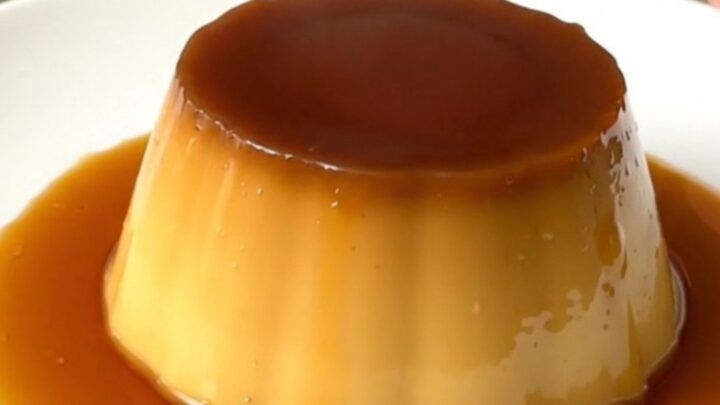
The surface should look smooth and glossy, with the caramel layer visible underneath once unmolded. If the center is still liquid or runny, continue cooking in 15-minute increments until the desired firmness is achieved.
- Egg dishes: 160°F (71°C) in the thickest part
Up next · Part 3 of 3
2 variations · storage & make-ahead · 3 answers · printable card
Tips, FAQ & printable recipe (Part 3)← Back to the ingredients (Part 1)