Dinner · Part 2 of 3: Instructions
Slow Cooker Coconut Turmeric Pumpkin Soup Step-by-step instructions
- Prep
- Cook
- Total
- Serves
- 4
Before you start
Before beginning, ensure the slow cooker is placed on a stable, heat-resistant surface away from any water sources. Prepare the pumpkin by peeling, seeding, and cutting it into consistent 1-inch cubes. Slice the onions thinly to ensure they dissolve into the soup effectively during the cooking process.
Have the measuring cup ready for the water and ensure the coconut milk can is easy to open. Having all ingredients prepped and ready to go before you begin layering will make the assembly process seamless and quick, allowing you to start the long cook time without delay.
Ingredients at a glance (5)
- 2 lbs diced pumpkin cubes
- 1 large sliced onion
- 1 tsp ground turmeric
- 3 cups water
- 1 can (13.5 oz) full-fat coconut milk
Instructions
Layering the Ingredients
- Assemble the IngredientsPlace the diced pumpkin cubes into the bottom of the slow cooker. Scatter the sliced onions evenly over the pumpkin. Sprinkle the ground turmeric over the vegetables, then pour the water over the entire mixture to ensure the ingredients are partially submerged.Look for Ingredients are layered evenly in the slow cooker.Tip Ensure the pumpkin pieces are cut into uniform sizes to promote even softening during the long cook time.
At this stage, the slow cooker contains the raw pumpkin, onions, turmeric, and water. Everything is layered but not yet cooked.
Ensure that the water level is sufficient to partially submerge the pumpkin, providing enough moisture to steam the vegetables properly as they begin to heat up during the initial phase of the slow cooker cycle.
Slow Cooking the Base
- Slow CookCover the slow cooker with its lid. Cook on the low setting for approximately 4 to 6 hours, or until the pumpkin is fork-tender and yields easily to pressure.Look for Pumpkin is soft and easily pierced with a fork.Tip Avoid lifting the lid frequently, as this releases heat and increases the total cooking duration required for the vegetables.
The pumpkin and onions are now soft and have broken down significantly. The mixture should smell fragrant and earthy due to the turmeric. Before proceeding, check that the pumpkin is tender enough to be easily pierced by a fork. If any firm pieces remain, continue cooking for a short period before adding the coconut milk.
Blending to Perfection
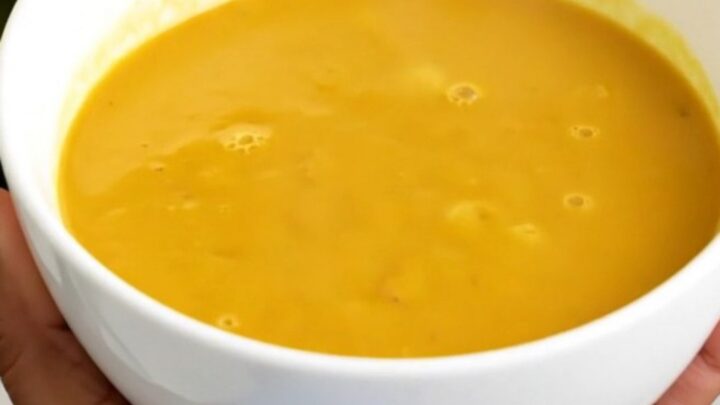
- Blend and FinishOnce the pumpkin is tender, stir in the full-fat coconut milk. Use an immersion blender to process the mixture directly in the slow cooker until the soup reaches a smooth, velvety, and glossy consistency. Serve immediately while hot.Look for Soup is completely smooth and uniform in color.Tip If the soup is too thick after blending, add a small splash of hot water or broth to reach the desired consistency.
The soup has been blended with the coconut milk and now has a smooth, glossy, and velvety consistency. It should be hot, aromatic, and uniform in color. Check the seasoning at this point, and if desired, adjust with a touch of salt or pepper. The soup is now ready to be portioned into bowls for serving.
Common mistakes
A common mistake is cutting the pumpkin into pieces that are too large, which prevents them from softening evenly within the allotted time. Another error is using low-quality or watery pumpkin varieties that lack the necessary density for a creamy result.
Ensure the slow cooker is not filled past the manufacturer's recommended capacity, as this can lead to uneven cooking and potential overflow. Finally, avoid over-blending the coconut milk for too long, as it can occasionally cause the natural fats to separate if exposed to high-speed blending for an extended period.
How to tell it’s done
The soup is done when the pumpkin cubes are completely tender and can be mashed easily with a fork against the side of the slow cooker. The onions should be translucent and soft, having released their sweetness into the broth.
When blending, the soup should transform from a chunky mixture into a perfectly uniform, glossy, and thick puree. There should be no visible lumps of vegetable remaining, and the color should be a vibrant, consistent golden yellow that indicates the turmeric has been fully incorporated.
Up next · Part 3 of 3
2 variations · storage & make-ahead · 3 answers · printable card
Tips, FAQ & printable recipe (Part 3)← Back to the ingredients (Part 1)