Dinner · Part 2 of 3: Instructions
Slow Cooker Coconut Cream Red Curry Beef Brisket Step-by-step instructions
- Prep
- Cook
- Total
- Serves
- 6
Before you start
Before you start, cube the beef brisket into 1-inch pieces, trimming any excess fat. Slice the red bell pepper into strips and drain the bamboo shoots. Measure out the red curry paste and open the can of coconut cream.
If you want to serve rice and naan, start those closer to the end of the cooking time. Have a 6-quart slow cooker ready and a wooden spoon for stirring later. This recipe requires very little prep, so you can have everything in the slow cooker in about 15 minutes.
Ingredients at a glance (6)
- 2 lb beef brisket, cut into 1-inch cubes
- 3 tbsp Thai red curry paste
- 1 cup sliced bamboo shoots, drained
- 1 red bell pepper, sliced into strips
- 1 can (13.5 oz) coconut cream
- 1/2 cup fresh cilantro leaves
Instructions
Layering the Base
- Layer the BeefPlace the cubed beef brisket in the bottom of a 6-quart slow cooker. Spread it into an even layer so it covers the bottom of the insert.Look for The beef should form a single layer at the bottom of the slow cooker.Tip Trimming large pieces of fat from the brisket before cubing helps keep the curry from becoming greasy.
- Add the Curry PasteSpoon the Thai red curry paste over the beef. Use a spoon or your fingers to smear the paste over as much of the meat as possible so it coats the cubes evenly.Look for The meat is lightly coated with the red curry paste.Tip If you prefer a milder curry, start with 2 tablespoons of paste and add more later.
- Scatter the VegetablesScatter the drained bamboo shoots and sliced red bell pepper strips over the beef and curry paste. Do not stir; the layers will meld as they cook.Look for The vegetables sit on top of the beef in an even layer.Tip Cut the bell pepper into thick strips so they hold their texture during the long cook.
At the end of this phase, the slow cooker insert contains a neat layer of beef cubes on the bottom, topped with a smear of red curry paste, and scattered with bamboo shoots and red bell pepper strips. The colors are vibrant: deep red paste, pale bamboo, and bright red pepper. Nothing is mixed together, and the beef is raw but ready to cook. The coconut cream and cilantro are waiting to be added.
Adding the Cream and Aromatics
- Pour the Coconut CreamPour the coconut cream over the beef and vegetables. Tilt the can to get all the thick cream, and use a spoon to scrape out any that clings to the sides.Look for The coconut cream covers most of the ingredients, but some beef may peek through.Tip Shake the can of coconut cream well before opening to ensure a smooth consistency.
- Top with CilantroScatter the fresh cilantro leaves over the top of the curry. They will wilt into the sauce as it cooks, adding a fresh note.Look for The cilantro leaves are spread over the surface.Tip Reserve a few cilantro leaves for garnish before adding the rest to the pot.
- Cover and Cook LowCover the slow cooker with the lid and cook on LOW for 8 to 10 hours, until the beef is fork-tender and easily shreds with a spoon. Let it rest for 3 minutes before slicing.Look for The curry is bubbling gently around the edges after several hours.Safe temperature 145°F (63°C) internal temperature (steaks, chops and roasts)Tip Avoid lifting the lid during cooking to keep the heat and moisture inside.
Now the coconut cream has been poured over the top, and the cilantro leaves are scattered across the surface. The cream is thick and white, partially covering the vegetables and meat. The curry paste is beginning to tint the cream pink in places. The slow cooker is covered and set to LOW. Over the next hours, the ingredients will meld and the beef will become tender.
The Finished Curry
- Check the BeefAfter 8 hours, test the beef with a fork. It should be tender enough to pull apart with little resistance. If not, continue cooking for another hour or two. Let it rest for 3 minutes before slicing.Look for The beef shreds easily and is no longer pink in the center.Safe temperature 145°F (63°C) internal temperature (steaks, chops and roasts)Tip Use an instant-read thermometer to confirm the beef has reached at least 145°F (63°C).
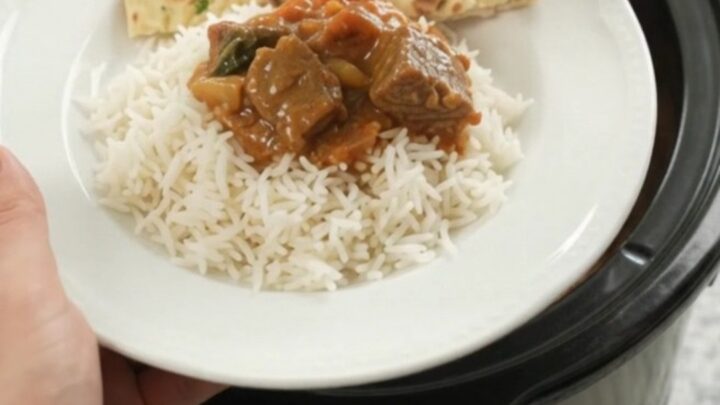
- Stir and ServeStir the curry gently to combine the layers. Let it rest for 5 minutes before serving. Serve over steamed basmati rice with warm naan on the side.Look for The sauce is thick and creamy, and the beef is coated in the curry.Tip Taste and adjust seasoning with salt or extra curry paste before serving.
After 8 to 10 hours, the curry is bubbling gently around the edges. The sauce has turned a rich, golden-red color, and the beef is visibly tender, with some cubes beginning to fall apart.
The aroma is intensely fragrant with curry paste and coconut. The bamboo shoots are tender but still have a slight crunch, and the bell peppers have softened. The cilantro has wilted into the sauce, leaving a fresh, herbal note.
Common mistakes
One common mistake is lifting the lid to check on the curry too often, which lets heat escape and extends the cooking time. Trust the process and resist the urge to peek. Another mistake is using a lean cut of beef like sirloin, which will dry out and become tough.
Stick with brisket or chuck. Also, don't stir the ingredients before cooking — the layers are intentional and help everything cook evenly. Finally, be careful not to overdo the curry paste if you're sensitive to heat; you can always add more later.
How to tell it’s done
The curry is done when the beef is fork-tender and easily shreds with a spoon. To check, insert a fork into a cube of beef — it should slide in with little resistance and the meat should pull apart easily.
The sauce should be thick and creamy, not watery, and the vegetables should be soft but not mushy. Use an instant-read thermometer to confirm the beef has reached at least 145°F (63°C) for food safety, though it will likely be well above that after 8 hours of cooking.
- Steaks, chops and roasts: 145°F (63°C) in the thickest part, then a 3-minute rest
Up next · Part 3 of 3
4 variations · storage & make-ahead · 5 answers · printable card
Tips, FAQ & printable recipe (Part 3)← Back to the ingredients (Part 1)