Dinner · Part 2 of 3: Instructions
Slow Cooker Citrus Veal Osso Buco Step-by-step instructions
- Prep
- Cook
- Total
- Serves
- 4
Before you start
Before starting the recipe, ensure the slow cooker is placed on a level, heat-resistant surface near a power outlet. Wash and peel the carrots, then dice them into uniform pieces to ensure they cook evenly. Similarly, dice the onions into small, consistent cubes.
Have the veal shanks ready and, if they have been stored in the refrigerator, take them out about 20 minutes before beginning the assembly to take the chill off. Gather all remaining ingredients and measuring tools to ensure a smooth assembly process once the cooking begins.
Ingredients at a glance (7)
- 4 pieces veal shanks
- 2 cups carrots, diced
- 1 cup onions, diced
- 1 tsp dried thyme
- 1 tbsp veal stock powder
- 1 cup orange juice
- orange zest, for serving
Instructions
Preparation and assembly
- Assemble the ingredientsPlace the veal shanks into the base of the slow cooker. Scatter the diced carrots and onions evenly over and around the meat. Sprinkle the dried thyme and the veal stock powder directly onto the shanks and vegetables.Look for Ensure the vegetables are distributed around the meat to promote even cooking and flavor distribution throughout the slow cooker base.Tip Layering the vegetables at the bottom helps keep the veal slightly elevated, allowing the juices to circulate effectively.
At the end of this phase, the veal shanks should be arranged in the base of the slow cooker, surrounded by the diced vegetables and coated with the dry seasonings. Everything is ready for the final addition of liquids to begin the long, slow braising process in the controlled heat of the slow cooker.
Slow braising
- Add liquids and slow cookPour the orange juice over the ingredients in the slow cooker. Cover the slow cooker with its lid and set it to cook on low for 8 hours. The slow, gentle heat will break down the connective tissue in the shanks, resulting in a tender braise.Look for The liquid should partially submerge the shanks to ensure they braise properly rather than steaming in too little moisture.Tip Avoid lifting the lid during the first several hours of cooking to maintain a consistent temperature inside the vessel.
During the slow cooking phase, the kitchen will begin to smell savory and aromatic as the veal, vegetables, and citrus juices combine.
The liquid in the slow cooker will darken as the stock powder dissolves and the juices from the meat and vegetables are released, creating a rich, flavorful braising environment.
Final finish and service
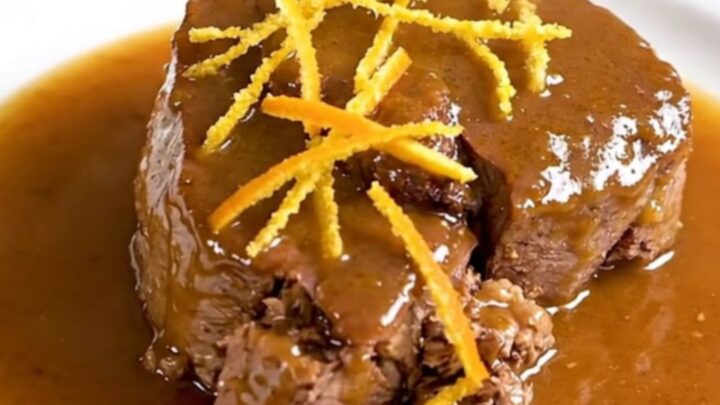
- Check doneness and garnishCheck that the veal shanks have reached an internal temperature of at least 145°F (63°C) and are fork-tender. Carefully remove the shanks, let them rest for at least 5 minutes, and transfer to a serving plate. Garnish with fresh orange zest before serving while hot.Look for The meat should be pulling away from the bone and be easily pierced with a fork without resistance.Safe temperature 145°F (63°C) internal temperature (steaks, chops and roasts)Tip If the sauce is too thin, you may briefly reduce it in a saucepan over medium heat before pouring it over the plated veal.
The dish is finished when the meat is tender enough to be easily pierced by a fork. The sauce should be glossy and fragrant with citrus. After resting the veal for at least 5 minutes to allow juices to redistribute, the dish is ready to be plated and garnished with fresh orange zest.
Common mistakes
A common mistake is overcrowding the slow cooker, which can prevent the meat from cooking evenly. Ensure there is enough space around each shank for the liquid to circulate.
Another error is using too much or too little liquid; the orange juice and stock powder should create a base that covers the bottom of the shanks without completely submerging them in a watery soup. Finally, failing to let the meat rest after cooking can lead to a loss of natural juices.
How to tell it’s done
The veal shanks are fully cooked when they reach an internal temperature of 145°F (63°C). Beyond the temperature, the ultimate sign of doneness is texture: the meat should be incredibly tender and easily pull away from the center bone with minimal pressure from a fork.
The sauce should be glossy and reduced enough to coat the meat, and the vegetables should be soft and fully incorporated into the braising liquid.
- Steaks, chops and roasts: 145°F (63°C) in the thickest part, then a 3-minute rest
Up next · Part 3 of 3
2 variations · storage & make-ahead · 3 answers · printable card
Tips, FAQ & printable recipe (Part 3)← Back to the ingredients (Part 1)