Dinner · Part 2 of 3: Instructions
Slow Cooker Cider Pork with Carrots for a Tender Dinner Step-by-step instructions
- Prep
- Cook
- Total
- Serves
- 4
Before you start
Before beginning, ensure all ingredients are fresh and ready for the slow cooker. Clean and peel the carrots, then slice them into uniform rounds to ensure they cook at the same rate. Peel the shallots and slice them thinly to allow their flavor to permeate the sauce efficiently.
If the pork shoulder is in one large piece, cut it into consistent cubes, which helps in even cooking and makes the final dish easier to portion out for serving. Clear a space on the countertop near an electrical outlet for the slow cooker, ensuring the cord is accessible and safe from water splashes.
Ingredients at a glance (5)
- 2 lb pork shoulder, cut into cubes
- 3 cups carrots, sliced
- 2 medium shallots, sliced
- 1 packet poultry stock powder
- 1 1/2 cups hard cider
Instructions
Ingredient Assembly
- Assemble the IngredientsPlace the pork cubes into the bottom of a clean slow cooker insert. Scatter the sliced carrots and sliced shallots evenly over the top of the pork. Sprinkle the poultry stock powder over the vegetables, then pour the hard cider over everything to ensure the ingredients are moistened.Look for Ensure the pork is at the bottom to allow it to simmer in the liquid.Tip Layering the ingredients helps the flavors meld as the slow cooker heats up.
At this stage, the slow cooker insert should be layered with the pork cubes at the bottom, topped by the carrots and shallots. The stock powder and cider are added, creating a base for the braising liquid. Everything looks ready to begin the slow, steady transformation. Check that the ingredients are arranged evenly and that the cider has reached the bottom of the insert to provide adequate moisture for the cooking process.
Slow Cooking Phase
- Slow Cook the PorkCover the slow cooker with its lid. Set the cooker to the low setting and cook for approximately 6 hours, or until the pork is fork-tender and reaches an internal temperature of at least 145°F (63°C). Let the meat rest for at least 3 minutes before serving.Look for The pork should be tender enough to pull apart easily with a fork.Safe temperature 145°F (63°C) internal temperature (steaks, chops and roasts)Tip Avoid lifting the lid during the cooking process to maintain a consistent temperature.
During this phase, the slow cooker will emit a savory, aromatic scent as the pork renders its fat and the cider reduces. The liquid will begin to pool around the ingredients, and the vegetables will soften.
The slow cooker should remain closed to maintain the necessary internal temperature. By the end of this phase, the meat should appear much paler and softer, indicating that the connective tissues are breaking down effectively under the steady heat.
Resting and Final Presentation
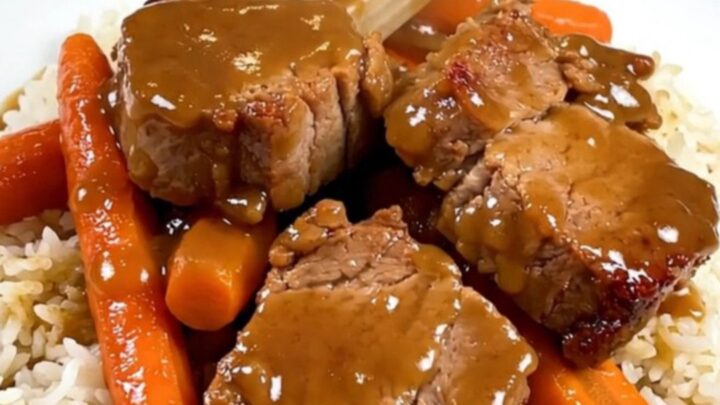
- Serve the DishOnce cooked and rested, carefully transfer the pork and vegetables to a plate, optionally serving over a bed of warm rice to soak up the juices.Look for The liquid should be fragrant and slightly reduced.Tip Serving over rice or mashed potatoes provides a perfect base for the savory sauce.
Once the cooking is complete, the pork should be tender, and the liquid should be rich and flavorful. After resting, the dish is ready to be plated. The pork should be succulent and moist, and the vegetables should be tender but still holding their shape. Before serving, ensure the pork has reached the required safe internal temperature of 145°F (63°C). The final dish should look glossy and steaming, ready to be served over rice or enjoyed on its own.
Common mistakes
A common mistake is overcrowding the slow cooker, which can prevent even heat distribution and lead to unevenly cooked meat. Ensure the ingredients are spread out rather than piled too high.
Another error is checking the meat too frequently; lifting the lid releases trapped heat and steam, significantly increasing the cooking time. Finally, failing to let the meat rest after cooking can lead to a loss of moisture, so always allow the pork to rest for a few minutes before portioning to ensure it remains juicy.
How to tell it’s done
The pork is done when it reaches an internal temperature of 145°F (63°C) and is fork-tender. This means the meat fibers should easily separate when pressed with a fork. The carrots should also be soft enough to pierce easily with the tip of a knife.
Because slow cookers vary in heat intensity, check the meat texture around the 5-hour mark. If it feels resistant, continue cooking. Proper doneness ensures the pork is safe and at its peak texture for consumption.
- Steaks, chops and roasts: 145°F (63°C) in the thickest part, then a 3-minute rest
Up next · Part 3 of 3
2 variations · storage & make-ahead · 3 answers · printable card
Tips, FAQ & printable recipe (Part 3)← Back to the ingredients (Part 1)