Dinner · Part 2 of 3: Instructions
Slow Cooker Chorizo and Tomato Penne for an Easy Weeknight Dinner Step-by-step instructions
- Prep
- Cook
- Total
- Serves
- 4
Before you start
Before starting, ensure all ingredients are measured and ready. The chorizo should be sliced into uniform rounds to allow for even cooking. Ensure the slow cooker insert is clean and positioned on a stable, heat-resistant surface.
Have a serving plate ready to receive the hot pasta once the cooking time is complete, and verify that the slow cooker is plugged into a functional outlet before beginning the layering process.
Ingredients at a glance (4)
- 8 oz fresh chorizo, sliced
- 12 oz dry penne pasta
- 1 tbsp herbes de Provence
- 2 cups tomato coulis
Instructions
Layering the ingredients
- Layering the ingredientsPlace the sliced fresh chorizo at the bottom of the slow cooker. Add the dry penne pasta over the chorizo in an even layer to ensure it cooks thoroughly.Look for Chorizo is at the base.Tip Ensure the pasta is spread out so it does not clump together during the cooking process.
At this stage, the chorizo is at the bottom and the dry pasta is layered on top. The ingredients look organized and ready for the seasoning to be added. Ensure no ingredients are spilled outside the slow cooker insert and that the countertop is clean and clear for the next steps.
Seasoning and saucing
- Seasoning and saucingSprinkle the herbes de Provence over the pasta, followed by pouring the tomato coulis over everything. Ensure the pasta is mostly submerged in the sauce to cook evenly.Look for Sauce covers the pasta.Tip Distribute the herbs evenly to flavor every bite of the pasta.
The herbs are sprinkled over the pasta and the tomato coulis has been poured over the top. The contents should look moist, with the sauce beginning to seep down into the pasta layers. Check that the tomato coulis has been distributed as evenly as possible to avoid dry spots.
Cooking to completion
- Cooking to completionCover and cook on high for approximately 3 hours. Ensure the chorizo reaches an internal temperature of at least 160°F (71°C) to be fully cooked and safe for consumption.Look for Pasta is tender and sauce is thickened.Safe temperature 160°F (71°C) internal temperature (ground meat)Tip Check the pasta texture after 2.5 hours as slow cookers vary in heat intensity.
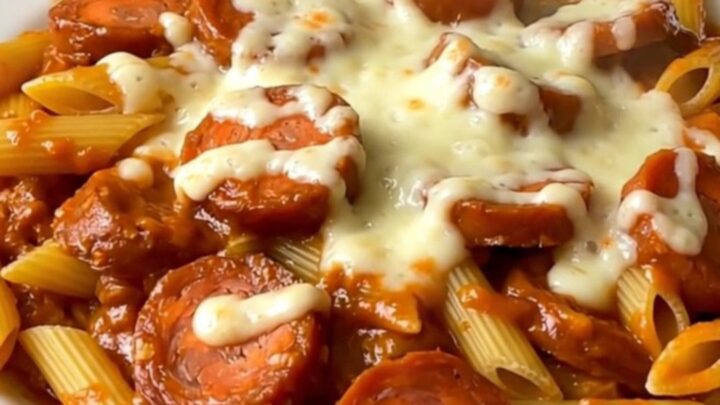
The dish is steaming, with the pasta fully cooked and the sauce rich and aromatic. The chorizo should be tender and fully incorporated into the mixture.
Check that the pasta is cooked through and the overall texture is uniform before serving the dish directly from the slow cooker.
Common mistakes
A common mistake is adding too much liquid, which can result in a watery sauce rather than a thick, coating consistency. Another error is failing to ensure the pasta is properly submerged in the tomato coulis, which can lead to unevenly cooked or crunchy noodles.
Finally, forgetting to check the internal temperature of the chorizo can lead to an undercooked protein, so always use a meat thermometer to ensure safety.
How to tell it’s done
The dish is ready when the penne is tender to the bite but not mushy, and the sauce has thickened significantly, clinging to the pasta. The fresh chorizo must be cooked through, reaching an internal temperature of at least 160°F (71°C).
The vibrant red color of the tomato coulis should be deepened by the juices released from the chorizo, indicating that the flavors have fully combined throughout the cooking process.
- Ground meat: 160°F (71°C) in the thickest part
Up next · Part 3 of 3
2 variations · storage & make-ahead · 3 answers · printable card
Tips, FAQ & printable recipe (Part 3)← Back to the ingredients (Part 1)