Dinner · Part 2 of 3: Instructions
Slow Cooker Chipotle Lime Pulled Pork Step-by-step instructions
- Prep
- Cook
- Total
- Serves
- 8
Before you start
Before you begin, ensure your slow cooker is clean and placed on a stable, heat-resistant surface near an electrical outlet. Have all your ingredients measured and ready to go.
If you are using a large pork butt, you may cut it into two or three large chunks to ensure it fits comfortably in the slow cooker, which also helps it cook more evenly.
Ensure you have two sturdy forks on hand for the shredding process, as this is the most effective way to achieve the desired consistency once the pork is finished cooking.
Ingredients at a glance (5)
- 4 lb pork butt
- 1 medium red onion, sliced
- 2 tbsp chipotle chili powder
- 1/4 cup lime juice
- 1 cup chicken broth
Instructions
Preparation and layering
- Assemble the ingredientsPlace the pork butt into the bottom of the slow cooker. Scatter the sliced red onions evenly over the top of the meat. Sprinkle the chipotle chili powder over the onions and pork. Pour the lime juice and chicken broth over the entire mixture.Look for The slow cooker is filled and ingredients are layered.Tip Ensure the pork is positioned flat to encourage even cooking throughout the process.
The pork is carefully arranged in the bottom of the slow cooker, surrounded and topped with the sliced red onions. The chili spice evenly coats the meat, and the liquid pools around the base without fully submerging the roast, creating an ideal setup for moist, slow braising.
Slow cooking cycle
- Slow cook the porkCover the slow cooker with the lid. Cook on low heat for 8 hours or on high heat for 4 hours until the pork is extremely tender. Ensure the pork reaches an internal temperature of 145°F (63°C) and let the meat rest for at least 3 minutes.Look for The pork reaches an internal temperature of 145°F (63°C) and shreds easily.Safe temperature 145°F (63°C) internal temperature (steaks, chops and roasts)Tip Avoid opening the lid during the cooking process to maintain a consistent temperature inside the cooker.
A deep, smoky, and savory aroma fills the kitchen as the pork cooks gently. The meat appears significantly shrunk, tender, and deeply browned on the surface, while the surrounding liquid is bubbling lightly and rich with rendered juices, signaling that the connective tissues have broken down completely.
Shredding and presentation
- Shred and serveRemove the pork from the slow cooker and transfer it to a large platter. Use two forks to shred the meat into bite-sized pieces. Serve immediately while hot.Look for The meat is fully shredded and ready for plating.Tip Discard any excess fat pieces while shredding if desired for a leaner final texture.
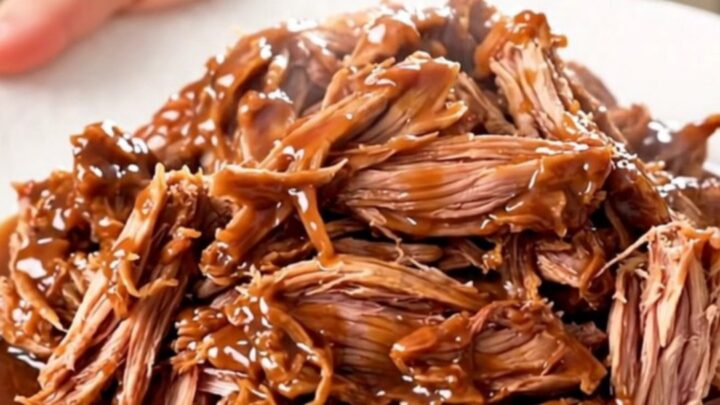
The cooked pork easily pulls apart into delicate, bite-sized shreds without requiring forceful cutting. The shredded meat is steaming hot, thoroughly coated in its savory cooking juices, and rests on a warm serving platter ready for plating alongside your favorite accompaniments.
Common mistakes
A common mistake is overcrowding the slow cooker, which can lead to uneven cooking. Ensure there is enough room for the air and liquid to circulate. Another error is failing to trim excessive fat; while some fat is necessary for flavor, large, thick caps of fat can result in a greasy final dish.
Finally, do not rush the process by turning the heat too high for a short duration; the slow, low-temperature cook is essential for breaking down the tough fibers in the pork.
How to tell it’s done
The pork is done when it is fork-tender and pulls away easily without resistance. It must reach a minimum internal temperature of 145°F (63°C) throughout the thickest part of the meat.
Using an instant-read meat thermometer inserted into the center of the roast is the most accurate way to check for safety. Once cooked, let the meat rest for at least 3 minutes to allow the juices to redistribute, which ensures a moist result in every serving.
- Steaks, chops and roasts: 145°F (63°C) in the thickest part, then a 3-minute rest
Up next · Part 3 of 3
2 variations · storage & make-ahead · 3 answers · printable card
Tips, FAQ & printable recipe (Part 3)← Back to the ingredients (Part 1)