Dinner · Part 2 of 3: Instructions
Slow Cooker Chestnut and Brown Lentil Stew Step-by-step instructions
- Prep
- Cook
- Total
- Serves
- 4
Before you start
Before beginning, ensure all vegetables are prepared and ready. Thoroughly wash the carrots and peel them if desired before slicing into consistent rounds. Dice the yellow onion into small, uniform pieces so they soften evenly.
Rinse the lentils in a fine-mesh sieve under cold running water until the water runs clear. Have your fresh thyme sprigs cleaned and ready to go. Ensure your slow cooker is placed on a level, heat-resistant surface with adequate space around it for proper ventilation during the cooking process.
Ingredients at a glance (5)
- 1 cup brown lentils, rinsed
- 2 large carrots, sliced
- 1 medium yellow onion, diced
- 4 sprigs fresh thyme
- 4 cups vegetable broth
Instructions
Preparation and assembly
- Assemble the stew basePlace the rinsed brown lentils at the bottom of the slow cooker insert. Distribute the sliced carrots and diced yellow onion evenly over the lentils to ensure even cooking.Look for vegetables are evenly spreadTip Rinse lentils under cold water until the water runs clear to remove any debris.
At this stage, the slow cooker contains the raw ingredients neatly layered. The lentils are at the base, topped with sliced carrots and diced onions, with the thyme sprigs resting on top. Everything is dry, and the broth has not yet been added. Ensure all ingredients are properly prepped to allow for a smooth assembly process, which sets the foundation for the slow, even cooking that will take place over the next few hours.
Cooking the stew
- Add aromatics and liquidLay the fresh thyme sprigs on top of the vegetable layer. Pour the vegetable broth carefully into the slow cooker, ensuring all ingredients are submerged.Look for liquid covers the ingredientsTip Use low-sodium vegetable broth to have better control over the seasoning of the final dish.
During this phase, the ingredients are submerged in the vegetable broth and the slow cooker is covered. As the heat rises, the aroma of thyme and onions begins to fill the kitchen. The broth will start to simmer gently, and the lentils will begin to absorb the moisture. The vegetables will soften, and the starch from the lentils will begin to thicken the liquid, creating a cohesive, flavorful base that develops depth as it cooks slowly.
Final seasoning and serving
- Cook and serveCover the slow cooker with its lid and cook on the low setting for approximately 4 hours, or until the lentils are tender. Remove the thyme stems before serving the stew in warm bowls.Look for lentils are tender and liquid is reducedTip Stir the stew gently before serving to incorporate the flavors and thicken the consistency.
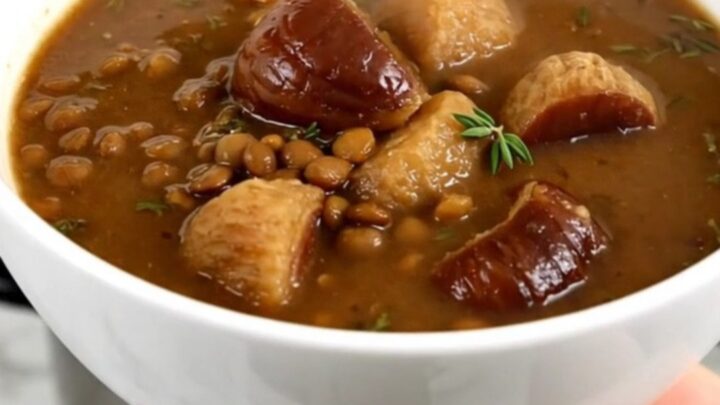
At the end of the cooking time, the stew is steaming and glossy. The lentils are tender, the carrots are soft, and the thyme sprigs are discarded. The final dish should be aromatic and have a thick, spoonable consistency.
Check that the lentils have reached the desired tenderness before turning off the heat. The stew is now ready to be ladled into warm bowls for serving, ensuring a consistent and comforting meal for everyone at the table.
Common mistakes
A common mistake is failing to rinse the lentils, which can leave the stew with a gritty texture. Another frequent error is using too little liquid; ensure the broth fully covers the ingredients so the top layer does not dry out.
Avoid lifting the lid frequently during the cooking process, as each time you open the slow cooker, significant heat escapes, which can increase the total cooking time and affect the final texture of the lentils and vegetables.
How to tell it’s done
The stew is finished when the lentils are completely tender but still retain their shape. They should be soft enough to crush easily between your fingers but not mushy. The carrots should be fork-tender and the broth should have thickened slightly, taking on a glossy, rich appearance from the starches released by the lentils.
Since there are no raw proteins in this recipe, focus on the texture of the lentils and the development of the aromatic broth to determine when the dish is perfectly ready to serve.
Up next · Part 3 of 3
2 variations · storage & make-ahead · 3 answers · printable card
Tips, FAQ & printable recipe (Part 3)← Back to the ingredients (Part 1)