Breakfast · Part 3 of 3: Tips & recipe card
Slow-Cooker Cherry Almond Amaretto French Toast Casserole Tips, FAQ & printable recipe
- Prep
- Cook
- Total
- Serves
- 8
Tips for success
For the best texture, use day-old brioche or challah. Fresh bread absorbs too much custard and can become mushy. If your bread is very fresh, cut it into cubes and let it sit out for an hour to dry slightly. This helps it hold its structure during the long slow cook. You can also toast the cubes in a 300°F (150°C) oven for 10 minutes to dry them out.
Toasting the almonds is a small step that makes a big difference. It brings out their nutty oils and adds a pleasant crunch against the soft custard. If you skip it, the almonds will be pale and chewy.
For an extra layer of flavor, consider using amaretto liqueur that is not too sweet—a dry amaretto works well. Adjust the amount of almond extract to your taste, but keep it moderate so it does not overpower the cherries.
Variations
- Berry Almond Bake: Swap the cherries for 3 cups of mixed berries—blueberries, raspberries, and blackberries. Reduce the brown sugar to 1/3 cup, as berries are sweeter. Add 1/2 teaspoon of vanilla extract along with the almond extract. The bake will have a more tart, vibrant flavor.
- Chocolate Cherry Twist: Add 1/2 cup of chocolate chips or chopped dark chocolate to the cherry layer. The chocolate melts into the custard, creating pockets of richness. Use a high-quality chocolate with at least 60% cocoa for a balanced sweetness. Omit the amaretto and use 1/4 cup of milk instead.
- Spiced Pear Version: Replace the cherries with 3 cups of sliced ripe pears. Add 1 teaspoon of ground cinnamon and 1/4 teaspoon of ground nutmeg to the custard. Use 1/2 cup of chopped pecans instead of almonds. This version is especially good in the fall.
- Citrus Almond Delight: Add the zest of one orange to the custard and reduce the almond extract to 1/2 teaspoon. Replace the cherries with 2 cups of fresh orange segments and 1 cup of dried cranberries. The citrus brightens the almond flavor and adds a festive note.
Storage and make-ahead
- Fridge
- Store in an airtight container in the refrigerator for up to 4 days. Reheat in the microwave or oven until warmed through.
- Freezer
- Freeze the baked casserole in a freezer-safe container for up to 2 months. Thaw overnight in the refrigerator before reheating.
- Reheat
- Reheat individual portions in the microwave for 1–2 minutes, or in a 350°F (175°C) oven for 10–15 minutes, covering with foil to retain moisture.
Store leftover casserole in an airtight container in the refrigerator for up to 4 days. To reheat, scoop portions into a microwave-safe dish and warm in 30-second intervals until heated through.
Alternatively, reheat in a 350°F (175°C) oven for 10–15 minutes, covering with foil to prevent drying. The casserole can also be frozen for up to 2 months; thaw overnight in the refrigerator before reheating.
Assemble the casserole the night before, cover, and refrigerate. In the morning, let it sit at room temperature for 30 minutes while the slow cooker warms up. Cook on low for 3 hours, adding about 15 minutes to the cooking time if the casserole is cold. This is a great option for holiday mornings—everything is ready to go, and the slow cooker does the work while you enjoy your coffee.
Serving ideas
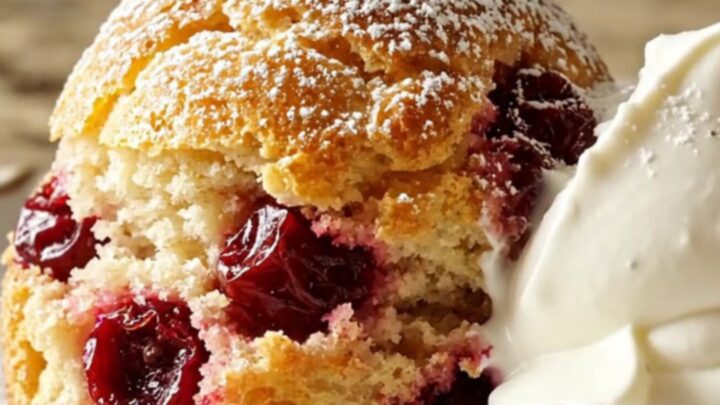
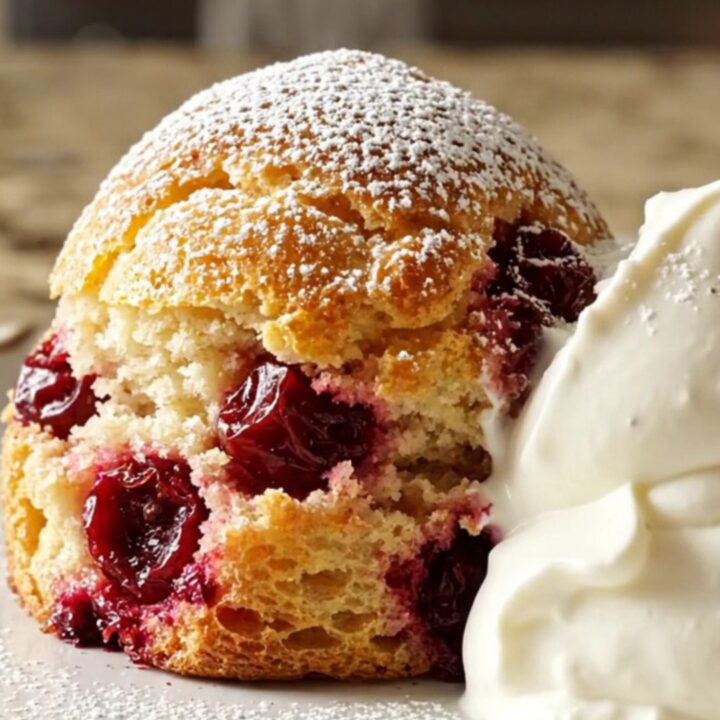
Serve the casserole warm, straight from the slow cooker, with a generous dusting of powdered sugar and a dollop of whipped mascarpone. The mascarpone adds a tangy richness that balances the sweetness of the cherries and brown sugar.
For a brunch spread, pair it with crisp bacon or sausage, a fresh fruit salad, and plenty of hot coffee. The casserole is hearty enough to stand alone but also welcomes a side of yogurt or extra berries.
If you prefer a lighter topping, Greek yogurt or lightly sweetened whipped cream works well in place of mascarpone. For a more decadent finish, drizzle with a little amaretto syrup or warm cherry compote.
The casserole is also delicious cold, straight from the fridge, though it is best enjoyed warm. Store leftovers in the refrigerator and reheat gently to preserve the custard’s creamy texture.
Frequently asked questions
Can this casserole be made the night before?
Why does the custard sometimes turn out watery?
Can this recipe be made without alcohol?
How do you know when the eggs are fully cooked?
Can this be cooked on high instead of low?
Slow-Cooker Cherry Almond Amaretto French Toast Casserole
Ingredients
- 10 cups sourdough brioche cubes (1-inch)
- 3 cups pitted dark sweet cherries (fresh or frozen)
- 6 large eggs
- 1 1/2 cups heavy cream
- 1/4 cup amaretto liqueur
- 1 tsp almond extract
- 1/2 cup packed light brown sugar
- 1/2 cup sliced almonds
- Powdered sugar, for dusting, to taste
- 1 cup whipped mascarpone, for serving
Instructions
- In a small dry skillet over medium heat, toast the sliced almonds, stirring frequently, until golden and fragrant, about 3 minutes. Transfer to a plate to cool. Lightly grease the insert of a 6-quart slow cooker with butter or nonstick spray.
- In a large bowl, whisk the eggs, heavy cream, amaretto, almond extract, and brown sugar until the sugar is dissolved and the mixture is smooth and slightly frothy.
- Place half of the brioche cubes in the slow cooker, then scatter half of the cherries over the top. Repeat with the remaining brioche and cherries. Pour the custard evenly over the bread, pressing gently with a spatula to submerge the top pieces. Sprinkle the toasted almonds over the surface.
- Cover the slow cooker and cook on LOW for 3 hours, until the custard is set and the top is golden. The internal temperature of the custard should reach 160°F (71°C) to ensure the eggs are fully cooked.
- Turn off the slow cooker and let the casserole rest, uncovered, for 10 minutes. Scoop warm portions onto plates, dust with powdered sugar, and top with a dollop of whipped mascarpone.
Estimated nutrition per serving
- Calories
- 520
- Protein
- 14 g
- Carbohydrates
- 58 g
- Fat
- 26 g
Next recipe
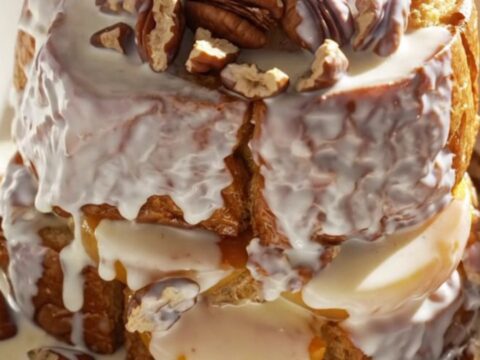
Slow-Cooker Peach Bourbon French Toast Bake
See the recipe → →This recipe is based on a short cooking video and is published under the pen name Clara Weller. It was checked before publication, but errors can slip through. Nutrition, when shown, is an estimate. Read more in our editorial policy and on our food safety page.
More recipes to try

Slow-Cooker Maple Bacon Cinnamon Roll Casserole
Total time: 2 h 15 min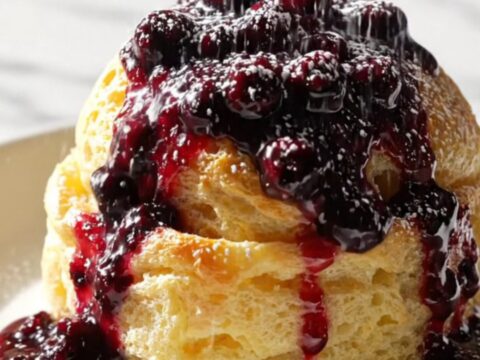
Crockpot Lemon Blueberry Ricotta French Toast Bake
Total time: 3 h 15 min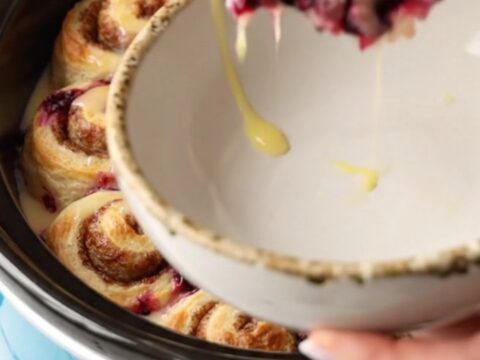
Slow Cooker Blueberry Cream Cheese Cinnamon Roll Casserole
Total time: 2 h 45 min
Crockpot Red Velvet Cinnamon Roll Bake for Christmas Morning
Total time: 2 h 45 min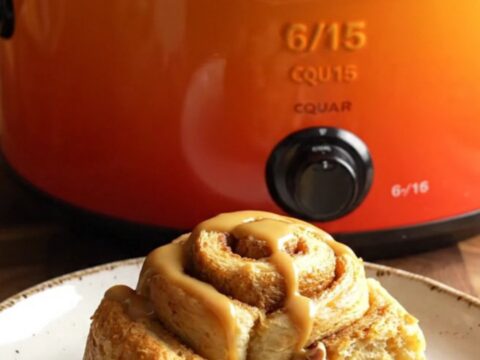
Slow Cooker Pumpkin Spice Cinnamon Roll Casserole
Total time: 2 h 50 min