Dinner · Part 2 of 3: Instructions
Slow-Cooker Cashew Cream Red Curry Chicken Thighs Step-by-step instructions
- Prep
- Cook
- Total
- Serves
- 6
Before you start
Before starting, drain the bamboo shoots and slice the red bell pepper into thin strips. Measure the curry paste and have the cashew cream and butter ready. No need to pre-cook anything—just place the chicken in the slow cooker and layer the remaining ingredients on top.
Ingredients at a glance (6)
- 6 boneless skinless chicken thighs
- 3 tbsp Thai red curry paste
- 1 can (8 oz) sliced bamboo shoots, drained
- 1 red bell pepper, sliced into strips
- 1 1/2 cups roasted cashew cream
- 4 tbsp unsalted butter, cut into pats
Instructions
Layer and Walk Away
- Layer the IngredientsPlace the chicken thighs in the bottom of the slow cooker in a single layer. Spoon the red curry paste over the chicken and spread it evenly. Scatter the drained bamboo shoots and red bell pepper strips over the top.Look for The chicken is covered with curry paste and vegetables.Tip No need to stir—the layers will meld as they cook.
- Add the Cream and ButterPour the cashew cream over the chicken and vegetables. Place the butter pats on top.Look for The cream covers the ingredients and the butter sits on top.Tip Use cold butter so it melts slowly and enriches the sauce.
After the first phase, the slow cooker is filled with raw chicken, curry paste, bamboo shoots, red bell pepper, cashew cream, and butter. Everything is layered but not stirred.
The aroma is already promising—spicy, creamy, and rich. Before moving to the cooking phase, ensure the lid is secure and the slow cooker is set to low.
Slow Simmer
- Cook on LowCover the slow cooker and cook on low for 4 to 5 hours, until the chicken is tender and cooked through. The sauce will bubble gently and thicken.Look for The curry is bubbling and fragrant.Safe temperature 165°F (74°C) internal temperature (poultry)Tip Avoid lifting the lid during cooking to keep the heat steady.
- Check the ChickenAfter 4 hours, check the chicken with an instant-read thermometer. It should register 165°F (74°C) in the thickest part. If not, continue cooking for another 30 minutes.Look for The thermometer reads 165°F (74°C) or higher.Safe temperature 165°F (74°C) internal temperature (poultry)Tip If the sauce seems thin, leave the lid off for the last 30 minutes.
During the cooking phase, the slow cooker gently bubbles and steams. The kitchen fills with the fragrance of red curry and butter. After 4 hours, the chicken is tender and the sauce has thickened slightly.
The peppers are soft but not mushy, and the curry paste has fully melded with the cream. Check the temperature to confirm it's safe.
Serve and Enjoy
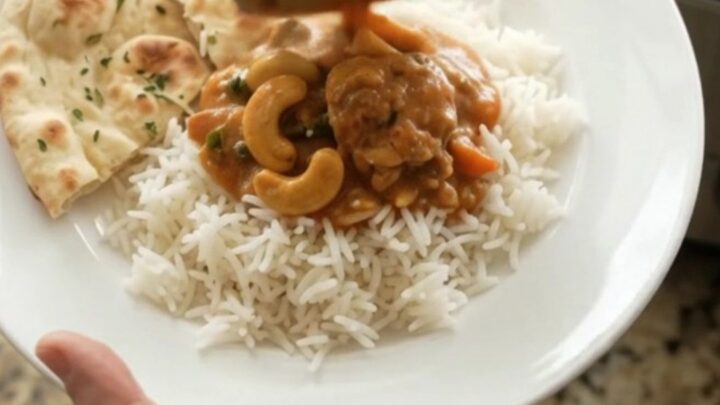
- Stir and ServeStir the curry gently to combine the sauce. Serve over steamed basmati rice with warm naan on the side. Ladle the sauce generously over each portion.Look for The curry is thick, creamy, and aromatic.Tip Garnish with fresh cilantro or lime wedges if desired (not shown in video).
When the cooking is complete, the curry is bubbling and rich. The chicken is fall-apart tender, and the sauce is velvety and coats the spoon. The peppers are tender and the bamboo shoots add a pleasant crunch. The final dish looks and smells like a Thai restaurant specialty—ready to be ladled over rice and naan.
Common mistakes
One common mistake is lifting the lid too often, which releases heat and extends cooking time. Another is using chicken breasts, which can dry out in the slow cooker—stick with thighs for the best texture.
Overcrowding the slow cooker can also lead to uneven cooking, so arrange the chicken in a single layer if possible.
How to tell it’s done
The curry is done when the chicken is fork-tender and reaches an internal temperature of 165°F (74°C) in the thickest part. The sauce should be thick enough to coat the back of a spoon.
If it looks too thin, leave the lid off for the last 30 minutes to let it reduce. The peppers should be tender but still have a slight bite.
- Poultry: 165°F (74°C) in the thickest part
Up next · Part 3 of 3
4 variations · storage & make-ahead · 5 answers · printable card
Tips, FAQ & printable recipe (Part 3)← Back to the ingredients (Part 1)