Dinner · Part 2 of 3: Instructions
Slow Cooker Carolina Mustard Pulled Pork Step-by-step instructions
- Prep
- Cook
- Total
- Serves
- 8
Before you start
Before starting, ensure your slow cooker is clean and properly plugged into a grounded outlet. If your pork shoulder was stored in the refrigerator, take it out about 30 minutes before you begin to take the chill off, but do not leave it out longer to ensure food safety.
Prepare your onions by peeling and slicing them into uniform strips, which will help them break down into the sauce during the cooking time. Have your seasonings and sauce measured and ready to go for a seamless assembly process.
Ingredients at a glance (4)
- 4 lb pork shoulder
- 2 medium yellow onions, sliced
- 2 tbsp dry seasoning packet
- 1 cup Carolina mustard barbecue sauce
Instructions
Assembly and layering
- Prep the slow cookerPlace the pork shoulder into the bottom of the slow cooker insert. Scatter the sliced yellow onions evenly over the top of the pork.Look for The pork should sit flat on the bottom of the insert.Tip Ensure the pork is fully thawed before placing it in the slow cooker for even cooking.
At this stage, you should see the pork shoulder sitting firmly at the base of the slow cooker with the onion slices distributed evenly on top. Everything is raw and organized. Ensure the pork is positioned so that the lid can close tightly, as a loose lid will prevent the pressure and heat from building up properly. Once the lid is secure, you are ready to begin the slow, steady transformation of the ingredients into a cohesive meal.
Seasoning and saucing
- Season and add sauceSprinkle the dry seasoning packet over the onions and pork. Pour the Carolina mustard barbecue sauce over the ingredients, ensuring it covers as much of the meat as possible.Look for The sauce should coat the top layer of onions and meat.Tip Use a spatula to gently spread the sauce if it does not cover the surface naturally.
The seasoning and mustard sauce should be applied evenly to coat the onions and the surface of the meat. There is no need to mix the ingredients at this point, as the natural juices released by the pork and the onions will combine with the sauce during the cooking process. Verify that the sauce is distributed well enough to provide flavor to the entire roast before you lock the lid and start the timer for the long cook.
Slow cooking and shredding
- Slow cook and shredCover the slow cooker and cook on low for 8 hours. Once finished, ensure the pork reaches an internal temperature of 145°F (63°C). Remove the pork to a cutting board, let it rest for at least 3 minutes, then shred using two forks before serving with the cooking juices.Look for The meat should be fork-tender and pull apart with minimal resistance.Safe temperature 145°F (63°C) internal temperature (steaks, chops and roasts)Tip If the sauce is too thin after cooking, skim off the excess fat before serving.
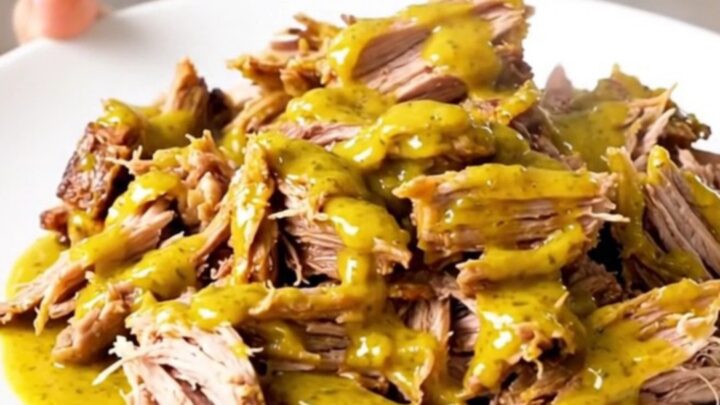
After the long cooking time, the pork should be incredibly tender, with the onions essentially melted into the sauce. The meat should be easy to pull apart with two forks. Check that the internal temperature has reached at least 145°F (63°C).
After the required resting period, the shredded pork should be glistening with the mustard sauce and ready to be served. If the mixture appears too liquid, you can leave the lid off for a few minutes to let the sauce reduce slightly.
Common mistakes
A common mistake is removing the lid too frequently during the cooking process. Every time the lid is lifted, heat escapes and the cooking time increases, which can dry out the pork. Resist the urge to peek until the very end.
Another error is failing to let the meat rest after cooking. Allowing the pork to rest for 3 minutes before shredding is crucial for retaining the juices, ensuring the final dish is succulent rather than stringy or dry.
How to tell it’s done
The pork is perfectly cooked when it reaches an internal temperature of 145°F (63°C) as measured with a meat thermometer in the thickest part of the roast. Beyond the temperature, the visual and tactile cues are key: the meat should look dark and glossy, and it must offer absolutely no resistance when prodded with a fork.
If the meat still feels firm or tough, continue cooking for an additional 30 to 60 minutes, as individual slow cookers can vary significantly in their heat output.
- Steaks, chops and roasts: 145°F (63°C) in the thickest part, then a 3-minute rest
Up next · Part 3 of 3
2 variations · storage & make-ahead · 3 answers · printable card
Tips, FAQ & printable recipe (Part 3)← Back to the ingredients (Part 1)