Dinner · Part 1 of 3: Ingredients
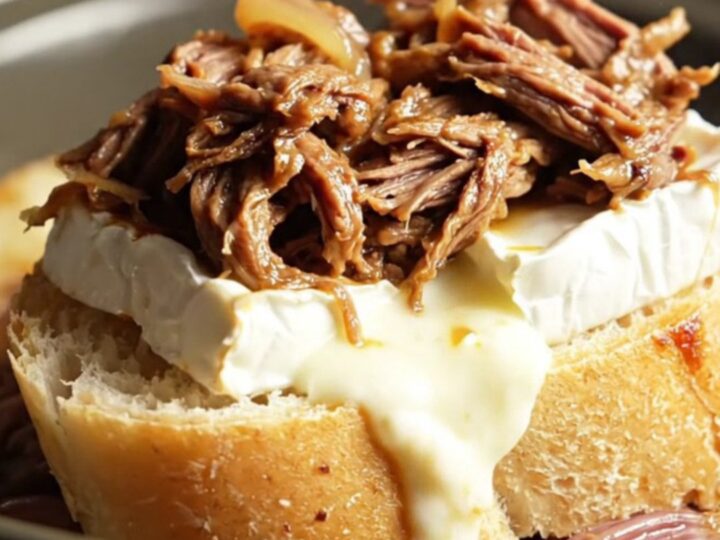
Slow-Cooker Caramelized Shallot and Brie Beef Roast
- Prep
- Cook
- Total
- Serves
- 6
Transform a humble beef roast into a sophisticated bistro-style masterpiece using only a slow cooker. This recipe marries the deep, savory notes of slow-braised beef with the sweet, jammy essence of caramelized shallots and the luxurious, creamy melt of triple-cream Brie.
It is the ultimate solution for those seeking deep, complex French-inspired flavors without the need for constant kitchen supervision, delivering a result that feels incredibly indulgent and perfect for any special evening at home.
The magic of this dish lies in the long, slow braise. By simmering the beef chuck roast in a combination of dry white wine and beef jus, the fibers break down until the meat is succulent and tender. Meanwhile, the whole shallots slowly transform, losing their sharp bite and becoming sweet, jammy, and golden.
The addition of salted butter adds a silky richness to the braising liquid, which binds everything together. Finishing the dish by serving it over crusty baguette slices topped with triple-cream Brie ensures every bite is a perfect balance of savory, sweet, and creamy textures, making it a standout meal.
Ingredients
Main
- 3 lb beef chuck eye roast
- 300 g peeled whole shallots
- 180 ml dry white wine
- 180 ml beef jus
- 1 bunch fresh thyme sprigs
- 85 g salted butter
Serving
- 8 oz triple-cream Brie cheese, sliced
- 1 loaf crusty baguette, sliced
Why this recipe works
The slow-cooking process is essential for breaking down the connective tissue in the beef chuck roast. By using a low heat setting over an extended period of 8 hours, the collagen transforms into gelatin, resulting in meat that is incredibly tender and succulent. This method also allows the shallots to soften completely without losing their structure, absorbing the flavors of the wine and beef jus.
The combination of ingredients creates a natural reduction that is packed with flavor. As the wine and beef jus simmer, the alcohol evaporates, leaving behind a concentrated, acidic base that cuts through the richness of the beef and the butter. The shallots act as a sweet counterpart, while the triple-cream Brie provides a final, luxurious finish that rounds out the acidity and saltiness of the sauce.
Notes and substitutions
Choosing a good quality beef chuck eye roast is key to this recipe. This cut has enough fat and connective tissue to stay moist during the long cooking time.
Ensure you remove any large, tough pieces of fat or gristle before shredding if preferred, though most will render down beautifully during the 8-hour cook. Fresh thyme is highly recommended over dried, as it provides a brighter, more aromatic flavor profile that complements the white wine.
The choice of Brie is crucial for the final serving. Use a high-quality triple-cream Brie to get that signature molten texture when the warm beef is placed on top. If you cannot find triple-cream, a standard double-cream Brie will still provide excellent results.
For the baguette, choose a loaf that has a sturdy, crusty exterior to hold the weight of the shredded beef and sauce without becoming soggy too quickly upon assembly.
- Beef chuck eye roast: Beef chuck roast or boneless short ribs
- Dry white wine: Dry vermouth or additional beef broth with a splash of apple cider vinegar
Equipment
- Slow cooker
- Sharp knife
- Cutting board
- Two forks
- Serving platter
Up next · Part 2 of 3
3 steps · 8 h of cooking · what to look for at each stage
Step-by-step instructions (Part 2)