Dinner · Part 2 of 3: Instructions
Slow Cooker Cajun Butter Turkey Breast Step-by-step instructions
- Prep
- Cook
- Total
- Serves
- 4
Before you start
Before you begin, ensure your slow cooker is clean and placed on a stable, heat-resistant surface. Take the turkey breast out of the refrigerator about 20 minutes before you start to allow it to lose some of the refrigerator chill, which helps with more even cooking.
Have your onions sliced, your butter melted, and your spices measured out and ready to go. Proper preparation ensures that the assembly takes only a few minutes, allowing you to get the slow cooker started immediately.
Ingredients at a glance (4)
- 2 lb boneless skinless turkey breast
- 1 cup onion, sliced into rings
- 2 tbsp Cajun seasoning
- 4 tbsp unsalted butter, melted
Instructions
Layering the Aromatics
- Prepare the Slow Cooker BasePlace the sliced onion rings at the bottom of the slow cooker insert to create a flavorful bed for the turkey. This prevents the breast from sticking and helps distribute the savory aromatics during the cooking process.Look for Onions should be spread evenly across the base of the insert.Tip Ensure the onions are cut into uniform rings for even cooking.
The onions should be evenly distributed at the bottom of the slow cooker to provide a stable and aromatic base.
You should see a clear, flat layer of onion rings covering the bottom surface, which will prevent the turkey from touching the hot ceramic insert directly and ensure a gentle, even heat distribution throughout the cooking process.
Seasoning the Turkey
- Season and Add ButterPlace the boneless skinless turkey breast on top of the onion layer. Sprinkle the Cajun seasoning generously over the turkey surface, then pour the melted butter evenly over the top to coat the meat and seasonings.Look for The turkey should be fully coated with the butter and seasoning blend.Tip Avoid touching the raw turkey to other surfaces to prevent cross-contamination.
The turkey breast should be placed securely on the onions and thoroughly coated with the Cajun seasoning and melted butter. At this stage, the spices should be visible across the surface of the meat, and the butter should be settling into the crevices, ready to begin the slow infusion process as the temperature rises inside the cooker.
Final Slow Cooking
- Slow Cook and ServeCover the slow cooker and cook on low for 4 hours until the turkey is tender and cooked through. Use a meat thermometer to ensure the thickest part of the breast reaches an internal temperature of 165°F (74°C). Allow the turkey to rest for 10 minutes before slicing.Look for The turkey is ready when it is opaque throughout and reaches the target temperature.Safe temperature 165°F (74°C) internal temperature (poultry)Tip Letting the meat rest ensures the juices redistribute for maximum tenderness.
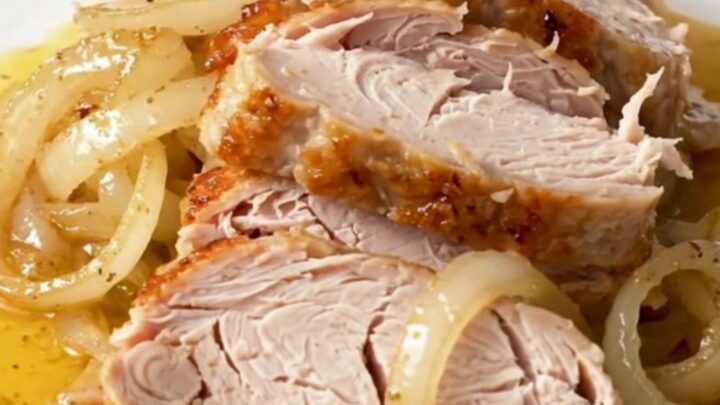
By the end of the cooking phase, the turkey should look tender and moist, with the Cajun butter sauce having pooled at the bottom of the cooker along with the softened onions. The meat should be completely opaque, and when sliced, it should release a light steam, indicating it has been cooked through to the safe internal temperature.
Common mistakes
Avoid lifting the lid of the slow cooker during the first three hours of cooking. Every time you open the lid, heat escapes and the cooking time increases significantly, which can dry out the turkey.
Additionally, ensure that you do not overcook the turkey, as even in a slow cooker, lean poultry can become stringy if left on heat for too long once it has reached the target temperature.
How to tell it’s done
The turkey is finished when the meat is firm to the touch and opaque throughout. Use an instant-read meat thermometer inserted into the thickest part of the breast to verify that it has reached an internal temperature of at least 165°F (74°C).
If the meat is still showing signs of pink or if the temperature is below this threshold, continue cooking for an additional 20 minutes before checking again.
- Poultry: 165°F (74°C) in the thickest part
Up next · Part 3 of 3
2 variations · storage & make-ahead · 3 answers · printable card
Tips, FAQ & printable recipe (Part 3)← Back to the ingredients (Part 1)