Dinner · Part 2 of 3: Instructions
Slow Cooker Butternut Squash Coconut Curry Soup Step-by-step instructions
- Prep
- Cook
- Total
- Serves
- 4
Before you start
Before starting, ensure your butternut squash is peeled, seeded, and cut into uniform cubes to promote even cooking. Have your onions sliced thinly to help them dissolve into the base of the soup.
Check that your slow cooker is clean and positioned on a stable, heat-resistant surface away from any water sources or flammable materials.
Have your measuring cups ready to ensure the liquid-to-vegetable ratio is correct, which is essential for achieving the perfect creamy texture without the soup becoming too watery or too dense.
Ingredients at a glance (4)
- 2 lbs butternut squash, peeled and cubed
- 1 medium yellow onion, sliced
- 2 tbsp curry powder
- 4 cups chicken broth
Instructions
Layering the ingredients
- Assemble ingredientsPlace the cubed butternut squash into the base of the slow cooker. Scatter the sliced onions evenly over the squash. Sprinkle the curry powder over the vegetables to ensure even distribution of flavor.Look for The squash and onions are evenly layered in the cooker.Tip Cut the squash into uniform one-inch cubes to ensure they cook at the same rate.
At this phase, the slow cooker contains the raw squash, onions, and spices. Ensure the squash is layered at the bottom to receive the most direct heat, while the curry powder is sprinkled evenly to prevent clumping. Everything should look organized and ready for the liquid.
Slow simmering
- Simmer the soupPour the chicken broth over the ingredients in the slow cooker. Cover and cook on high for four hours or on low for seven to eight hours until the squash is completely tender when pierced with a fork.Look for The squash is soft and easily mashed with a fork.Tip Ensure the broth just covers the vegetables for the best consistency.
During the simmering phase, the kitchen will begin to smell warm and aromatic. You should notice the broth bubbling gently and the squash losing its bright orange structure as it softens. The onions should be completely translucent, indicating the base is ready to be blended.
Blending to finish
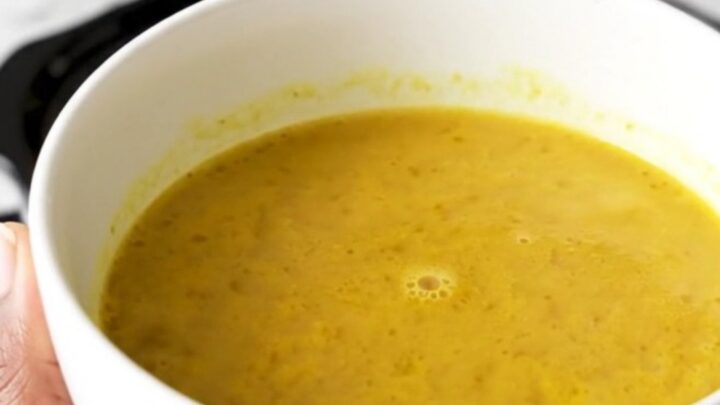
- Blend and serveUse an immersion blender directly in the slow cooker to process the mixture until smooth and velvety. If the soup is too thick, stir in a splash of water or additional broth until the desired consistency is achieved.Look for The soup is bright yellow, glossy, and completely smooth.Tip If you do not have an immersion blender, transfer the soup in batches to a standard blender, being careful with the hot liquid.
The final phase involves turning the soft vegetables into a uniform, golden-yellow soup. Use the immersion blender to achieve a glossy finish. The soup should be thick enough to coat the back of a spoon, indicating it is ready to be served hot.
Common mistakes
Avoid adding too much liquid at the start; it is easier to thin the soup later than to thicken it. Ensure the squash cubes are roughly the same size to prevent some pieces from remaining hard while others turn to mush.
Do not over-process the soup if you prefer a slightly rustic texture, but for a classic velvety finish, blend until completely smooth. Finally, never fill the slow cooker more than two-thirds full to prevent the soup from bubbling over the edges during the long cooking process.
How to tell it’s done
The soup is finished when the butternut squash is completely tender and breaks apart under the slight pressure of a fork. The liquid should have reduced slightly, and the mixture should appear thick, glossy, and uniform in color.
When you blend the soup, it should reach a smooth, velvety consistency without any large chunks remaining. Taste the soup and adjust the seasoning with salt or pepper if necessary before serving, ensuring the curry flavors have fully developed and mellowed into the base.
Up next · Part 3 of 3
2 variations · storage & make-ahead · 3 answers · printable card
Tips, FAQ & printable recipe (Part 3)← Back to the ingredients (Part 1)