Dinner · Part 1 of 3: Ingredients
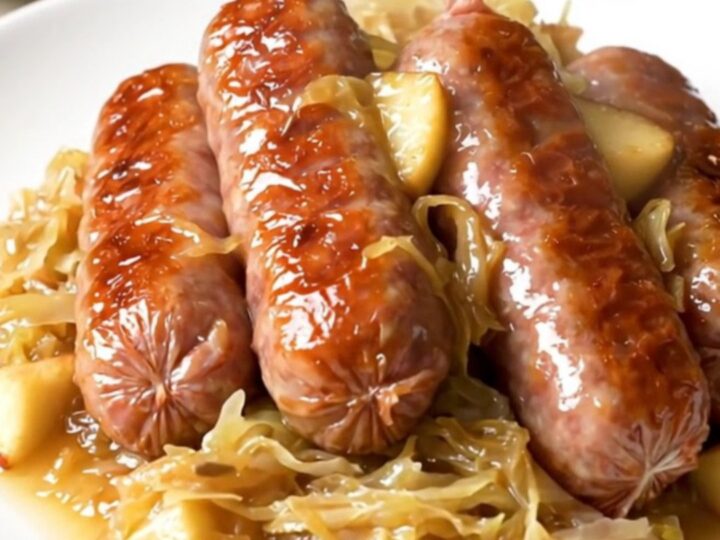
Slow Cooker Bratwurst and Sauerkraut Apple Bake
- Prep
- Cook
- Total
- Serves
- 4
Elevate your weeknight dinner rotation with this incredibly simple, hands-off slow cooker bratwurst and sauerkraut apple bake. By combining classic German-inspired flavors with the convenience of modern kitchen appliances, this recipe delivers a hearty and satisfying meal that is perfect for busy schedules without compromising on taste or quality.
The beauty of this dish lies in the harmonious contrast between the savory, rich bratwurst and the bright, acidic bite of fermented sauerkraut. Adding shredded apples introduces a subtle sweetness that tempers the sharpness of the kraut, while caraway seeds provide a traditional aromatic finish.
The apple juice acts as a braising medium, keeping the meat moist and tender as it slowly cooks to perfection. This preparation is designed for those who appreciate robust, rustic flavors and want a reliable, fuss-free approach to preparing a complete meal that feels special enough for a weekend gathering but simple enough for any Tuesday night.
Ingredients
- 4 links raw bratwurst
- 1 lb sauerkraut, drained
- 2 medium apples, shredded
- 2 tbsp brown sugar
- 1 tsp caraway seeds
- 1 cup apple juice
Why this recipe works
The slow cooker method is ideal for bratwurst because it allows the meat to braise gently, ensuring that it remains succulent and juicy rather than drying out. The moisture from the apple juice and the juices released by the apples and sauerkraut create a flavorful environment that infuses the sausage with depth and complexity over the four-hour cooking period. This slow process breaks down the fibers in the meat and softens the sauerkraut just enough to mellow its acidity, resulting in a cohesive dish where every bite carries a balanced profile of savory, sweet, and tangy notes.
Layering the ingredients serves a specific culinary purpose in this recipe. By placing the sausages at the very bottom, they are closest to the heat source, which initiates the cooking process and allows their rendered fat to permeate the sauerkraut and apples sitting above.
The shredded apples act as a sponge, absorbing the juices and the flavor of the caraway seeds, while the brown sugar caramelizes slightly into the liquid, creating a rich base. This vertical layering ensures that the components interact optimally, resulting in a final dish that is layered with texture and flavor depth without requiring any additional stirring or monitoring.
Notes and substitutions
For the best results, select high-quality raw bratwurst from a local butcher or supermarket meat counter. The flavor of the entire dish depends on the quality of the sausage, so choose a version with a good balance of pork and traditional spices like nutmeg, ginger, or marjoram.
If the brats are sold in a long coil, cut them into individual links to ensure they cook evenly and fit comfortably in the slow cooker basin. The sauerkraut should be a traditional variety; avoid versions with excessive added sugar or strange flavorings, as you will be adding your own sweetness with the apples and brown sugar.
When it comes to equipment, any standard oval or round slow cooker will work perfectly for this recipe. If you find that your apples are particularly large, you may want to peel them before shredding to achieve a more uniform texture, although leaving the skin on provides a nice rustic appearance and additional fiber.
The box grater is the most efficient tool for shredding the apples quickly; ensure you stop grating before you reach the core to avoid any woody bits. If you do not have caraway seeds, you can substitute with a small amount of fennel seeds, though the flavor will be slightly more anise-forward.
- apple juice: dry hard cider or vegetable broth for a less sweet flavor profile
- brown sugar: maple syrup or honey for a different depth of sweetness
Equipment
- slow cooker
- box grater
- measuring cups
- measuring spoons
Up next · Part 2 of 3
3 steps · 4 h of cooking · what to look for at each stage
Step-by-step instructions (Part 2)