Dinner · Part 2 of 3: Instructions
Slow Cooker Braised Savoy Cabbage with Potatoes and Carrots Step-by-step instructions
- Prep
- Cook
- Total
- Serves
- 4
Before you start
Ensure all vegetables are thoroughly washed before preparation. Shred the cabbage into uniform ribbons to ensure it wilts evenly. Peel and cut the potatoes and carrots into consistent sizes, which is vital for uniform cooking times.
Have the butter and vegetable broth measured and ready to go. Before starting, confirm that your slow cooker is clean and positioned on a stable, heat-resistant surface with the power cord securely connected to an outlet.
Ingredients at a glance (5)
- 1 head Savoy cabbage, shredded
- 4 medium potatoes, cut into wedges
- 3 medium carrots, sliced
- 3 tbsp butter, cut into pats
- 1 cup vegetable broth
Instructions
Vegetable Preparation
- Prepare the vegetablesShred the Savoy cabbage into ribbons. Cut the potatoes into thick wedges and slice the carrots into rounds. Ensure the vegetables are cleaned and prepped before beginning the layering process in the slow cooker base.Look for Vegetables should be uniform in size to ensure even cooking throughout the slow cooker.Tip Keep the potato wedges roughly the same size to ensure they cook at the same rate as the carrots.
The cabbage is shredded into ribbons, potatoes are cut into uniform wedges, and carrots are sliced into rounds. All vegetables are clean, prepped, and ready to be assembled in the slow cooker base. Ensure the cutting board and knife are clean before moving to the next stage of the assembly.
Assembly and Layering
- Layer the ingredientsPlace the shredded cabbage into the bottom of the slow cooker. Scatter the potato wedges and carrot slices evenly over the cabbage. Distribute the butter pats across the top of the vegetables.Look for The cabbage forms a bed for the harder vegetables to steam in the broth.Tip Do not pack the vegetables too tightly, as this allows the steam to circulate properly.
The cabbage rests at the bottom, topped with potatoes and carrots, finished with butter pats. The ingredients look structured and organized.
This phase confirms that the layering is correct, providing the necessary foundation for the vegetables to steam properly during the long, slow cooking process that follows.
Braising and Cooking
- Add liquid and cookPour the vegetable broth over the vegetables and butter. Cover the slow cooker with its lid and cook on low for 4 to 6 hours or on high for 2 to 3 hours until everything is tender and steaming.Look for The vegetables are done when they are fork-tender and the cabbage has wilted completely.Tip Check the tenderness of the potatoes with a fork to ensure they are cooked through before serving.
The vegetable broth is poured over the layers, and the lid is secured. The slow cooker is active, and the ingredients are beginning to soften. Check that the liquid level is sufficient to support the steaming process, then allow the heat to transform the raw vegetables into a tender, integrated meal.
Common mistakes
A common mistake is cutting the potato wedges too large, which may result in them remaining firm while the cabbage overcooks. Conversely, overcrowding the slow cooker can prevent even steam circulation, leading to unevenly cooked vegetables.
Avoid lifting the lid repeatedly during the cooking process, as this releases heat and steam, significantly increasing the total time needed. Finally, ensure the butter is distributed evenly rather than placed in one spot to guarantee consistent flavor throughout the entire batch.
How to tell it’s done
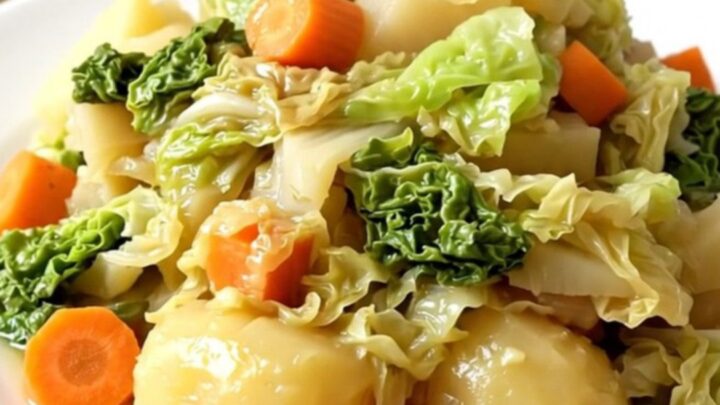
The dish is considered done when the potatoes are fork-tender and offer no resistance when pierced. The cabbage should be soft, wilted, and have absorbed the majority of the broth. The carrots should be easily cut with a fork but still hold their shape.
Because this is a vegetable-only dish, there are no internal temperature requirements; rely entirely on the visual and textural cues of the vegetables to ensure they are cooked through and ready to be served.
Up next · Part 3 of 3
2 variations · storage & make-ahead · 3 answers · printable card
Tips, FAQ & printable recipe (Part 3)← Back to the ingredients (Part 1)