Dinner · Part 2 of 3: Instructions
Slow Cooker Braised Red Cabbage with Apples Step-by-step instructions
- Prep
- Cook
- Total
- Serves
- 6
Before you start
Before starting, ensure all ingredients are properly cleaned and prepared. Remove the outer, tougher leaves of the red cabbage, cut it into quarters, and remove the thick central core. Shred the cabbage into thin, uniform strips using a sharp knife or a mandoline.
Peel and core the apples, then cut them into thin slices. Ensure your slow cooker is clean and positioned on a stable, heat-resistant surface near an electrical outlet, away from the edge of the counter.
Ingredients at a glance (4)
- 1 head red cabbage, shredded
- 2 large apples, sliced
- 2 tbsp brown sugar
- 1/2 cup vegetable broth
Instructions
Layering the Ingredients
- Prepare the BasePlace the shredded red cabbage directly into the slow cooker bowl. Scatter the sliced apples evenly over the top of the cabbage to ensure they distribute their sweetness throughout the dish during the long cooking process.Look for The cabbage should fill the slow cooker comfortably without being packed too tightly.Tip Removing the core of the cabbage before shredding ensures a better texture.
At this stage, the slow cooker is filled with raw cabbage and apple slices. The ingredients should be layered loosely to allow the heat to circulate.
Check that the cabbage is shredded evenly and that the apples are distributed across the surface to ensure they flavor the cabbage as they soften.
Adding Moisture and Sugar
- Add Seasoning and LiquidSprinkle the brown sugar over the apples and cabbage. Pour the vegetable broth over the mixture, ensuring it reaches the bottom of the slow cooker to provide enough moisture for steaming and braising.Look for The liquid will settle at the bottom of the slow cooker, creating a flavorful steaming environment.Tip Use a low-sodium vegetable broth to maintain better control over the final saltiness.
The brown sugar and vegetable broth have been added. The liquid is visible at the bottom of the slow cooker. Ensure the sugar is sprinkled evenly rather than clumped in one spot. The mixture is now ready to begin the long, slow braising process under the lid.
Final Braising and Finishing
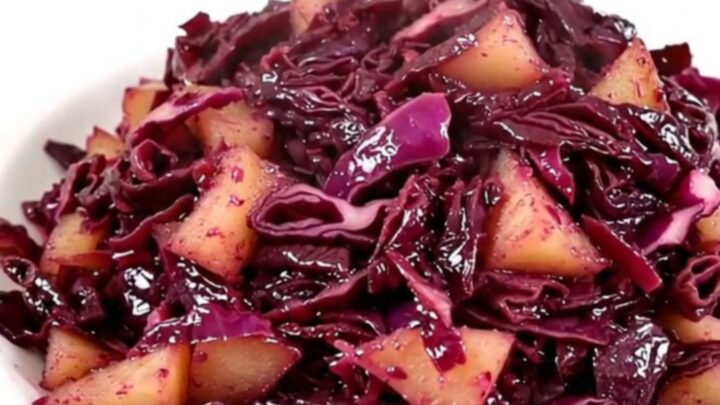
- Cook and ServeCover the slow cooker and cook on low for four hours. Once the time is up, stir the mixture gently to combine the softened cabbage and apples with the accumulated juices. Serve warm.Look for The cabbage should be tender and glossy, and the apples should be very soft.Tip Stirring helps to coat everything evenly in the flavorful braising liquid.
The cabbage is now fully cooked and tender. The liquid has reduced into a glossy, flavorful sauce that coats the cabbage. After a final stir to combine everything, the dish should be vibrant, aromatic, and ready to serve as a warm, comforting accompaniment to your main course.
Common mistakes
A common mistake is overcrowding the slow cooker with too much cabbage, which can prevent even cooking; however, the cabbage will wilt quickly, so this is rarely an issue after the first hour. Another error is failing to stir the dish after it has finished cooking.
Stirring is vital to distribute the natural sugars and juices from the apples evenly throughout the cabbage. Finally, avoid using overly sweet apples, as the combination of brown sugar and sweet fruit can make the dish cloying rather than balanced.
How to tell it’s done
The dish is considered done when the cabbage is completely tender and has reached a dark, vibrant purple hue. The apples should be soft and partially broken down, having contributed their juices to the braising liquid.
The mixture should appear glossy and moist, not dry. There is no specific internal temperature required for this dish, but it should be steaming hot throughout, indicating that the flavors have properly melded and the cabbage has reached its optimal texture.
Up next · Part 3 of 3
2 variations · storage & make-ahead · 3 answers · printable card
Tips, FAQ & printable recipe (Part 3)← Back to the ingredients (Part 1)