Dinner · Part 1 of 3: Ingredients
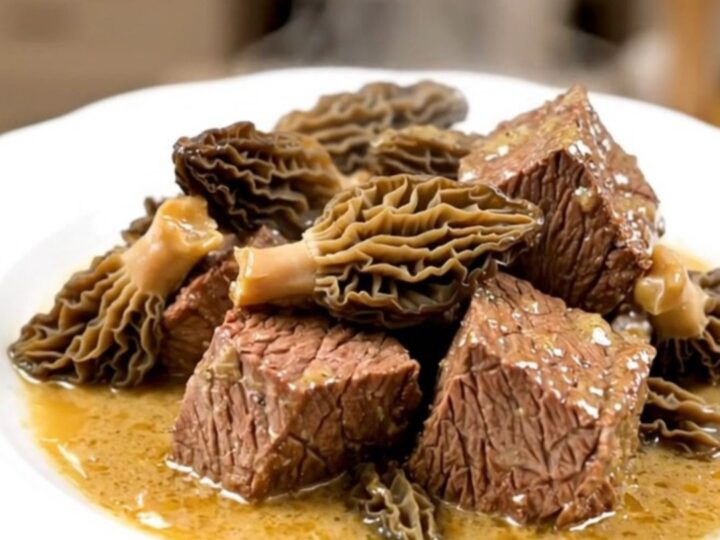
Slow-Cooker Braised Beef with Vin Jaune and Morels
- Prep
- Cook
- Total
- Serves
- 4
Discover the art of French home cooking with this slow-cooked beef recipe, where the unique, nutty profile of Vin Jaune wine meets the intense, earthy flavor of dried morel mushrooms. This dish transforms modest ingredients into a restaurant-quality meal with minimal active effort, making it ideal for those who appreciate deep, nuanced flavors in their cooking without spending hours standing at the stove.
Braised beef is a cornerstone of French comfort food, and this version leans into the classic pairing of Vin Jaune—a specialized wine from the Jura region—and wild morel mushrooms. By utilizing a slow cooker, the beef fibers break down slowly, allowing the wine and stock to penetrate the meat thoroughly.
The resulting sauce is velvety and rich, clinging to the tender beef and providing a sophisticated finish that feels luxurious and perfectly balanced for a quiet, elegant dinner at home.
Ingredients
Main
- 1 1/2 lb beef cubes, suitable for braising
- 1 cup dried morel mushrooms, rehydrated
- 2 shallots, thinly sliced
- 2 tbsp veal stock powder
- 1/2 cup Vin Jaune
Why this recipe works
The slow cooking process is essential for breaking down the connective tissue in the beef cubes, ensuring the meat becomes incredibly tender. Because the slow cooker maintains a consistent, low-temperature environment, the moisture is trapped inside, which prevents the beef from drying out. This long, gentle braise allows the complex, oxidative notes of the Vin Jaune to mellow while infusing the beef with a deep, savory character that defines high-end French cuisine.
Using a slow cooker for this dish provides a hands-off approach that guarantees consistent results. The method relies on the evaporation of alcohol from the wine, which leaves behind its concentrated, nutty acidity.
This acidity works perfectly with the umami-rich morel mushrooms and the savory profile of the veal stock. The ingredients essentially steam in their own juices, creating a self-contained sauce that requires no thickening agents, resulting in a clean, professional finish.
Notes and substitutions
Selecting the right beef is crucial for this recipe. Choose cuts that are suitable for long braising, such as chuck roast, which has enough fat and connective tissue to become succulent over several hours.
Avoid lean cuts like sirloin, as they will turn tough and dry during the extended cooking time. If you cannot find Vin Jaune, a high-quality dry sherry is the closest substitute, as it mimics that characteristic oxidative, nutty flavor profile required for the authentic sauce experience.
Dried morel mushrooms are preferred here for their concentrated flavor, which is significantly more intense than fresh varieties. Always ensure you rehydrate them in warm water until they are soft and plump before adding them to the slow cooker.
If you decide to use fresh mushrooms, increase the quantity slightly to account for the higher water content. The equipment needed is minimal, but ensure your slow cooker is clean and the lid fits tightly to maintain the necessary braising environment.
- Vin Jaune: A dry, nutty sherry or a dry white wine mixed with a drop of sherry vinegar
- Morel mushrooms: Dried porcini mushrooms or cremini mushrooms
Equipment
- slow cooker
- measuring cups
- sharp chef knife
- cutting board
Up next · Part 2 of 3
3 steps · 6 h of cooking · what to look for at each stage
Step-by-step instructions (Part 2)