Dinner · Part 1 of 3: Ingredients
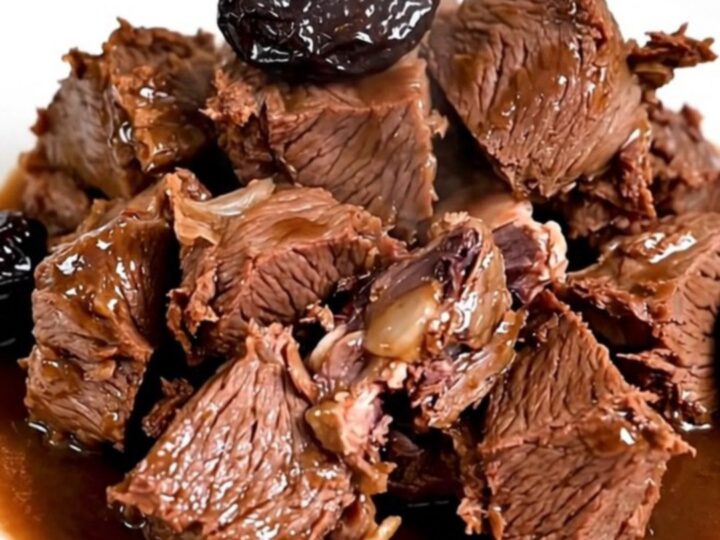
Slow Cooker Braised Beef with Prunes and Rich Red Wine Sauce
- Prep
- Cook
- Total
- Serves
- 4
Elevate your weeknight dinner with this slow-cooked beef braised in red wine and sweet prunes. This French-inspired dish relies on the gentle, steady heat of a slow cooker to transform tough cuts of meat into melt-in-your-mouth perfection, creating a rich and aromatic sauce that pairs beautifully with the natural sweetness of the prunes.
Braised beef is a classic comfort dish that thrives on patience and simple, high-quality ingredients. By combining beef chuck with the deep tannins of a Cahors red wine and the concentrated sweetness of prunes, you create a complex flavor profile that feels refined yet requires very little active effort.
The slow cooker does the heavy lifting, allowing the flavors to meld and the meat to tenderize over several hours. This recipe is an excellent choice for those who appreciate traditional cooking methods but need a hands-off approach to managing their evening meal preparation in a busy kitchen environment.
Ingredients
Main Ingredients
- 2 lb beef chuck roast, cut into 2-inch chunks
- 3 medium shallots, peeled and halved
- 1 cup pitted prunes
Seasoning
- 1/2 tsp ground cinnamon
- 1 tbsp veal stock powder
Liquid
- 1 1/2 cups Cahors red wine
Why this recipe works
The slow cooker method provides a consistent, low-temperature environment that is ideal for breaking down the tough connective tissues found in beef chuck.
Over several hours, this process converts collagen into gelatin, which not only tenderizes the meat but also adds a luxurious, silky mouthfeel to the braising liquid. The low heat prevents the liquid from evaporating too quickly, ensuring the meat remains moist and flavorful throughout the entire cooking duration.
Using a combination of veal stock powder and a full-bodied red wine builds a deep, umami-rich base for the sauce. The prunes act as a sweet contrast to the savory elements, releasing their natural sugars and fruitiness into the braising liquid. As the wine reduces during the slow cooking process, it concentrates, resulting in a glossy, flavorful reduction that coats the beef perfectly without the need for additional thickeners or complex culinary techniques.
Notes and substitutions
Beef chuck is the preferred cut for this recipe due to its excellent ratio of fat to lean meat, which is necessary for long-term braising. When selecting your wine, choose a dry red that you would enjoy drinking, as the flavor will be concentrated during the cooking process.
A Cahors or other Malbec-based wine works exceptionally well, but any dry, full-bodied red wine will yield delicious results. Ensure the veal stock powder is fully dissolved or integrated so it contributes evenly to the final sauce consistency.
The choice of slow cooker can affect the cooking time, so it is recommended to start checking the tenderness of the meat around the six-hour mark. If your slow cooker has a particularly hot setting, you may find that the cooking time is slightly reduced.
Always ensure that the lid fits snugly to maintain the necessary moisture levels. While the recipe calls for specific amounts, these can be adjusted slightly based on the size of your slow cooker and the amount of beef you intend to prepare.
- Cahors red wine: Any full-bodied dry red wine such as Malbec or Cabernet Sauvignon
- Veal stock powder: Beef bouillon powder or concentrated beef base
Equipment
- Slow cooker
- Measuring cup
- Spoon
- Cutting board
- Knife
Up next · Part 2 of 3
3 steps · 6 h of cooking · what to look for at each stage
Step-by-step instructions (Part 2)