Dinner · Part 2 of 3: Instructions
Slow Cooker Braised Beef Shank in Chinon Wine Step-by-step instructions
- Prep
- Cook
- Total
- Serves
- 4
Before you start
Before starting, ensure your beef shank is clean and free of any large, hard pieces of gristle that might impede the cooking process. Peel your carrots and cut them into uniform sticks so they cook through at the same rate as the beef.
Have your measuring cup ready to pour the wine accurately and ensure your slow cooker is plugged into a reliable power source. Organize your workspace so that the ingredients are ready to be layered directly into the slow cooker basin without unnecessary delay.
Ingredients at a glance (4)
- 2 lb beef shank
- 4 large carrots, peeled and cut into sticks
- 1 cube beef bouillon cube
- 1 cup Chinon wine
Instructions
Layering the Ingredients
- Assemble the basePlace the beef shank chunks into the bottom of the slow cooker basin. Arrange the prepared carrot sticks evenly over the top of the beef. Crumble the beef bouillon cube over the ingredients to ensure even distribution of seasoning.Look for The beef is at the bottom and the carrots are layered on top.Tip Ensure the carrots are cut into uniform sticks to cook evenly.
The base is established with the beef shank at the bottom, topped with carrots and the bouillon cube. Everything is ready to receive the wine, ensuring that the flavors will meld together effectively as the slow cooker begins its work.
Adding the Wine
- Add the winePour the Chinon wine over the beef and carrots. Ensure the wine covers the ingredients partially, though the slow cooking process will release enough juices to create a rich braising liquid.Look for The wine should surround the beef and carrots.Tip Use a room temperature wine to avoid cooling the slow cooker base too quickly.
The wine is poured over the beef and carrots, providing the necessary acidity and depth. The liquid should look clear and aromatic, coating the ingredients to facilitate the braising process that will transform the textures over the next several hours.
Slow Cooking and Resting
- Slow cook and serveCover the slow cooker and cook on the low setting for 8 hours until the meat is fork-tender. Once cooked, let the meat rest for 5 minutes before serving. Verify that the internal temperature of the beef reaches 145°F (63°C) before consumption.Look for The beef should be falling apart easily when poked with a fork.Safe temperature 145°F (63°C) internal temperature (steaks, chops and roasts)Tip Do not open the lid frequently as this releases heat and moisture.
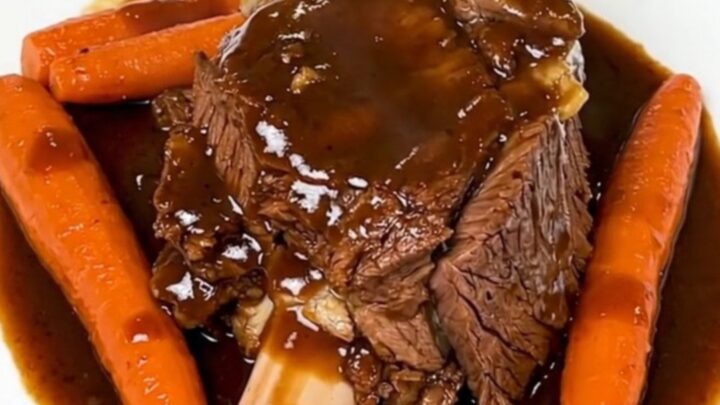
The beef has finished its long, slow braise and is now fork-tender and succulent. The sauce has reduced slightly into a rich, aromatic glaze. After the required resting period, the dish is ready to be plated and served while hot.
Common mistakes
A common mistake is using a wine that is too sweet or too light, which can overwhelm the natural flavor of the beef. Avoid using a high-heat setting, as this can cause the meat to toughen rather than tenderize.
Do not lift the lid during the first few hours of cooking, as this significantly drops the temperature and extends the cooking time. Finally, ensure the bouillon is crumbled thoroughly, as large clumps can lead to uneven seasoning throughout the braising liquid.
How to tell it’s done
The beef is done when it is fork-tender and pulls away easily from the bone. The internal temperature must reach at least 145°F (63°C) to be considered safe for consumption.
Because slow cooking is a gentle process, the meat will reach a point where it is extremely soft and yields to the slightest pressure.
Ensure you allow the meat to rest for at least 5 minutes after removing it from the slow cooker to allow the juices to redistribute properly before serving.
- Steaks, chops and roasts: 145°F (63°C) in the thickest part, then a 3-minute rest
Up next · Part 3 of 3
2 variations · storage & make-ahead · 3 answers · printable card
Tips, FAQ & printable recipe (Part 3)← Back to the ingredients (Part 1)