Dinner · Part 2 of 3: Instructions
Slow Cooker Braised Beef Chuck with Garlic and Rosemary Step-by-step instructions
- Prep
- Cook
- Total
- Serves
- 4
Before you start
Before you begin, ensure your slow cooker is clean and positioned on a stable, heat-resistant surface near a power outlet. Have all ingredients measured and prepared. Cut the carrots into thick, uniform batons to ensure they maintain their structure throughout the long cooking process.
If your beef is in one large piece, cut it into consistent chunks of about two inches each to help it cook evenly. Keep the beef chilled until the exact moment you are ready to place it into the slow cooker for food safety.
Ingredients at a glance (5)
- 2 lb beef chuck, cut into large chunks
- 3 large carrots, cut into thick sticks
- 6 cloves garlic, whole and unpeeled
- 3 sprigs fresh rosemary
- 1 1/2 cups warm beef broth
Instructions
Preparation and Layering
- Assemble the IngredientsPlace the beef chuck pieces in the bottom of the slow cooker insert. Arrange the thick carrot sticks and the whole, unpeeled garlic cloves around the meat. Lay the fresh rosemary sprigs directly across the beef to ensure the aromatics infuse the meat as it cooks.Look for Ingredients are layered evenly in the cooker.Tip Keep the garlic unpeeled as the skins help keep the cloves intact during the long cooking process.
At this phase, the raw beef and aromatics should be neatly arranged in the bottom of the slow cooker. Ensure the garlic cloves are distributed evenly throughout the pot and the rosemary sprigs are placed on top. The ingredients should look organized and fresh, ready to begin the slow transformation into a tender, flavorful main course once the broth is added and the lid is secured.
Slow Cooking Process
- Add Liquid and Slow CookPour the warm beef broth over the beef and vegetables until they are partially submerged. Cover the slow cooker with its lid. Set the device to the low setting and cook for 8 hours until the beef is fork-tender and the connective tissue has completely broken down.Look for Liquid level covers the base of the ingredients.Tip Warm the broth before adding to help the slow cooker reach the required temperature more efficiently.
During this phase, the slow cooker will be working to break down the beef fibers. You should notice a pleasant, savory aroma beginning to fill the kitchen as the rosemary and garlic infuse the cooking liquid.
The liquid will begin to darken and thicken as the juices from the beef and carrots mingle with the broth, creating a deep, complex flavor profile that characterizes a successful braise.
Final Temperature and Resting
- Check Final Temperature and RestOnce the cooking time is complete, verify that the beef has reached an internal temperature of at least 145°F (63°C). Carefully remove the beef to a cutting board and let it rest for at least 3 minutes before serving to ensure the juices redistribute throughout the meat for maximum tenderness.Look for Meat is extremely tender and pulls apart easily with a fork.Safe temperature 145°F (63°C) internal temperature (steaks, chops and roasts)Tip Discard the rosemary stems and garlic skins before plating the finished dish for a cleaner presentation.
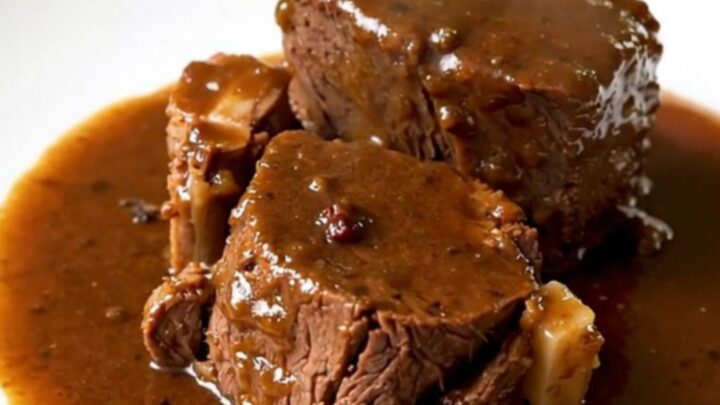
At the final stage, the beef should be incredibly soft and tender. The liquid should be glossy and reduced, coating the beef chunks. Check that the beef has reached the safe internal temperature of 145°F (63°C). The meat should be easily pierced with a fork, and the carrots should be tender but not mushy. Ensure the meat rests for three minutes before serving to achieve the perfect texture.
Common mistakes
A common mistake is adding too much liquid, which can result in a thin, watery sauce rather than a rich, flavorful gravy. Use only the specified amount of broth to ensure the flavors remain concentrated.
Another error is checking the food too frequently; opening the lid releases trapped heat and steam, significantly increasing the total cooking time and potentially drying out the meat. Avoid using pre-peeled garlic, as the cloves will disintegrate into the sauce rather than staying whole for a better texture.
How to tell it’s done
The beef is done when it is fork-tender and can be easily shredded with minimal pressure. Use a digital meat thermometer to confirm the internal temperature of the thickest piece of beef has reached at least 145°F (63°C).
The meat should appear dark, glossy, and surrounded by a rich, reduced gravy. If the meat offers resistance when pierced, continue cooking for an additional thirty minutes before checking again. Always allow the meat to rest for at least 3 minutes before serving.
- Steaks, chops and roasts: 145°F (63°C) in the thickest part, then a 3-minute rest
Up next · Part 3 of 3
2 variations · storage & make-ahead · 3 answers · printable card
Tips, FAQ & printable recipe (Part 3)← Back to the ingredients (Part 1)