Dinner · Part 2 of 3: Instructions
Slow Cooker Braised Beef Chuck Pot-au-Feu with Horseradish Step-by-step instructions
- Prep
- Cook
- Total
- Serves
- 4
Before you start
Before beginning, ensure the slow cooker is placed on a stable, heat-resistant surface near an outlet. Prepare the ingredients by peeling the carrots and cutting the turnips into uniform halves to ensure they cook at the same rate.
Pat the beef chuck dry with paper towels to remove excess moisture, which helps in achieving a clean sear if desired, though adding raw is fine for this method. Have all components ready to assemble quickly so the slow cooker can be started without delay, ensuring a seamless workflow in the kitchen.
Ingredients at a glance (5)
- 2 lbs beef chuck, sliced into thick pieces
- 4 whole carrots, peeled and trimmed
- 3 turnips, halved
- 1 tbsp grated horseradish
- 2 cups golden beef broth
Instructions
Assembly and layering
- Prepare the slow cookerArrange the beef chuck slices evenly across the bottom of the slow cooker to ensure uniform cooking. Place the peeled whole carrots and halved turnips around the meat to create a balanced base for the stew.Look for Vegetables should be tucked snugly around the meat without overcrowding the cooker.Tip Ensure the beef is in a single layer if possible for even heat distribution.
The slow cooker should be filled with the beef slices at the base, topped with the carrots and turnips. The ingredients should be arranged in a way that allows the broth to circulate effectively. Ensure the horseradish is distributed evenly to prevent pockets of intense flavor. The setup should look organized and ready for the long, slow heat to begin transforming the raw components into a cohesive, aromatic stew.
Seasoning and braising start
- Add seasoning and liquidAdd the grated horseradish directly onto the beef and vegetables, then carefully pour the beef broth over the ingredients until they are partially submerged. Cover the slow cooker tightly with its lid to lock in the moisture.Look for The broth should reach about halfway up the ingredients, not covering them completely.Tip Using a low-sodium broth allows for better control over the final seasoning of the dish.
Once the broth is poured, the ingredients should be partially submerged, creating an environment perfect for moist heat cooking. The kitchen should begin to fill with the savory scent of the beef and broth. Ensure the lid is properly seated on the slow cooker. At this point, the process is entirely passive, and the goal is to maintain a steady low heat to begin the slow breakdown of the beef fibers.
Final cooking and tenderization
- Slow cook and serveCook on the low setting for 8 hours until the beef reaches an internal temperature of at least 145°F (63°C). Once finished, allow the beef to rest for 5 minutes before serving the tender meat and vegetables with the flavorful broth, ensuring the meat is fully cooked through.Look for The beef should be fork-tender and pull apart easily with minimal pressure.Safe temperature 145°F (63°C) internal temperature (steaks, chops and roasts)Tip Removing excess fat from the surface of the broth before serving provides a cleaner taste.
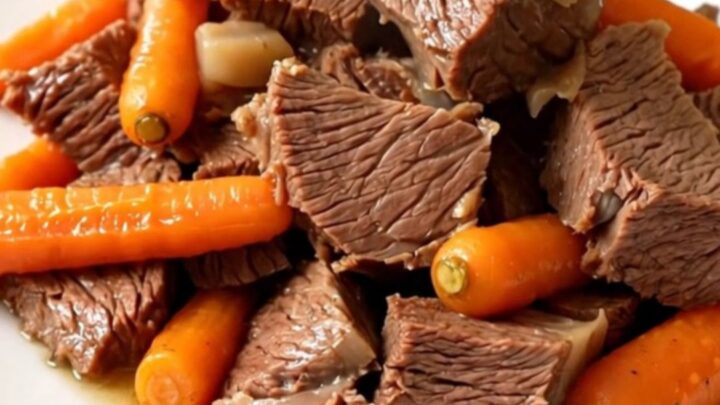
After 8 hours, the beef should be incredibly tender and the vegetables should be perfectly cooked. The liquid will have reduced slightly, concentrating the flavors. The meat should be easily pierced with a fork, signaling it is ready to serve.
Check that the internal temperature has reached the safe threshold of 145°F (63°C). The dish should look rich, steaming, and inviting, with the vegetables maintaining their shape despite the long braise.
Common mistakes
A common mistake is using a cut of meat that is too lean, such as sirloin, which will dry out and become tough during the long cooking process; always choose a cut with good marbling.
Another error is cutting the vegetables too small, which causes them to disintegrate into the broth. Avoid opening the lid frequently, as each time the lid is lifted, heat escapes and the cooking time is extended, which can lead to uneven results and a less tender final product.
How to tell it’s done
The beef is done when it is fork-tender, meaning it should shred easily with a fork without any resistance. The internal temperature of the beef must reach at least 145°F (63°C) to be safely consumed. The carrots and turnips should be soft enough to be pierced easily with a knife.
The broth will have darkened and thickened slightly, carrying the distinct scent of slow-cooked beef and the sharp, clean aroma of the horseradish. Allow the beef to rest for 5 minutes before serving to ensure maximum juiciness.
- Steaks, chops and roasts: 145°F (63°C) in the thickest part, then a 3-minute rest
Up next · Part 3 of 3
2 variations · storage & make-ahead · 3 answers · printable card
Tips, FAQ & printable recipe (Part 3)← Back to the ingredients (Part 1)