Dinner · Part 1 of 3: Ingredients
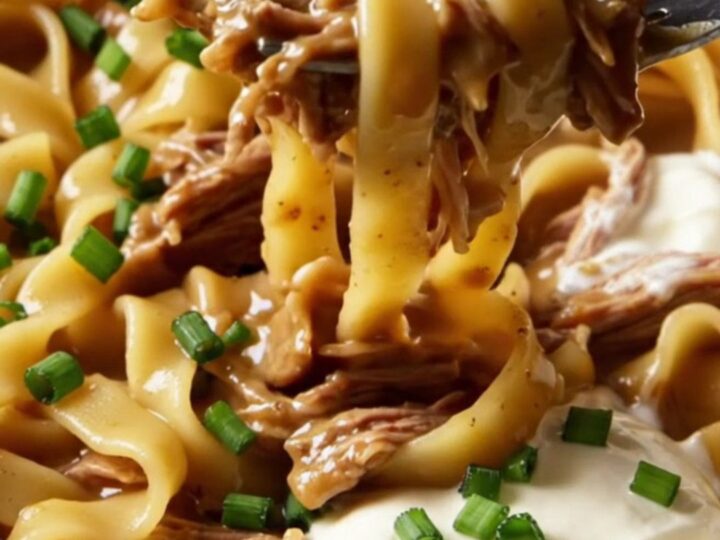
Slow Cooker French Onion Brisket Noodles
- Prep
- Cook
- Total
- Serves
- 6
This slow cooker brisket noodle dish is the definition of comfort food. A well-marbled beef brisket simmers all day with sweet onions, savory French onion soup mix, and rich beef stock until it's fall-apart tender.
Then it's tossed with ruffled mafaldine noodles and a touch of sour cream for a creamy, silky gravy that clings to every ribbon. The result is a deeply satisfying dinner that tastes like it took hours of hands-on work, but the slow cooker does all the heavy lifting.
There's something magical about a cut of beef that transforms into spoon-tender perfection after hours in a slow cooker. This recipe starts with a 3-pound brisket, layered with sliced onions and a packet of French onion soup mix, then braised low and slow in beef stock and Worcestershire.
After seven hours, the meat shreds into thick, juicy strands. The cooking liquid becomes a rich, oniony gravy that coats ruffled mafaldine noodles beautifully. A final stir of sour cream adds a subtle tang and velvety texture, making every bite luxurious. It's a simple dump-and-go meal that delivers big, comforting flavors.
Ingredients
- 3 lb beef brisket, trimmed
- 2 yellow onions, sliced
- 1 packet French onion soup mix
- 2 cups beef stock
- 2 tbsp Worcestershire sauce
- 16 oz mafaldine noodles
- 1 cup sour cream
- Fresh chives, snipped, for serving
Why this recipe works
The slow cooker does all the work here, turning a tough, economical cut like brisket into buttery-soft meat. Low, steady heat breaks down the collagen in the beef, transforming it into gelatin that enriches the sauce and gives the meat its melt-in-your-mouth texture.
The French onion soup mix adds a concentrated savory depth, while the onions caramelize slowly, lending natural sweetness to the gravy.
Tossing the noodles directly into the slow cooker with the beef and sauce means every ribbon gets coated in that glossy, flavorful gravy. The sour cream stirred in at the end adds a touch of richness and a slight tang that balances the beefy, oniony flavors. It's a one-pot wonder that feels indulgent yet is surprisingly simple to put together.
Notes and substitutions
Brisket is ideal for slow cooking because of its high fat and collagen content. If you can't find brisket, chuck roast or short ribs work well too.
Look for a piece that's well-marbled and about 3 pounds. Trim excess fat if needed, but leave some for flavor and moisture. The onions should be sliced thinly so they soften and meld into the gravy.
Mafaldine noodles, with their ruffled edges, are perfect for catching the thick sauce. If you can't find them, pappardelle or fettuccine are great substitutes. For the sour cream, use full-fat for the creamiest result; low-fat can sometimes curdle. Fresh chives are optional but add a lovely oniony freshness that brightens the dish.
- beef brisket: Chuck roast or short ribs can be used; adjust cooking time as needed until shreddable.
- mafaldine noodles: Pappardelle or fettuccine work well; cook according to package directions.
- sour cream: Plain Greek yogurt can replace sour cream for a tangy finish.
- beef stock: Chicken stock or water with a splash of soy sauce can be used in a pinch.
Equipment
- Slow cooker (6-quart or larger)
- Large pot for boiling noodles
- Colander
- Tongs
- Two forks for shredding
- Measuring cups and spoons
Up next · Part 2 of 3
6 steps · 7 h of cooking · what to look for at each stage
Step-by-step instructions (Part 2)