Dinner · Part 2 of 3: Instructions
Slow-Cooker Boursin Chicken Vodka Ravioli Step-by-step instructions
- Prep
- Cook
- Total
- Serves
- 6
Before you start
Before starting, cut the chicken breasts into 1-inch cubes and measure the sauce and cheese. If using fresh ravioli, keep them refrigerated until ready to use.
If you prefer a thicker sauce, have some cornstarch slurry ready (1 tbsp cornstarch mixed with 2 tbsp water) to stir in at the end. Set out all ingredients and the slow cooker. No need to preheat the slow cooker or brown the chicken — this recipe is designed for the dump-and-go method.
Ingredients at a glance (5)
- 2 lb boneless skinless chicken breasts, cut into 1-inch cubes
- 20 oz jumbo four-cheese ravioli (fresh or frozen)
- 24 oz tomato-vodka cream sauce
- 1 wheel garlic-and-fine-herbs Boursin cheese (5.2 oz)
- 1 1/2 cups shredded Italian fontina cheese
Instructions
Layer and Cook
- Layer the IngredientsPlace the cubed chicken breasts in the bottom of a 6-quart slow cooker in an even layer. Spread the jumbo four-cheese ravioli over the chicken, then pour the tomato-vodka cream sauce evenly over the top. Place the wheel of garlic-and-herb Boursin cheese in the center of the sauce, and scatter the shredded fontina over everything.Look for The slow cooker should be filled about three-quarters full, with the sauce covering most of the ravioli.Tip No need to stir — the layers will meld as they cook. Keep the Boursin whole so it melts slowly into the sauce.
- Cook on LowCover the slow cooker and cook on low for 4 hours, or until the chicken is cooked through and tender and the ravioli are al dente. Avoid opening the lid during cooking to keep the heat steady.Look for The sauce will be bubbling gently around the edges, and the cheese will be melted and creamy.Safe temperature 165°F (74°C) internal temperature (poultry)Tip If using frozen ravioli, check at 3 1/2 hours — they may cook faster than fresh.
- Check the ChickenAfter 4 hours, check that the chicken is fully cooked by inserting an instant-read thermometer into a few cubes. The temperature should read at least 165°F (74°C). If not, continue cooking for 15-30 minutes and check again.Look for The chicken should be fork-tender and no longer pink in the center.Safe temperature 165°F (74°C) internal temperature (poultry)Tip If the sauce looks thin, let it sit uncovered for 10 minutes to thicken slightly.
After layering, the slow cooker should be filled with chicken, ravioli, sauce, and cheese. As it cooks, the sauce will start to bubble around the edges, and the cheese will melt and blend into the sauce.
The aroma of garlic, herbs, and tomato will fill the kitchen. After 4 hours, the chicken should be tender and cooked through, and the ravioli should be al dente.
Stir and Rest
- Stir GentlyOnce the chicken is cooked, gently stir the mixture to distribute the melted Boursin and fontina throughout the sauce. Be careful not to break the ravioli. The sauce should be creamy and pink, with the cheese fully incorporated.Look for The sauce will look smooth and velvety, with ribbons of melted cheese.Tip Use a rubber spatula or wooden spoon to fold the sauce gently.
- Let It RestTurn off the slow cooker and let the dish rest for 5 minutes. This allows the sauce to thicken slightly and the flavors to meld. The ravioli will absorb some sauce and become even more tender.Look for The sauce will cling to the ravioli and chicken, and the cheese will be stretchy.Tip Resting also helps the dish cool slightly so it's easier to serve.
Once the chicken is cooked, gently stir the mixture to incorporate the melted Boursin and fontina. The sauce will turn a creamy pink color, and the cheese will create silky ribbons throughout. Let the dish rest for 5 minutes to allow the sauce to thicken slightly. The ravioli will look plump and glossy, and the chicken will be fork-tender.
Serve
- Serve HotSpoon the chicken vodka ravioli onto warm plates or bowls. Use a slotted spoon to lift the ravioli and chicken, then ladle extra sauce over the top. Serve immediately, garnished with extra shredded fontina or fresh herbs if desired.Look for The dish should be steaming, with a creamy pink sauce and golden cheese on top.Tip Warm plates keep the dish hot longer.
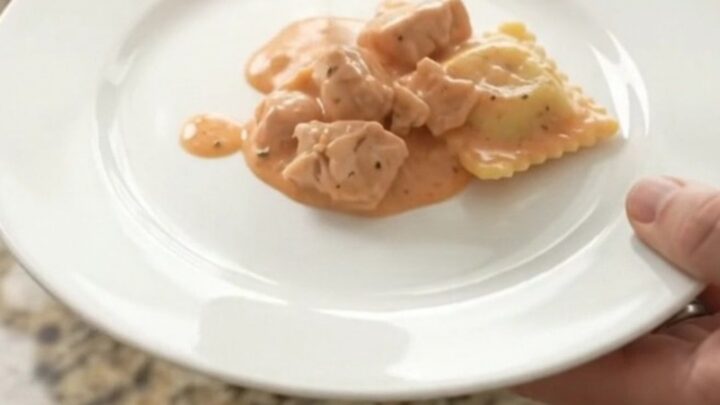
Spoon the hot pasta onto plates, making sure each serving gets a good mix of ravioli, chicken, and sauce. The sauce should be thick enough to cling to the pasta, and the cheese should stretch as you lift the spoon. Serve immediately, with extra cheese or herbs on top if desired. The dish will be steaming and fragrant.
Common mistakes
One common mistake is lifting the lid too often, which releases heat and extends cooking time. Another is overcooking the ravioli — check them at the 3.5-hour mark, especially if using fresh.
Using low-quality vodka sauce can make the dish taste flat, so invest in a good jar. Also, don't skip the rest time; it allows the sauce to thicken and the flavors to meld. Finally, be gentle when stirring to avoid breaking the ravioli.
How to tell it’s done
The dish is done when the chicken is cooked through and registers 165°F (74°C) on an instant-read thermometer, and the ravioli are tender but not mushy. The sauce should be thick enough to coat the back of a spoon, and the cheese should be fully melted and creamy.
If the sauce seems thin, let the dish sit uncovered for 10 minutes to allow excess liquid to evaporate. The ravioli will continue to absorb sauce as it rests.
- Poultry: 165°F (74°C) in the thickest part
Up next · Part 3 of 3
4 variations · storage & make-ahead · 5 answers · printable card
Tips, FAQ & printable recipe (Part 3)← Back to the ingredients (Part 1)