Dinner · Part 2 of 3: Instructions
Crockpot Black Pepper Pork: Sweet Soy Slow Cooker Dinner Step-by-step instructions
- Prep
- Cook
- Total
- Serves
- 4
Before you start
Before starting, cut the pork loin into thin strips about 1/2-inch thick and pat them dry with paper towels. Chop the onion and green bell pepper into roughly 1-inch pieces.
Measure out the black pepper and sweet soy sauce. Have your slow cooker ready and the insert clean. There is no need to preheat the slow cooker; just layer the ingredients as directed.
Ingredients at a glance (5)
- 1 1/2 lb pork loin, cut into thin strips
- 1 medium onion, chopped
- 1 medium green bell pepper, chopped
- 1 tbsp coarsely ground black pepper
- 1/2 cup sweet soy sauce
Instructions
Layer and Season
- Layer the PorkPlace the pork loin strips in the slow cooker insert in a loose, even layer. It is fine if they overlap slightly, but try to arrange them so they are not piled too thickly, which helps them cook evenly.Look for The pork strips cover the bottom of the slow cooker in a single layer.Tip Cut the pork into uniform strips about 1/2-inch thick so they cook at the same rate.
- Scatter the VegetablesScatter the chopped onion and green bell pepper over the pork. No need to stir; they will cook down and release moisture during the long slow cooking.Look for The vegetables are distributed evenly over the pork.Tip Chop the onion and pepper into similar-sized pieces for even cooking.
- Season with Black PepperSprinkle the coarsely ground black pepper over the top. The pepper will bloom in the sauce as it cooks, adding a warm, spicy backbone.Look for The pepper is visible as a dark speckle over the vegetables.Tip Use freshly ground pepper for the best flavor; pre-ground works in a pinch.
- Pour Over Sweet SoyPour the sweet soy sauce evenly over everything. Tilt the slow cooker slightly to distribute the sauce, but do not stir.Look for The sauce pools around the pork and vegetables, coating the top.Tip If using regular soy sauce plus brown sugar, whisk them together first.
At the end of this phase, the slow cooker contains a layer of pork strips, topped with onion and bell pepper, and dusted with black pepper.
The sweet soy sauce is poured over, creating a dark, glossy surface. The raw pork should be evenly distributed, and the vegetables should be scattered without clumping.
Slow Cook and Rest
- Cook Low and SlowCover the slow cooker and cook on LOW for 4 to 5 hours, or on HIGH for 2 to 3 hours, until the pork is tender and cooked through. Resist lifting the lid during cooking to keep the heat steady. Let it rest for 3 minutes before slicing.Look for The sauce is bubbling gently around the edges and the kitchen smells sweet and peppery.Safe temperature 145°F (63°C) internal temperature (steaks, chops and roasts)Tip The pork is done when it shreds easily with a fork and reaches 145°F (63°C).
- Rest the PorkOnce the pork is cooked, turn off the slow cooker and let the pork rest in the sauce for at least 3 minutes. This allows the juices to redistribute and the meat to stay moist.Look for The sauce has thickened slightly and the pork looks glossy.Tip Resting is part of the cooking process—don't skip it.
After cooking low and slow, the pork is fork-tender and the sauce has deepened in color and thickened. The vegetables are soft and translucent. The pork has rested for at least 3 minutes, allowing the juices to settle. The sauce should coat the back of a spoon.
Serve and Enjoy
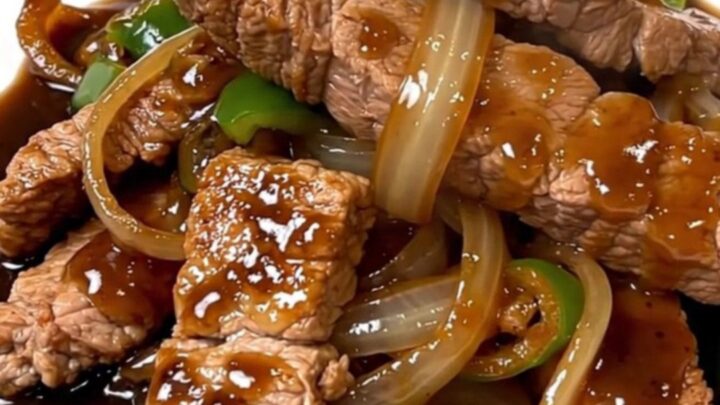
- Serve the PorkUsing a slotted spoon, transfer the pork and vegetables to a serving plate. Spoon some of the sauce over the top. Serve hot with rice or noodles, if desired.Look for The pork strips are tender and coated in thick sauce.Tip Garnish with extra black pepper or sliced green onions if you like.
The pork and vegetables are transferred to a serving plate, with sauce spooned over the top. The dish looks glossy and inviting, with visible specks of black pepper. It is ready to be served hot, ideally with rice or noodles to soak up the sauce.
Common mistakes
One common mistake is lifting the lid too often during cooking, which lets out heat and extends the cooking time. Another is cutting the pork too thick, which can lead to dry or undercooked pieces.
Be sure to slice against the grain for maximum tenderness. Also, do not skip the resting step—it allows the juices to redistribute, keeping the pork moist.
How to tell it’s done
The pork is done when it is tender and easily pulls apart with a fork. The internal temperature should read at least 145°F (63°C) on an instant-read thermometer.
The sauce should be slightly thickened and glossy, and the vegetables soft. If the sauce seems too thin, you can remove the pork and vegetables and simmer the sauce on the stovetop for a few minutes to reduce.
- Steaks, chops and roasts: 145°F (63°C) in the thickest part, then a 3-minute rest
Up next · Part 3 of 3
4 variations · storage & make-ahead · 5 answers · printable card
Tips, FAQ & printable recipe (Part 3)← Back to the ingredients (Part 1)