Breakfast · Part 2 of 3: Instructions
Easy Slow Cooker Biscuits and Gravy Breakfast Casserole Step-by-step instructions
- Prep
- Cook
- Total
- Serves
- 6
Before you start
Before starting, ensure all ingredients are ready. If the ground pork sausage is not pre-cooked, brown it in a skillet over medium-high heat until it is fully cooked through and crumbly.
Drain any excess fat thoroughly to prevent the casserole from becoming greasy. Preheat the slow cooker if your model requires it, and have your biscuit dough cut into quarters so it is ready for immediate assembly in the pot.
Ingredients at a glance (4)
- 10 pieces raw biscuit dough, cut into quarters
- 1 lb ground pork sausage, crumbled and cooked
- 1 1/2 cups shredded cheddar cheese
- 2 cups country gravy, warm
Instructions
Assembling the Layers
- Prepare the BasePlace the cut biscuit pieces in an even layer at the bottom of the slow cooker to ensure they cook through evenly. Scatter the pre-cooked crumbled ground pork sausage over the biscuit pieces, covering them thoroughly.Look for Biscuits should be spread out in one layer.Tip Using raw biscuit dough cut into smaller pieces helps them cook faster and absorb the gravy better.
The base is established with a uniform layer of biscuit pieces topped with crumbled sausage. Everything should look evenly distributed to ensure consistent cooking throughout the pot.
Check that the sausage is well-drained and the biscuits are cut into appropriately sized pieces for quick, even heat penetration.
Adding Cheese and Gravy
- Add Cheese and GravySprinkle the shredded cheddar cheese over the sausage layer. Pour the warm country gravy evenly over the entire casserole, ensuring the biscuits are mostly covered so they can soften and bake properly during the cooking cycle.Look for Gravy should coat the biscuits completely.Tip Ensure the gravy is warm before pouring to reduce the overall cooking time in the slow cooker.
The cheese should be sprinkled evenly over the sausage, and the gravy should be poured carefully to cover the biscuits without drowning them. The mixture should look cohesive, with the gravy starting to settle into the gaps between the biscuit pieces, creating a rich foundation for the upcoming cooking process.
Cooking to Perfection
- Cook and ServeCover the slow cooker and cook on high for 3 hours. The casserole is ready when the biscuits are fluffy and cooked through, reaching an internal temperature of 160°F (71°C) at the sausage level. Allow it to rest for 10 minutes before serving.Look for Biscuits should be golden and fluffy.Safe temperature 160°F (71°C) internal temperature (ground meat)Tip Check the center of the casserole to ensure the biscuits are no longer doughy before turning off the heat.
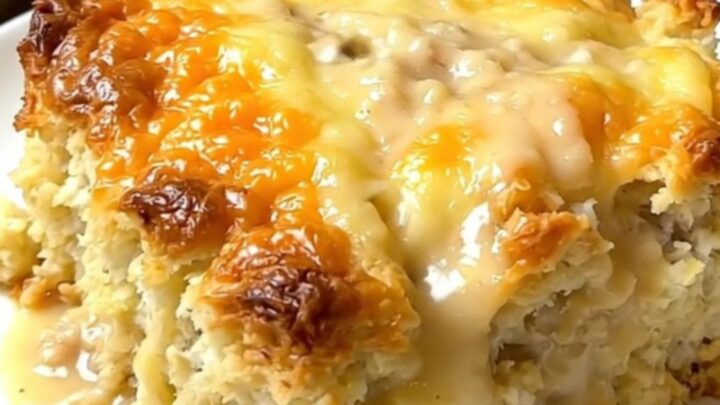
After three hours, the casserole should look golden, fluffy, and fragrant. The gravy will have thickened and combined with the cheese to create a savory, creamy sauce. Ensure the biscuits are firm to the touch and the internal temperature of the sausage has reached the necessary safe level before serving.
Common mistakes
A common mistake is overcrowding the biscuits, which prevents them from cooking through and results in doughy centers. Always spread them out in an even layer. Another error is failing to drain the sausage fat, which can lead to a greasy, unappealing sauce.
Finally, avoid lifting the lid too frequently during the cooking process, as this releases heat and moisture, significantly increasing the time needed for the biscuits to become fluffy and fully cooked.
How to tell it’s done
The casserole is done when the biscuits have puffed up and are fully cooked through, appearing golden and firm. The gravy should be bubbling and thick, and the cheese should be completely melted and slightly browned at the edges.
Use a food thermometer to ensure the sausage reaches an internal temperature of 160°F (71°C) to confirm it is safe to serve.
- Ground meat: 160°F (71°C) in the thickest part
Up next · Part 3 of 3
2 variations · storage & make-ahead · 3 answers · printable card
Tips, FAQ & printable recipe (Part 3)← Back to the ingredients (Part 1)