Dinner · Part 2 of 3: Instructions
Slow Cooker Beet and Potato Dill Velouté Step-by-step instructions
- Prep
- Cook
- Total
- Serves
- 4
Before you start
Before beginning, ensure all vegetables are thoroughly washed, peeled, and cut into uniform dice to promote even cooking. Have the water measured and the bouillon cube ready for crumbling.
Clear a workspace near the slow cooker to avoid messy transfers and ensure the immersion blender is clean and ready to use once the cooking phase is complete. Double-check that the slow cooker is placed on a heat-safe surface and that the lid fits securely to trap heat and moisture during the long simmer.
Ingredients at a glance (7)
- 4 medium raw beets, peeled and diced
- 2 cups potatoes, diced
- 1 cup onions, sliced
- 1 cube vegetable bouillon cube, crumbled
- 4 cups water
- 2 tbsp heavy cream, for swirling
- fresh dill, for serving
Instructions
Layering and Slow Cooking
- Assemble IngredientsPlace the peeled and diced beets into the bottom of the slow cooker. Scatter the diced potatoes and sliced onions over the beets to ensure even cooking during the process.Look for Vegetables are layered evenly at the bottom of the slow cooker.Tip Peel the beets carefully as they can stain surfaces and clothing.
- Season and Add WaterCrumble the bouillon cube over the vegetables and pour the water into the slow cooker. Cover and cook on high for 4 hours until all vegetables are completely tender.Look for The bouillon is distributed evenly across the surface of the vegetables.Tip Ensure the water covers the vegetables sufficiently for even steaming.
After the initial preparation, the vegetables will settle into the slow cooker. During the four-hour cooking cycle, the vegetables will soften as they absorb the bouillon-infused water.
Check the pot after three hours to ensure the vegetables are tender enough to be easily pierced with a fork. The kitchen will begin to smell earthy and savory as the onions and beets release their aromatics, signaling that the base of the soup is developing correctly.
Blending to Velouté
- Blend the SoupOnce the vegetables are soft, use an immersion blender directly in the slow cooker to process the mixture until it reaches a smooth, velvety consistency.Look for The soup turns into a vibrant, uniform magenta color with no chunks remaining.Tip Be careful when blending hot liquids to avoid splashes.
Once the cooking time is complete, the vegetables will be fully submerged in the softened liquid. Use the immersion blender to process the soup, paying attention to the bottom of the vessel where the beets were placed. Continue blending until the mixture is completely uniform in color and texture. The soup should transform from a collection of cooked vegetables into a smooth, thick liquid that is ready for serving and garnishing with cream.
Garnishing and Final Presentation
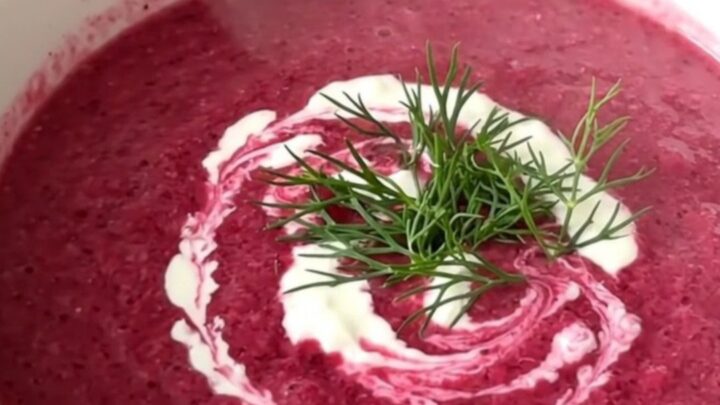
- Garnish and ServeLadle the hot velouté into serving bowls. Add a decorative swirl of heavy cream on top and finish with a sprinkle of fresh dill before serving immediately.Look for The cream creates a beautiful contrast against the magenta soup.Tip Serve while steaming hot for the best texture and flavor experience.
In the final phase, ladle the hot soup into bowls. The magenta color should be striking and vibrant. Adding the cream swirl requires a steady hand; use a spoon or a small pourer to create a gentle spiral on the surface. Finish with a fresh sprig of dill placed in the center. The soup should be served while hot, as the texture is at its peak when the velouté is warm and the garnish remains distinct.
Common mistakes
A common mistake is cutting the beets into pieces that are too large, which can lead to uneven cooking and a longer wait time. Ensure all vegetable pieces are approximately one inch in size.
Another error is failing to blend the soup thoroughly; take the time to move the immersion blender throughout the entire pot to ensure no chunks remain. Avoid adding too much water initially, as it is easier to thin a thick soup than to thicken one that has become too diluted during the cooking process.
How to tell it’s done
The soup is done when the beets and potatoes are completely soft and offer no resistance when pierced with a fork. The mixture should be easily broken down by an immersion blender, resulting in a smooth, uniform liquid.
If any pieces remain firm, allow the soup to cook for another thirty minutes before attempting to blend again. The final texture should be thick and velvety, coating the back of a spoon without feeling grainy or watery, and the color should be a deep, rich, and consistent magenta.
Up next · Part 3 of 3
2 variations · storage & make-ahead · 3 answers · printable card
Tips, FAQ & printable recipe (Part 3)← Back to the ingredients (Part 1)