Dinner · Part 2 of 3: Instructions
Slow Cooker Beer Mustard Chicken Thighs with Onions Step-by-step instructions
- Prep
- Cook
- Total
- Serves
- 6
Before you start
Before beginning, ensure the slow cooker is placed on a stable, heat-resistant surface. Prepare the onions by slicing them into consistent half-moons, which helps them soften evenly.
Gather all ingredients and measure the beer and mustard carefully to maintain the proper balance of acidity and sweetness. Ensure the chicken is chilled until the moment of preparation, following standard food safety protocols to maintain the quality of the raw protein.
Ingredients at a glance (5)
- 6 pieces boneless skinless chicken thighs
- 2 cups yellow onion, sliced into half-moons
- 2 tbsp brown sugar
- 1/2 cup lager or ale beer
- 1/4 cup grainy mustard
Instructions
Layering
- Layering the slow cookerPlace the boneless skinless chicken thighs into the bottom of the slow cooker insert. Ensure they are arranged in an even layer. Top the chicken with the sliced onions, spreading them out to cover the thighs completely.Look for The chicken should be arranged in a single layer at the bottom of the cooker.Tip Avoid overcrowding the cooker to ensure even cooking of the meat.
The chicken should be arranged in a single layer at the bottom of the slow cooker to ensure even heat distribution.
Check that the onions are spread evenly over the top, creating a bed that will release moisture and flavor as they braise. The surface should look organized and ready for the liquid components.
Seasoning
- Adding seasonings and sauceSprinkle the brown sugar evenly over the layer of onions. In a separate bowl, whisk together the beer and grainy mustard until well combined. Pour this mixture carefully over the onions and chicken, ensuring the liquid coats the ingredients.Look for The liquid should be well-emulsified before pouring.Tip Whisking the mustard into the beer ensures a consistent flavor profile throughout the dish.
The beer and mustard mixture should be fully emulsified, with no clumps of mustard remaining. When poured, the liquid should settle around the chicken and onions. Look for a uniform distribution of the brown sugar, which will help create the final savory-sweet balance of the sauce as it cooks.
Cooking
- Slow cooking and servingCover the slow cooker and cook on low for 4 to 6 hours or on high for 2 to 3 hours. Once the chicken reaches an internal temperature of 165°F (74°C), turn off the heat. Let the chicken rest for at least 5 minutes before serving with the sauce.Look for The chicken is done when it is fork-tender and reaches the safe internal temperature.Safe temperature 165°F (74°C) internal temperature (poultry)Tip Letting the chicken rest allows the juices to redistribute, ensuring a moist final result.
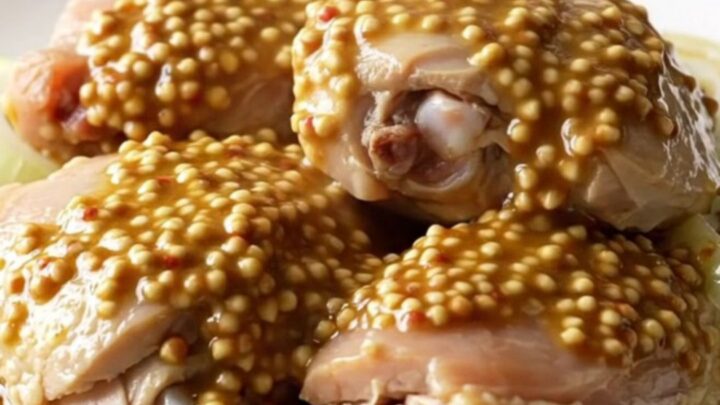
The kitchen should smell savory and slightly tangy as the beer and mustard infuse the chicken. Check that the liquid is bubbling gently. Once the time is up, the chicken should look cooked through and the onions should appear tender, confirming the dish is ready for the final resting phase.
Common mistakes
Avoid lifting the lid frequently during the cooking process, as this releases heat and moisture, significantly increasing the total cooking time.
Do not substitute the boneless skinless thighs with chicken breasts, as they tend to dry out during the extended cooking period required for this recipe. Ensure the sugar is spread evenly rather than dumped in one spot to prevent uneven caramelization or potential burning at the base.
How to tell it’s done
The chicken is perfectly cooked when it is tender and easily pulled apart with a fork. Use a reliable digital meat thermometer to check the thickest part of the thigh, ensuring it reaches an internal temperature of at least 165°F (74°C).
The onions should be translucent and soft, and the sauce should have a slightly thickened, pourable consistency that coats the back of a spoon.
- Poultry: 165°F (74°C) in the thickest part
Up next · Part 3 of 3
2 variations · storage & make-ahead · 3 answers · printable card
Tips, FAQ & printable recipe (Part 3)← Back to the ingredients (Part 1)