Dinner · Part 2 of 3: Instructions
Slow Cooker Beer and Gingerbread Pork Cheeks Step-by-step instructions
- Prep
- Cook
- Total
- Serves
- 4
Before you start
Before starting, ensure your slow cooker is clean and placed on a stable, heat-resistant surface near an electrical outlet. Gather all ingredients and have them measured and ready.
If you are using a slow cooker with a removable ceramic insert, ensure it is at room temperature before adding hot liquids to prevent cracking.
Have your serving plates ready so the dish can be plated immediately upon reaching the desired tenderness, ensuring the meat stays hot and the sauce retains its glossy consistency.
Ingredients at a glance (6)
- 2 lb pork cheeks, trimmed
- 4 medium carrots, sliced
- 2 medium onions, sliced
- 1 tsp dried thyme
- 2 cups brown beer
- 2 slices gingerbread, crumbled
Instructions
Layering the ingredients
- Prepare the slow cookerPlace the pork cheeks into the bottom of the slow cooker. Scatter the sliced carrots and onions evenly over the top of the meat. Sprinkle the dried thyme over the vegetables and meat to ensure even distribution of flavor.Look for Vegetables are layered evenly.Tip Ensure the pork is not overcrowded in the slow cooker to allow for even cooking throughout the process.
The pork cheeks are arranged in a single layer at the bottom of the cooker, covered with sliced carrots and onions. The thyme is sprinkled evenly, and the brown beer is poured over, ready for the long, slow braise. The kitchen should smell like fresh herbs and earthy root vegetables as you prepare to start the cooker.
Low and slow braising
- Add liquid and cookPour the brown beer over the ingredients. Cover the slow cooker with the lid. Set the device to low heat and cook for 8 hours. The low and slow method is essential for breaking down the tough connective tissues in the pork cheeks.Look for Liquid covers the base of the ingredients.Tip Do not lift the lid during the cooking process, as this releases heat and moisture that are vital for the braising process.
The slow cooker is set to low, and the magic of slow braising begins. During this time, the connective tissues in the pork slowly dissolve. You will notice the aroma of the beer and thyme filling the kitchen as the liquid gently bubbles. Check that the lid is tightly sealed to maintain the necessary moisture.
Final thickening and serving
- Thicken the sauce and finishIn the final hour of cooking, stir in the crumbled gingerbread to thicken the sauce and add depth. Once the pork reaches an internal temperature of 145°F (63°C), turn off the cooker. Let the meat rest for at least 3 minutes before serving.Look for The sauce is glossy and thickened.Safe temperature 145°F (63°C) internal temperature (steaks, chops and roasts)Tip If the sauce is not thick enough, you may remove the lid for the final 30 minutes of cooking to allow some reduction.
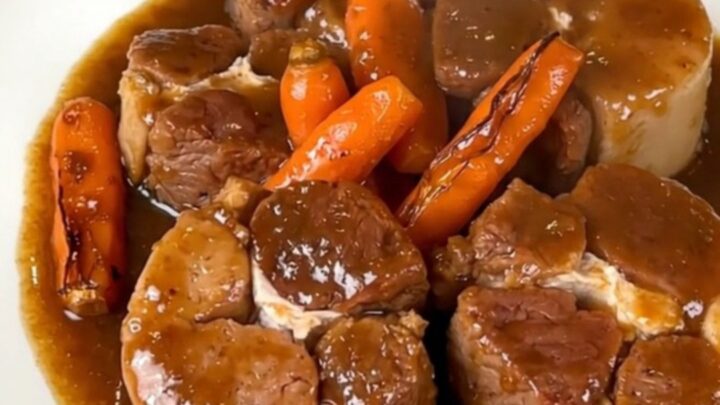
The gingerbread is stirred in, and the sauce transforms from a thin liquid into a rich, glossy gravy. The pork is tender, and the vegetables are soft. The dish is ready when the meat is easily pierced by a fork and the sauce reaches a deep, caramelized consistency that clings beautifully to the meat.
Common mistakes
A common mistake is lifting the lid during the cooking process; every time the lid is opened, significant heat is lost, extending the cooking time and potentially drying out the meat.
Another error is adding the gingerbread too early; if added at the beginning, it may break down too much and lose its flavor profile. Ensure the gingerbread is only added during the final hour to provide the correct thickening effect and to maintain the integrity of the sauce's flavor.
How to tell it’s done
The pork cheeks are perfectly cooked when they are fork-tender, meaning they pull apart with minimal resistance. Use a digital meat thermometer to confirm the internal temperature has reached at least 145°F (63°C).
The sauce should have reduced slightly, appearing dark, glossy, and thick enough to coat the back of a spoon. If the meat still feels firm, continue cooking in 30-minute increments, as the texture of pork cheeks relies entirely on the successful breakdown of connective tissue.
- Steaks, chops and roasts: 145°F (63°C) in the thickest part, then a 3-minute rest
Up next · Part 3 of 3
2 variations · storage & make-ahead · 3 answers · printable card
Tips, FAQ & printable recipe (Part 3)← Back to the ingredients (Part 1)