Dinner · Part 2 of 3: Instructions
Slow-Cooker Beef Chuck Roast with Onion Mushroom Gravy Step-by-step instructions
- Prep
- Cook
- Total
- Serves
- 6
Before you start
Before beginning, ensure that your slow cooker is clean and placed on a stable, heat-resistant surface. Remove the beef roast from the refrigerator about 20 minutes before you plan to start, which helps it cook more evenly.
Prepare the baby Yukon potatoes by washing them thoroughly under cold running water and cutting them into uniform halves. Having all ingredients measured and ready to go makes the assembly process very quick. Ensure you have two sturdy forks ready for the shredding stage once the cooking is complete.
Ingredients at a glance (5)
- 3.5 lb beef chuck roast
- 500 g baby Yukon potatoes, halved
- 1 packet dry onion soup mix
- 600 g condensed cream of mushroom soup
- fresh chopped parsley, for serving
Instructions
Layering the ingredients
- Prepare the slow cooker basePlace the halved baby Yukon potatoes at the bottom of the slow cooker insert to create a stable base for the roast.Look for The potatoes are evenly distributed at the bottom.Tip Halving the potatoes helps them cook evenly in the sauce.
At the end of this phase, your slow cooker should be neatly layered with the potatoes at the bottom and the beef roast on top, completely covered by the mushroom and onion soup mix. The setup should look orderly, with the ingredients ready to begin their transformation. There should be no need to mix the ingredients at this point, as the cooking process will naturally integrate the flavors as the soups melt and combine with the juices from the roast.
Slow-cooking the roast
- Layer the ingredientsPlace the beef chuck roast on top of the potatoes. Pour the dry onion soup mix over the meat, followed by the condensed cream of mushroom soup.Look for The roast is covered with the soup mixture.Tip Ensure the soup covers as much of the roast as possible for maximum flavor.
During the cooking phase, the slow cooker will release a savory, aromatic scent of onions and mushrooms throughout your kitchen. The liquid levels should remain consistent, and the beef will slowly change from a firm, raw state to a tender, dark mahogany color.
The potatoes will soften as they absorb the savory juices. The most important checkpoint is simply patience; refrain from lifting the lid, as the trapped steam is vital for achieving the perfect, tender texture of the beef.
Shredding and serving
- Slow cook and serveCover with the lid and cook on low for 8 hours. Once the beef reaches an internal temperature of 145°F (63°C), remove it from the heat and let it rest for 10 minutes before shredding with two forks. Serve alongside the potatoes and garnish with fresh parsley.Look for The beef is fork-tender and pulls apart easily.Safe temperature 145°F (63°C) internal temperature (steaks, chops and roasts)Tip Letting the meat rest ensures the juices redistribute for a more tender texture.
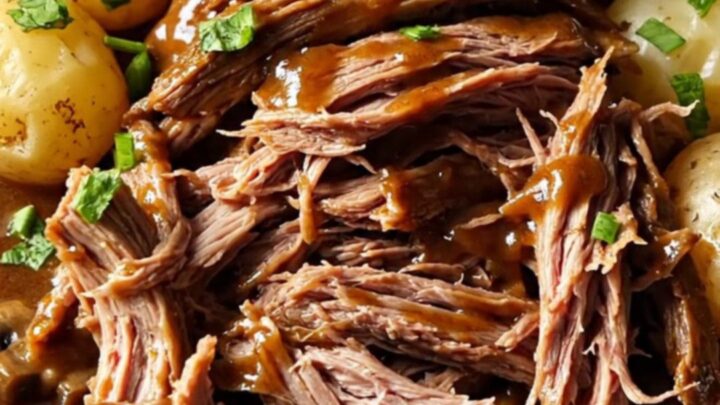
Once the cooking time is complete, the roast should be visibly tender and the gravy should have a rich, glossy consistency. The final checkpoint is the texture of the meat; it should shred effortlessly when pulled with two forks.
The potatoes should be tender enough to pierce easily with a fork but still firm enough to hold their shape. The final dish should be visually appealing, with the dark gravy coating the meat and potatoes, ready for a fresh garnish of parsley.
Common mistakes
Avoid the mistake of adding extra water to the slow cooker. The soup mixtures and the juices released by the beef and potatoes are sufficient to create the gravy. Adding extra liquid will result in a thin, watery sauce that lacks the desired richness.
Another common error is cutting the potatoes too small, which can cause them to disintegrate completely during the long cooking time. Keep them in halves or large chunks to ensure they hold their shape while soaking up all the delicious gravy flavors.
How to tell it’s done
The roast is finished when it reaches an internal temperature of at least 145°F (63°C) and is fork-tender. The best way to check is by using an instant-read meat thermometer inserted into the thickest part of the roast. If the meat offers resistance when you try to pull it apart with two forks, it needs more time. When fully cooked, the roast should yield easily, almost collapsing under the pressure of the fork, and the gravy should be thick and bubbling.
- Steaks, chops and roasts: 145°F (63°C) in the thickest part, then a 3-minute rest
Up next · Part 3 of 3
2 variations · storage & make-ahead · 3 answers · printable card
Tips, FAQ & printable recipe (Part 3)← Back to the ingredients (Part 1)