Dinner · Part 2 of 3: Instructions
Slow Cooker Beef Cheeks with Wholegrain Mustard Step-by-step instructions
- Prep
- Cook
- Total
- Serves
- 4
Before you start
Before beginning, ensure the beef cheeks are properly trimmed of any tough external silverskin, as this will not break down completely during the cooking process. Slice the carrots and onions into uniform pieces to ensure they cook evenly alongside the beef.
Have the slow cooker insert clean and ready on a level, heat-resistant surface. Assemble all ingredients within reach to facilitate the quick layering process, which helps in maintaining the correct sequence of ingredients for optimal flavor distribution.
Ingredients at a glance (5)
- 2 lbs beef cheeks, trimmed
- 3 large carrots, sliced
- 2 medium onions, sliced
- 1 cube beef bouillon, crumbled
- 3 tbsp wholegrain mustard
Instructions
Assembly Phase
- Prepare the BasePlace the trimmed beef cheeks into the bottom of the slow cooker insert. Ensure they are arranged in an even layer to promote consistent cooking throughout the process.Look for Beef is arranged in a single layer at the base of the slow cooker.Tip Removing excess silverskin from the beef cheeks ensures a more tender result.
The beef is positioned at the base of the slow cooker, creating a stable foundation. The vegetables and seasonings are layered clearly on top, ensuring the mustard is distributed across the surface of the meat. Everything should look clean and organized before the lid is placed on the unit to begin the long, slow cooking cycle that will transform these raw ingredients into a cohesive, flavorful dish.
Cooking Phase
- Add Vegetables and SeasoningScatter the sliced carrots and onions over the beef. Crumble the beef bouillon cube evenly over the top of the vegetables. Add the spoonfuls of wholegrain mustard over the entire mixture.Look for Ingredients are layered effectively without mixing.Tip Distribute the mustard evenly to ensure every piece of beef receives flavor during the long cook.
During the cooking phase, the slow cooker maintains a consistent, low temperature. The beef cheeks undergo a transformation where the collagen breaks down, the onions and carrots soften, and the bouillon and mustard meld into a rich, aromatic sauce.
The kitchen will begin to smell savory and slightly tangy as the flavors concentrate. There is no need to stir, as the slow cooker environment is designed to handle the process autonomously.
Finishing Phase
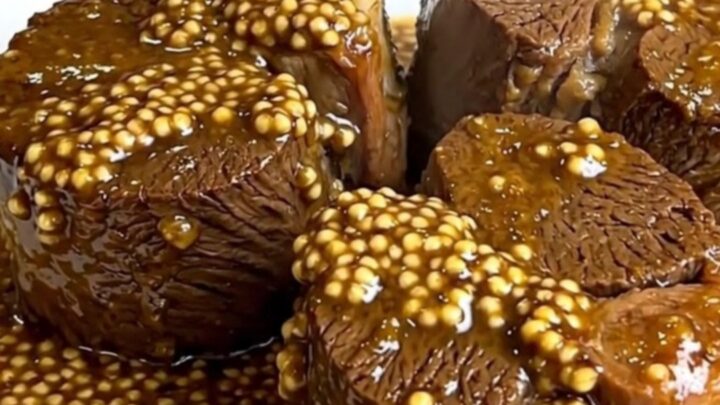
- Slow Cook and ServeCover the slow cooker and cook on low for 8 hours until the beef reaches an internal temperature of 145°F (63°C). Let the beef rest for at least 5 minutes before serving with the accumulated sauce.Look for Beef is fork-tender and the sauce has thickened into a rich glaze.Safe temperature 145°F (63°C) internal temperature (steaks, chops and roasts)Tip The residual heat of the slow cooker helps the meat stay moist during the short rest.
At the end of the cooking time, the beef should be incredibly tender and the sauce should have a glossy, thickened consistency. The aroma should be deep and savory, with a clear note of mustard. Check that the meat is tender by testing it with a fork; it should yield instantly. Once the internal temperature is confirmed, allow it to rest briefly before serving to ensure the best possible texture and flavor intensity.
Common mistakes
A common mistake is using a cut of meat that is too lean, which will result in a dry final dish; beef cheeks are ideal because of their fat and collagen content. Another error is failing to trim the silverskin, which can leave chewy bits in an otherwise tender dish.
Avoid opening the slow cooker lid frequently, as this causes significant heat loss and extends the cooking time unnecessarily. Finally, ensure the bouillon is properly crumbled to prevent pockets of concentrated saltiness in the finished sauce.
How to tell it’s done
The beef is done when it is fork-tender, meaning it can be easily pulled apart with minimal pressure. The internal temperature must reach at least 145°F (63°C) to ensure the meat is properly cooked through. The sauce should appear glossy and have reduced slightly, coating the back of a spoon.
If the meat offers resistance when pierced, continue cooking for an additional thirty minutes before checking again. Always allow the meat to rest for at least 5 minutes before serving to let the juices redistribute.
- Steaks, chops and roasts: 145°F (63°C) in the thickest part, then a 3-minute rest
Up next · Part 3 of 3
2 variations · storage & make-ahead · 3 answers · printable card
Tips, FAQ & printable recipe (Part 3)← Back to the ingredients (Part 1)