Dinner · Part 2 of 3: Instructions
Slow Cooker Beef Cheeks with Heirloom Carrots Step-by-step instructions
- Prep
- Cook
- Total
- Serves
- 4
Before you start
Before beginning, ensure all vegetables are thoroughly washed and peeled if necessary. Slice the heirloom carrots and shallots into uniform pieces to promote even cooking. Have your measuring tools ready and verify that the slow cooker is properly plugged in and ready for use.
Taking these few minutes to organize your ingredients will make the assembly process smooth and efficient, allowing you to set the cooker and forget about it until the meal is ready to be served.
Ingredients at a glance (6)
- 2 lb beef cheeks, trimmed
- 4 large heirloom carrots, sliced
- 3 shallots, sliced
- 1 beef bouillon cube, crumbled
- 1 bay leaf
- 1 cup red wine
Instructions
Preparation and assembly
- Assemble ingredients in the slow cookerPlace the beef cheeks at the bottom of the slow cooker insert. Distribute the sliced heirloom carrots and shallots evenly over the meat to ensure they cook in the flavorful juices.Look for The beef cheeks should be arranged in a single layer if possible for even cooking.Tip Ensure the slow cooker is placed on a heat-resistant surface before adding ingredients.
The ingredients should be neatly arranged in the slow cooker with the beef at the base. Everything should be clean, prepped, and ready for the liquid components.
This stage is all about efficient layering, ensuring the aromatic ingredients are distributed to provide maximum flavor infusion throughout the long cooking time.
Braising and infusion
- Add aromatics and liquidSprinkle the crumbled beef bouillon cube and the bay leaf over the vegetables and meat. Pour the red wine over the entire mixture, ensuring it coats the ingredients well.Look for The liquid should partially submerge the beef for effective braising.Tip Crumble the bouillon cube finely to ensure it dissolves evenly into the braising liquid.
The liquid should be clearly visible around the base of the ingredients. At this stage, the slow cooker is doing the heavy lifting, and no further intervention is needed. The smell of the wine and aromatics will begin to fill the kitchen, signaling that the braising process is working correctly to tenderize the beef.
Final cooking and resting
- Slow cook and serveCover and cook on low for 8 hours until the meat is fork-tender. Ensure the beef reaches an internal temperature of 145°F (63°C). Let the beef rest for at least 3 minutes before serving.Look for The meat should be extremely tender and pull apart easily with a fork.Safe temperature 145°F (63°C) internal temperature (steaks, chops and roasts)Tip Check the internal temperature in the thickest part of the meat to confirm it is fully cooked.
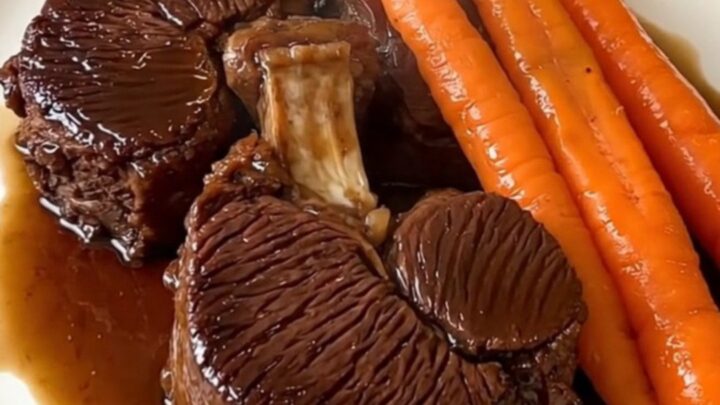
The beef should look dark, glossy, and very tender. The sauce will have thickened slightly, and the vegetables should be tender. After verifying the internal temperature of 145°F (63°C), let the meat rest for 3 minutes to ensure the best texture before plating the dish for service.
Common mistakes
Avoid lifting the lid of the slow cooker during the cooking process, as this releases heat and moisture, significantly increasing the total cooking time and potentially affecting the final texture of the meat.
Additionally, do not overcrowd the slow cooker, as this can prevent even circulation of the braising liquid. Ensure the bouillon is properly crumbled to avoid clumps in the sauce, and always verify the internal temperature of the meat before serving to ensure food safety.
How to tell it’s done
The beef is perfectly cooked when it is fork-tender and pulls apart with very little resistance. Using a meat thermometer, ensure the thickest part of the beef cheeks reaches an internal temperature of at least 145°F (63°C).
The carrots should be soft enough to pierce easily with a fork but still hold their shape. Allowing the meat to rest for at least 3 minutes after cooking is essential for the juices to redistribute, ensuring every bite remains moist and flavorful.
- Steaks, chops and roasts: 145°F (63°C) in the thickest part, then a 3-minute rest
Up next · Part 3 of 3
2 variations · storage & make-ahead · 3 answers · printable card
Tips, FAQ & printable recipe (Part 3)← Back to the ingredients (Part 1)