Dinner · Part 2 of 3: Instructions
Slow Cooker Beef Bourguignon with Chestnuts Step-by-step instructions
- Prep
- Cook
- Total
- Serves
- 6
Before you start
Before starting, ensure your beef chuck is trimmed of excess fat and cut into uniform 1.5-inch chunks to ensure even cooking. Wash and peel your carrots, slicing them into thick coins so they hold their shape during the long simmer.
Have your red wine measured out in a glass pitcher for easy pouring, and ensure your slow cooker is clean and positioned on a dry, heat-resistant surface.
Having all your ingredients prepped and ready to go before you begin the layering process will make the assembly quick and efficient.
Ingredients at a glance (5)
- 2 lb beef chuck roast, cut into chunks
- 3 large carrots, sliced
- 2 tbsp veal stock powder
- 1 1/2 cups dry red wine
- 1 cup peeled cooked chestnuts
Instructions
Layering the ingredients
- Layering the base ingredientsPlace the beef chunks into the bottom of the slow cooker basin. Arrange the sliced carrots evenly over the meat to ensure they cook through during the long simmering process.Look for Beef is evenly distributed on the bottom of the cooker.Tip Ensure the beef chunks are roughly the same size for uniform cooking.
The beef is neatly arranged at the bottom, topped with a vibrant layer of sliced carrots. The ingredients are settled and ready for the liquid components, ensuring a stable base for the slow braising process that will follow.
Adding liquids and aromatics
- Adding seasonings and liquidSprinkle the veal stock powder directly over the carrots and beef. Pour the red wine over the entire mixture, ensuring the wine covers the base elements to facilitate braising.Look for The liquid should partially submerge the beef and carrot mixture.Tip Using a dry red wine like a Burgundy or Cabernet provides the best depth.
The veal stock powder is evenly distributed, and the wine has been poured over the mixture. The aromatics are beginning to interact with the beef, setting the stage for a deep and complex flavor development once the heat is applied.
Slow simmering to perfection
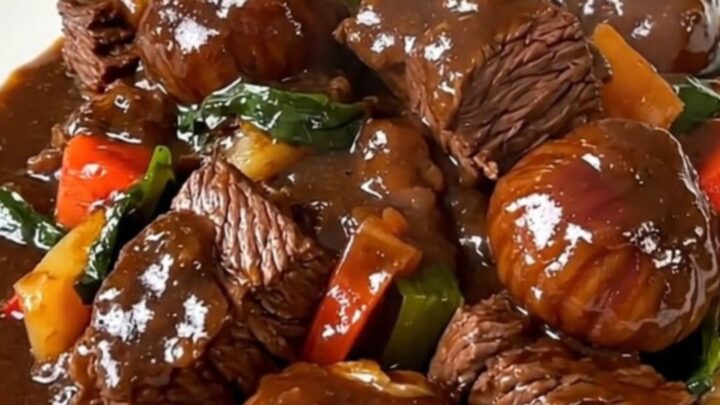
- Final cook and servingAdd the chestnuts to the slow cooker. Cover and cook on low for 8 hours until the meat reaches 145°F (63°C). Let the meat rest at least 3 minutes before serving on a warm plate.Look for The sauce should be glossy and thickened, and the beef should be fork-tender.Safe temperature 145°F (63°C) internal temperature (steaks, chops and roasts)Tip Do not stir too vigorously, as you want the chestnuts to remain mostly intact.
The stew has reached a rich, glossy consistency, with the beef tender and the chestnuts softened. The kitchen smells deeply savory and earthy, indicating that the flavors have fully melded and the dish is ready for serving.
Common mistakes
A common mistake is overcrowding the slow cooker with too much liquid; you only need enough to partially submerge the ingredients, as the beef and vegetables will release their own juices during the cooking process. Another error is using a wine that is too sweet or low-quality.
Since the sauce reduces, any harsh notes in the wine will become more pronounced. Finally, do not stir the pot frequently during the cooking time, as this can break up the chestnuts and cause the carrots to lose their shape before the meal is finished.
How to tell it’s done
The beef is perfectly cooked when it reaches an internal temperature of 145°F (63°C) and is fork-tender, meaning it pulls apart easily with minimal pressure. The sauce should have reduced slightly and appear glossy, coating the back of a spoon.
If the meat still feels tough, continue cooking for another 30 minutes, as individual slow cookers vary in heat intensity. Always let the meat rest for at least 3 minutes after removing it from the heat to allow the juices to redistribute for the best texture.
- Steaks, chops and roasts: 145°F (63°C) in the thickest part, then a 3-minute rest
Up next · Part 3 of 3
2 variations · storage & make-ahead · 3 answers · printable card
Tips, FAQ & printable recipe (Part 3)← Back to the ingredients (Part 1)