Dinner · Part 3 of 3: Tips & recipe card
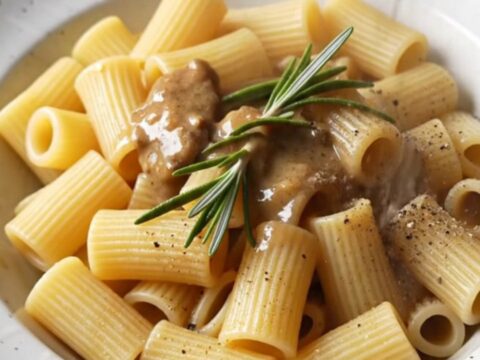
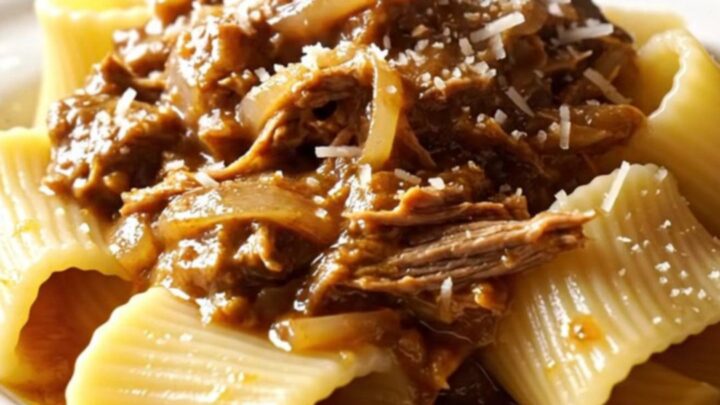
Slow-Cooker Neapolitan Beef and Onion Genovese Paccheri Tips, FAQ & printable recipe
- Prep
- Cook
- Total
- Serves
- 8
Tips for success
For the best flavor, take the time to slice the onions thinly and evenly. This ensures they cook down uniformly into a silky sauce. If you have a mandoline, use it for speed and consistency.
Also, don't skip the step of seasoning the beef and onions before cooking; it builds the foundation of flavor. The wine should be one you'd happily drink—its flavor concentrates as it reduces.
When tossing the pasta with the sauce, be gentle to avoid breaking the paccheri. Use a large spoon or tongs to fold the pasta into the sauce, adding pasta water as needed.
The sauce should coat each tube without being too thin. If you have leftovers, the pasta will absorb some sauce overnight; add a splash of water or broth when reheating to restore the creamy consistency.
Variations
- Red Wine Genovese: Replace the white wine with an equal amount of dry red wine, such as Chianti or Sangiovese. This deepens the color and adds a more robust, earthy flavor. Reduce the cooking time by 30 minutes to prevent the sauce from becoming too dark.
- Herbed Version: Add 2 sprigs of fresh thyme and 1 bay leaf to the slow cooker along with the onions. Remove them before shredding the beef. The herbs add a subtle aromatic note that complements the sweetness of the onions. Finish with a handful of chopped fresh parsley.
- Spicy Kick: For a hint of heat, add 1/2 teaspoon of red pepper flakes along with the onions. Alternatively, serve the finished dish with a drizzle of chili oil. The heat balances the sweetness of the onions without overpowering the beef.
- Vegetarian Option: Omit the beef and increase the onions to 5 pounds. Add 1 pound of cremini mushrooms, quartered, and use vegetable broth instead of wine. Cook on LOW for 6 hours, then mash some of the mushrooms to thicken the sauce. Serve with extra pecorino.
Storage and make-ahead
- Fridge
- Store in an airtight container in the refrigerator for up to 4 days. Reheat gently with a splash of water or broth.
- Freezer
- Freeze the ragu (without pasta) in a freezer-safe container for up to 3 months. Thaw overnight in the refrigerator before reheating.
- Reheat
- Reheat the pasta and sauce in a skillet over medium-low heat, adding a splash of water or broth to loosen the sauce. Stir frequently until heated through.
Store leftover pasta and ragu in an airtight container in the refrigerator for up to 4 days. The sauce will thicken as it cools; when reheating, add a splash of water, broth, or pasta water to loosen it. Reheat gently on the stovetop or in the microwave until piping hot.
The ragu can be made up to 3 days ahead and refrigerated. Cook the pasta fresh when ready to serve, or toss the pasta with the sauce and store together for up to 2 days. To freeze, cool the ragu completely, then transfer to freezer-safe containers. Freeze for up to 3 months. Thaw overnight in the refrigerator and reheat gently.
Serving ideas
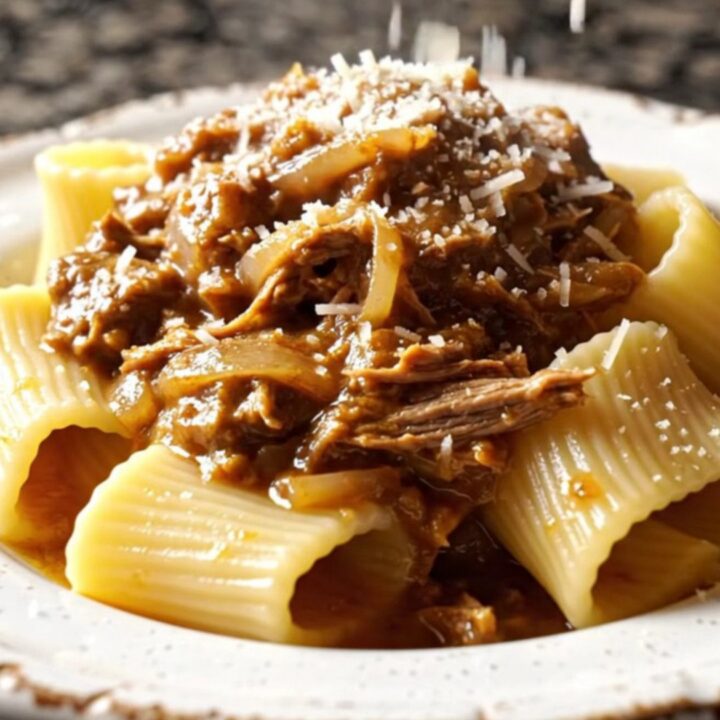
Serve the paccheri in shallow bowls, with extra sauce spooned over the top. Finish each serving with a generous shower of freshly grated Parmigiano-Reggiano and a few cracks of black pepper.
A drizzle of good olive oil just before serving adds a fruity note. This dish pairs beautifully with a simple green salad and crusty bread to soak up any remaining sauce.
For a more substantial meal, serve the ragu over soft polenta or creamy mashed potatoes instead of pasta. The sauce is also excellent spooned over grilled or roasted vegetables.
If you have leftover sauce, it makes a fantastic filling for lasagna or a topping for baked potatoes. The flavors only deepen as the sauce sits, so leftovers are a treat.
Frequently asked questions
Can this recipe be made without wine?
How can the sauce be thickened if it is too thin?
What is the best pasta shape for this ragu?
Can this dish be prepared in a Dutch oven instead of a slow cooker?
How long can leftovers be kept in the refrigerator?
Slow-Cooker Neapolitan Beef and Onion Genovese Paccheri
Ingredients
- 2 1/2 lb beef chuck roast, trimmed and cut into large chunks
- 4 lb sweet yellow onions, thinly sliced
- 1 carrot, diced
- 1 rib celery, diced
- 1/2 cup dry white wine
- 2 tbsp olive oil
- 16 oz paccheri pasta (large tubes)
- 1/2 cup grated pecorino cheese
- Freshly grated Parmigiano-Reggiano, for serving
- Kosher salt, to taste
- Freshly ground black pepper, to taste
Instructions
- Place the beef chuck chunks in the bottom of a 6-quart slow cooker. Scatter the diced carrot and celery over the beef, then pile the sliced sweet onions on top, covering the meat completely. Pour the white wine and olive oil over the onions. Season generously with salt and black pepper.
- Cover the slow cooker and cook on LOW for 8 hours. The onions will slowly collapse into a golden, jammy sauce while the beef becomes fork-tender. Do not lift the lid during cooking, as this releases heat and extends the time. Let it rest for 3 minutes before slicing.
- Using two forks, shred the beef directly in the slow cooker, mixing it into the onion sauce. Taste and adjust seasoning with salt and pepper. Keep the slow cooker on warm while you cook the pasta. Let it rest for 3 minutes before slicing.
- Bring a large pot of generously salted water to a boil. Add the paccheri and cook according to package directions until al dente. Drain the pasta, reserving about 1 cup of the starchy cooking water.
- Add the drained paccheri to the slow cooker with the beef and onion ragu. Sprinkle in the grated pecorino and toss everything together, adding a splash of the reserved pasta water if needed to coat the pasta evenly. The sauce should cling to the tubes.
- Spoon the paccheri and ragu into warm bowls. Finish each serving with a generous shower of freshly grated Parmigiano-Reggiano and an extra crack of black pepper. Serve immediately while hot.
Estimated nutrition per serving
- Calories
- 680
- Protein
- 42 g
- Carbohydrates
- 65 g
- Fat
- 28 g
Next recipe
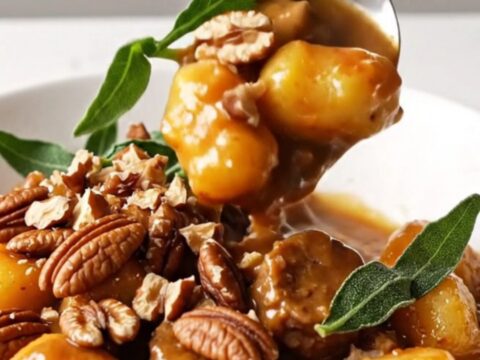
Sweet Potato Gnocchi in Brown Butter and Sausage Sauce
See the recipe → →This recipe is based on a short cooking video and is published under the pen name Clara Weller. It was checked before publication, but errors can slip through. Nutrition, when shown, is an estimate. Read more in our editorial policy and on our food safety page.
More recipes to try

Creamy Crockpot Italian Wedding Meatball and Ditalini Pasta Bake
Total time: 2 h 45 min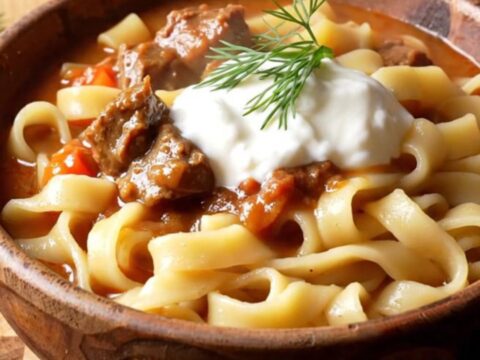
One-Pot Hungarian Beef Goulash with Egg Noodles
Total time: 6 h 20 min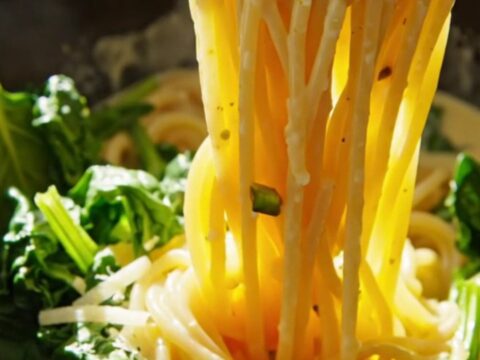
Creamy Crockpot Lemon Ricotta Pistachio Spaghetti
Total time: 1 h 40 min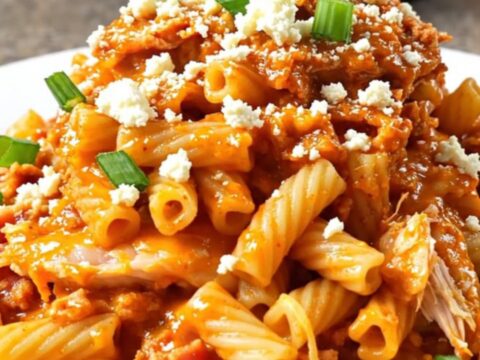
Creamy Crockpot Buffalo Chicken Radiatore Pasta Bake
Total time: 3 h 45 min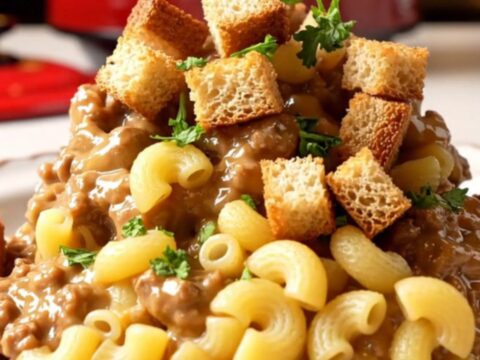
Crockpot Patty Melt Mac and Cheese with Caramelized Onions
Total time: 3 h 30 min