Dinner · Part 2 of 3: Instructions
Slow-Cooker Bayou Butter Lobster Tails Step-by-step instructions
- Prep
- Cook
- Total
- Serves
- 4
Before you start
Before starting, make sure the lobster tails are thawed if they were frozen. Split them in half lengthwise with kitchen shears, leaving the shell on. Peel and devein the shrimp.
Dice the bell peppers and onion, and slice the celery into thin ribbons. Cook the jasmine rice according to package directions, or prepare it while the seafood cooks. Have all the sauce ingredients measured and ready.
Ingredients at a glance (14)
- 4 split cold-water lobster tails
- 1 lb raw jumbo shrimp, peeled and deveined
- 1 red bell pepper, diced
- 1 green bell pepper, diced
- 1 sweet Vidalia onion, diced
- 2 stalks celery, sliced into ribbons
- 1/2 cup melted butter
- 4 cloves garlic, minced
- 1 tbsp paprika
- 1/2 tsp cayenne pepper
- 1/2 tsp salt
- 2 tbsp fresh lemon juice
- 2 cups cooked jasmine rice, for serving
- Lemon wedges, for serving
Instructions
Prep and Layer
- Prepare the Seafood and VegetablesPlace the split lobster tails and raw jumbo shrimp into the bottom of a 6-quart slow cooker in a single layer. Scatter the diced red and green bell peppers, sweet onion, and celery ribbons evenly over the seafood.Look for The slow cooker should look full but not overcrowded.Tip If the lobster tails are frozen, thaw them in the refrigerator overnight before starting.
- Make the Cajun Butter SauceIn a small bowl, stir together the melted butter, minced garlic, paprika, cayenne, salt, and fresh lemon juice until well combined. Pour the sauce evenly over the seafood and vegetables.Look for The sauce should coat the top of the seafood and vegetables.Tip For extra heat, add a pinch more cayenne or a dash of hot sauce.
- Set the Slow CookerCover the slow cooker with the lid and set it to LOW. Cook for 2 1/2 to 3 hours, until the lobster tails are opaque and the shrimp are pink and firm.Look for The sauce will bubble gently around the edges of the insert.Safe temperature 145°F (63°C) internal temperature (shellfish)Tip Avoid lifting the lid during cooking to keep the heat inside.
After this phase, the slow cooker is filled with raw seafood and vegetables, topped with a glossy red sauce. The butter sauce clings to the lobster and shrimp, and the vegetables are bright and colorful. The aroma of garlic and paprika fills the kitchen. Before moving on, make sure all the ingredients are evenly coated and the slow cooker is set to LOW.
Slow Cook and Check
- Check for DonenessAfter 2 1/2 hours, check the thickest part of a lobster tail with an instant-read thermometer. It should read at least 145°F (63°C). The shrimp should be pink and curled, and the vegetables tender.Look for The lobster meat is white and opaque, not translucent.Safe temperature 145°F (63°C) internal temperature (shellfish)Tip If the lobster is not done, cook for another 15 to 20 minutes and check again.
- Rest the SeafoodTurn off the slow cooker and let the seafood rest in the warm sauce for 5 minutes. This allows the lobster and shrimp to finish cooking gently and absorb the Cajun butter.Look for The sauce will thicken slightly as it rests.Tip Do not leave the seafood on the warm setting for more than 30 minutes, or it may overcook.
At the end of this phase, the slow cooker is bubbling gently, and the sauce has turned a deeper crimson. The lobster tails are bright orange-red, and the shrimp are pink and curled.
The vegetables are tender and have released their juices into the sauce. The kitchen smells richly of butter, garlic, and spice. Check that the internal temperature reaches 145°F (63°C).
Rest and Serve
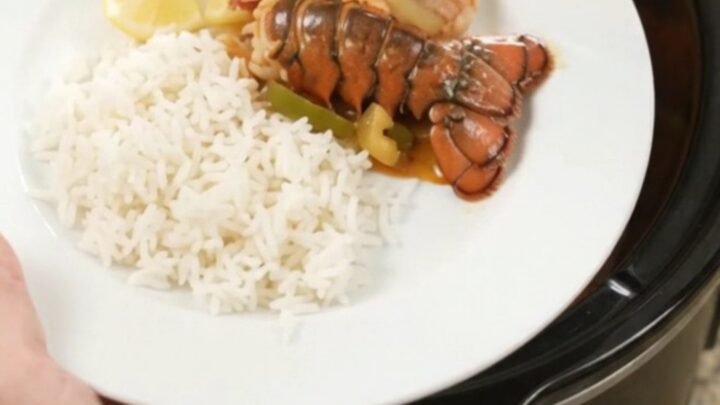
- Serve Over RiceSpoon the cooked jasmine rice onto a large platter or individual plates. Use a slotted spoon to lift the lobster tails, shrimp, and vegetables out of the butter sauce and arrange them over the rice. Spoon some extra sauce over the top and serve with lemon wedges.Look for The seafood should be glossy with butter and the rice fluffy.Tip Serve immediately with crusty bread to soak up the remaining sauce.
The seafood has rested, and the sauce has thickened slightly. The lobster meat is white and tender, and the shrimp are firm. The vegetables are glossy and coated with sauce. The rice is fluffy and steamed. When plated, the dish looks like a vibrant, buttery feast, with lemon wedges adding a bright contrast. Serve immediately.
Common mistakes
One common mistake is overcooking the seafood, which turns it rubbery. Stick to the recommended time and check early. Another is using frozen seafood without thawing, which can lower the temperature of the slow cooker and extend cooking time.
Also, avoid lifting the lid repeatedly, as this releases heat and slows cooking. Finally, don't skip the rest step; it allows the juices to redistribute.
How to tell it’s done
The seafood is done when the lobster meat is opaque and flakes easily with a fork, and the shrimp are pink and curled. The internal temperature should reach at least 145°F (63°C) in the thickest part of the lobster tail.
The vegetables should be tender but not mushy. If the sauce looks thin, let it simmer uncovered on the warm setting for a few minutes to reduce.
- Shellfish: 145°F (63°C) in the thickest part
Up next · Part 3 of 3
4 variations · storage & make-ahead · 5 answers · printable card
Tips, FAQ & printable recipe (Part 3)← Back to the ingredients (Part 1)