Dinner · Part 2 of 3: Instructions
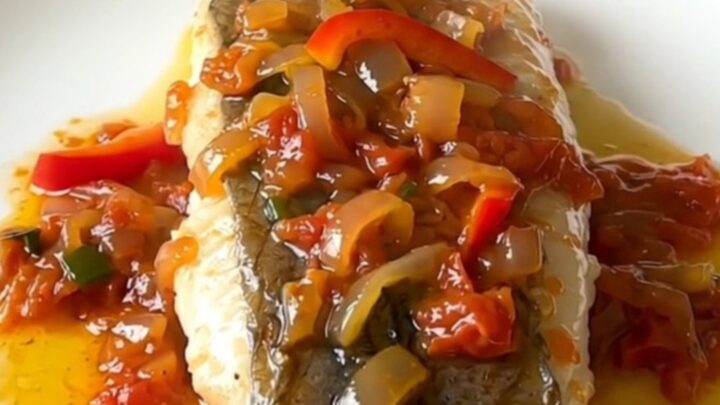
Slow Cooker Basque-Style Hake Fillets with Piperade Step-by-step instructions
- Prep
- Cook
- Total
- Serves
- 4
Before you start
Before beginning, organize all ingredients on the counter. Slice the bell peppers and onions into thin, uniform strips to ensure they cook evenly. Rinse the hake fillets under cold water if necessary, then pat them thoroughly dry with paper towels to remove excess moisture.
Prepare the tomato and olive oil mixture in a glass measuring cup, stirring well until fully combined. Ensure the slow cooker insert is clean and positioned on a level surface away from the edge of the counter, with the power cord safely routed.
Ingredients at a glance (6)
- 4 fillets hake fillets
- 2 cups bell peppers, sliced
- 1 cup onions, sliced
- 1 tsp ground Espelette pepper
- 1 1/2 cups tomato pulp
- 2 tbsp olive oil
Instructions
Arrangement of ingredients
- Prepare the basePlace the raw hake fillets into the bottom of the slow cooker ceramic insert. Ensure the fillets are arranged in a single layer to allow for even cooking throughout the process.Look for The fish should be clean and dry before being placed in the cooker.Tip Pat the fish dry with paper towels to ensure it does not release too much moisture during the cooking process.
At this phase, the raw fish is settled at the bottom of the cooker, forming a stable foundation. The vegetables are layered on top, ready to release their juices. Everything should look neat and orderly, with the peppers and onions distributed evenly to ensure that the fish is covered and protected from the direct heat of the ceramic base, setting the stage for a uniform slow-cook.
Seasoning and saucing
- Add vegetables and seasoningScatter the sliced bell peppers and onions evenly over the fish fillets. Sprinkle the ground Espelette pepper over the vegetables, ensuring even distribution for consistent flavor throughout the dish.Look for Vegetables should cover the fish completely to create a moist environment.Tip Use a variety of pepper colors to make the final dish more visually appealing.
The tomato and oil mixture is poured over the top, coating the vegetables and beginning to seep down toward the fish. The Espelette pepper is visible as small specks throughout the dish. Ensure the liquid is distributed across the entire surface so that no dry spots remain, which is vital for the steam-based cooking environment that the slow cooker will create once the lid is secured.
Slow cooking cycle
- Pour sauce and cookWhisk the tomato pulp and olive oil together in a glass measuring cup, then pour the mixture over the contents of the slow cooker. Cover and cook on low heat for approximately 3 hours, or until the fish reaches an internal temperature of 145°F (63°C).Look for The fish is cooked when it flakes easily with a fork and the sauce has thickened slightly.Safe temperature 145°F (63°C) internal temperature (fish)Tip Avoid lifting the lid too often during the cooking process to maintain a consistent temperature.
The final phase involves the transformation of the raw components into a cohesive dish. The vegetables should be very tender, and the tomato sauce should have reduced and thickened.
The fish should be firm but flaky, having absorbed the flavors of the peppers and onions. Check the internal temperature to ensure the fish is safely cooked through before turning off the slow cooker and preparing to serve.
Common mistakes
A common error is overcooking the fish, which can cause it to become rubbery or disintegrate into the sauce. Always start checking the internal temperature about 30 minutes before the suggested time.
Another mistake is crowding the slow cooker or layering the fish too deeply, which prevents even heat distribution. Avoid using high heat settings, as fish is delicate and requires the gentle environment of the low setting to maintain its texture and flavor integrity throughout the cooking process.
How to tell it’s done
The hake is finished cooking when the flesh turns from translucent to opaque and white throughout. The most accurate way to check for doneness is to insert a food thermometer into the thickest part of the fillet; it must reach an internal temperature of 145°F (63°C).
The fish should flake easily when gently prodded with a fork, and the surrounding piperade sauce should be thick, fragrant, and have a vibrant, cooked-down appearance.
- Fish: 145°F (63°C) in the thickest part
Up next · Part 3 of 3
2 variations · storage & make-ahead · 3 answers · printable card
Tips, FAQ & printable recipe (Part 3)← Back to the ingredients (Part 1)