Dinner · Part 2 of 3: Instructions
Slow Cooker Balsamic Fig Pork Tenderloin Step-by-step instructions
- Prep
- Cook
- Total
- Serves
- 4
Before you start
Before you begin, gather all your ingredients and ensure your slow cooker is clean and positioned on a stable, heat-resistant surface near an outlet. Remove the pork tenderloin from the refrigerator about 20 minutes before you start to take the chill off, which helps with more even cooking.
Prepare your figs by quartering them uniformly, and ensure your balsamic glaze is measured and ready to pour. Having everything prepared beforehand makes the assembly step quick and seamless.
Ingredients at a glance (4)
- 1 lb pork tenderloin, trimmed
- 1/2 cup dried figs, quartered
- 1 tsp garlic powder
- 1/2 cup balsamic glaze
Instructions
Assembly and seasoning
- Prepare the slow cookerPlace the pork tenderloin into the bottom of the slow cooker. Scatter the quartered dried figs evenly over the meat, then sprinkle the garlic powder across the surface.Look for The pork should be laid flat at the bottom of the slow cooker insert.Tip Ensure the pork is patted dry with paper towels before placing it in the slow cooker to help the seasoning adhere better.
At the end of this phase, the pork should be positioned in the slow cooker with the figs and garlic powder distributed over the top. The setup should look neat and ready for the glaze. Ensure the pork is not folded over itself, as this can lead to uneven cooking. Once everything is layered, you are ready to add the liquid and begin the slow cooking process.
Slow cooking
- Add glaze and cookPour the balsamic glaze over the pork and figs. Cover and cook on low for 4 hours until the pork is tender and cooked through.Look for The glaze will thicken and the figs will soften as they cook.Tip Do not lift the lid during the first few hours of cooking to ensure the slow cooker maintains a consistent temperature.
During the cooking phase, the kitchen will begin to fill with the savory-sweet aroma of balsamic and figs. You should notice the glaze bubbling gently and the figs softening significantly.
The pork will transition from a raw, pink appearance to a cooked, opaque state. If you peek, the liquid should be simmering steadily, indicating that the slow cooker is functioning at the correct temperature for the recipe.
Resting and slicing
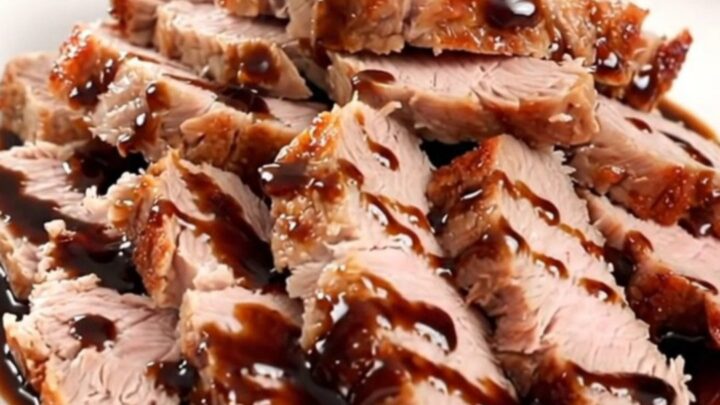
- Rest and serveCheck the internal temperature of the pork with a meat thermometer. Once it reaches 145°F (63°C), remove the pork from the slow cooker and let it rest on a cutting board for at least 5 minutes before slicing.Look for The pork should reach an internal temperature of at least 145°F (63°C) for safety.Safe temperature 145°F (63°C) internal temperature (steaks, chops and roasts)Tip Drizzle the remaining glossy reduction from the bottom of the slow cooker over the sliced meat before serving.
Once the pork has reached 145°F (63°C), it is time to remove it from the slow cooker. The meat should be dark and glossy from the glaze. After the required 5-minute rest on a cutting board, the meat should be easy to slice into clean, uniform medallions. The internal texture should be consistent throughout, and the juices should remain in the meat rather than running out onto the board.
Common mistakes
A common mistake is failing to let the meat rest after cooking. Resting is essential for allowing the juices to redistribute throughout the pork, ensuring every slice remains moist.
Another error is using too much liquid or not enough glaze; the balsamic glaze should be thick enough to coat the meat rather than just simmering it in a watery broth. Finally, avoid lifting the lid frequently, as each time you open the slow cooker, you release heat and increase the total cooking time significantly.
How to tell it’s done
The pork is perfectly done when it reaches an internal temperature of 145°F (63°C) at the thickest part. Using a digital meat thermometer is the most reliable way to check for doneness.
The meat should be firm to the touch but still tender, and the exterior should be glazed with a dark, glossy coating from the balsamic and fig reduction. Avoid overcooking, as even in a slow cooker, lean pork tenderloin can become tough if left to cook for too long past the target temperature.
- Steaks, chops and roasts: 145°F (63°C) in the thickest part, then a 3-minute rest
Up next · Part 3 of 3
2 variations · storage & make-ahead · 3 answers · printable card
Tips, FAQ & printable recipe (Part 3)← Back to the ingredients (Part 1)