Dinner · Part 2 of 3: Instructions
Slow Cooker Balsamic Braised Short Ribs Step-by-step instructions
- Prep
- Cook
- Total
- Serves
- 4
Before you start
Before beginning, ensure your slow cooker insert is clean and properly seated in the base. Take your beef short ribs out of the refrigerator about 20 minutes before you start to take the chill off, though keeping them cold until the very last moment is safer.
Slice your onions into thin, uniform strips to ensure they cook down evenly. Have your measured liquids and seasoning packet ready on the counter so you can assemble the dish quickly without fumbling through your pantry.
Ingredients at a glance (5)
- 4 lbs bone-in beef short ribs
- 2 large yellow onions, sliced
- 1 packet savory seasoning mix
- 1/2 cup balsamic vinegar
- 1 cup beef broth
Instructions
Preparation and assembly
- Assemble the slow cookerPlace the raw bone-in beef short ribs into the bottom of the slow cooker insert. Scatter the sliced yellow onions evenly over the top of the ribs to ensure they soften during the long cooking process.Look for Ribs are arranged in a single layer if possible.Tip Avoid overcrowding the cooker to ensure even heat distribution.
At this phase, the raw beef is neatly arranged in the slow cooker, topped with fresh onions and the seasoning blend. The liquids are poured over, creating a fragrant base. Check that the ribs are spread evenly so no single piece is buried too deeply, which helps promote uniform heat circulation once the machine is turned on and the lid is secured.
Seasoning and liquid addition
- Season and add liquidsOpen the seasoning packet and sprinkle the contents evenly over the onion and meat layer. Pour the balsamic vinegar and beef broth over the ingredients, ensuring the liquid covers the base of the insert.Look for Liquid is distributed throughout the pot.Tip Pour the liquid slowly to avoid splashing the sides of the cooker.
The seasoning is now distributed, and the balsamic vinegar and broth are added to the pot. The mixture should smell tangy and aromatic. Ensure that the liquid reaches the bottom of the ribs to prevent any scorching.
Once the lid is placed on, the slow cooking process begins, and the ingredients will start to marry their flavors over the next several hours.
Slow cooking and resting
- Slow cook and serveCover the slow cooker and set to low heat for 8 hours. Once the time is up, check that the meat reaches an internal temperature of at least 145°F (63°C). Let the meat rest for 5 minutes before serving.Look for Meat is tender and pulls away from the bone easily.Safe temperature 145°F (63°C) internal temperature (steaks, chops and roasts)Tip Use a digital thermometer to ensure accuracy.
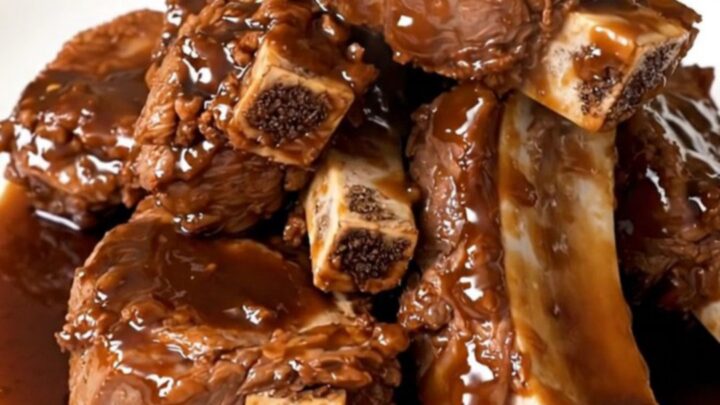
After the long cook, the kitchen should smell rich and savory. The meat will be very dark, glossy, and tender to the touch. It is crucial to let the meat rest for 5 minutes before transferring it to a serving plate. This brief rest allows the juices to redistribute throughout the muscle fibers, ensuring the best possible texture and flavor for every bite.
Common mistakes
A common mistake is using a cut of meat that is too lean. Short ribs require the fat and connective tissue to become tender, so do not trim away too much of the fat before cooking.
Another error is failing to use enough liquid; while the meat releases juices, the balsamic and broth are essential for creating the braising environment. Finally, avoid opening the slow cooker too frequently, as this drops the internal temperature significantly and can lead to uneven cooking results.
How to tell it’s done
The short ribs are done when they are fork-tender and begin to pull away from the bone with minimal pressure. Use a meat thermometer to ensure the thickest part of the meat has reached at least 145°F (63°C).
The sauce should be glossy and thickened slightly from the rendered fat and onion juices. If the meat feels tough or resistant, continue cooking for another 30 to 60 minutes, as the connective tissue may need more time to break down fully.
- Steaks, chops and roasts: 145°F (63°C) in the thickest part, then a 3-minute rest
Up next · Part 3 of 3
2 variations · storage & make-ahead · 3 answers · printable card
Tips, FAQ & printable recipe (Part 3)← Back to the ingredients (Part 1)