Dinner · Part 2 of 3: Instructions
Slow Cooker Baked Feta Pasta with Tomatoes Step-by-step instructions
- Prep
- Cook
- Total
- Serves
- 4
Before you start
Before starting, ensure all ingredients are at room temperature to promote even cooking. Clean and dry the cherry tomatoes thoroughly.
Peel the garlic cloves carefully, leaving them whole to ensure they soften without burning. Have your slow cooker clean and ready on a stable surface near an electrical outlet.
Since the pasta is cooked separately, prepare a large pot of salted water on your stove, but do not start boiling the water until the slow cooker is nearing the end of its cycle to ensure the pasta is hot and fresh when added to the sauce.
Ingredients at a glance (8)
- 8 oz Greek sheep's milk feta, one block
- 2 pints cherry tomatoes
- 6 whole peeled garlic cloves
- 1/2 cup extra-virgin olive oil
- 16 oz cavatappi noodles, cooked
- 1/2 tsp flaky sea salt, for serving
- 1/4 tsp red pepper flakes, for serving
- 1 tbsp fresh oregano, for serving
Instructions
Preparation and Layering
- Layer the slow cookerPlace the block of feta in the center of the slow cooker basin. Arrange the cherry tomatoes and peeled garlic cloves in a single layer all around the cheese block. Pour the olive oil evenly over the tomatoes and garlic to ensure they are well coated before the long simmer begins.Look for The feta block is stable in the center and the tomatoes are evenly distributed.Tip Ensure the tomatoes are not piled too high so they cook evenly throughout the process.
The feta block is centered, surrounded by the tomatoes and garlic, and all components are coated in olive oil. The slow cooker is ready to be covered and started. Ensure the tomatoes are not stacked in a way that prevents them from touching the bottom of the basin.
Slow Cooking the Sauce
- Slow cook the sauceCover the slow cooker with its lid. Set the device to high heat and cook for 2.5 hours. During this time, the tomatoes will naturally burst and release their juices, creating a rich base. The feta will soften significantly, becoming ready to be incorporated into the sauce.Look for The tomatoes have collapsed into a jammy consistency and the feta is soft to the touch.Tip Avoid opening the lid frequently as this releases essential heat and increases total cooking time.
The tomatoes have burst and the feta has softened significantly. The kitchen should smell fragrant with roasted garlic and sweet tomatoes. The mixture should appear jammy and vibrant, indicating that the flavors have successfully melded into a cohesive, delicious sauce base.
Final Assembly
- Finish and assembleOnce the cooking time is complete, use a wooden spoon to vigorously mash the softened feta into the burst tomatoes and garlic until a creamy, uniform sauce forms. Meanwhile, boil the cavatappi noodles in a separate pot until al dente. Drain the pasta and fold it directly into the slow cooker, stirring until every noodle is perfectly coated in the crimson emulsion. Serve immediately topped with sea salt, red pepper flakes, and fresh oregano.Look for The sauce is glossy and coats the pasta completely without any clumps of cheese remaining.Tip Reserve a splash of pasta water if the sauce appears too thick before combining with the noodles.
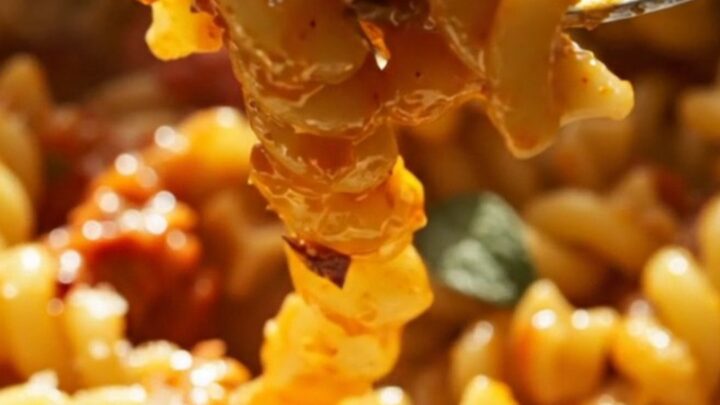
The feta is fully incorporated into the tomato base, forming a smooth, creamy, and glossy crimson emulsion. Once the cooked pasta is folded in, it should be thoroughly coated. The dish should be served warm, with the garnish adding the final touch of color and texture.
Common mistakes
Avoid using pre-crumbled feta, as it will not melt properly and will leave a gritty texture in your sauce. Do not skip the olive oil, as it is a crucial component for emulsifying the feta and tomato juices into a smooth sauce.
Do not add the pasta to the slow cooker during the initial cooking phase; it must be cooked separately and added at the very end to prevent it from becoming mushy and absorbing too much liquid, which would ruin the balance of the dish.
How to tell it’s done
The dish is considered done when the cherry tomatoes have completely collapsed and released their juices, and the feta cheese is soft and easily mashable with a wooden spoon. The resulting mixture should be a thick, homogeneous, and glossy sauce.
If the sauce seems too thin, continue to cook on high for an additional 15 minutes with the lid slightly ajar to encourage some evaporation. The pasta must be cooked to al dente, providing a slight resistance to the bite, which complements the creamy, soft texture of the sauce.
Up next · Part 3 of 3
2 variations · storage & make-ahead · 3 answers · printable card
Tips, FAQ & printable recipe (Part 3)← Back to the ingredients (Part 1)