Dinner · Part 2 of 3: Instructions
Slow Cooker Autumn Vegetable Stew with Sweet Cider Step-by-step instructions
- Prep
- Cook
- Total
- Serves
- 4
Before you start
Before beginning the recipe, ensure all vegetables are thoroughly washed. Peel the carrots, pumpkin, and parsnips, and chop them into uniform cubes, roughly one inch in size, to ensure consistent cooking. Clean the leeks carefully to remove any trapped dirt.
Have all ingredients measured and ready to assemble, as the process is quick and efficient. Clean your workspace and prepare your slow cooker insert on a stable, heat-resistant surface near a power outlet.
Ingredients at a glance (6)
- 2 cups leeks, cleaned and chopped
- 2 cups carrots, peeled and chopped
- 2 cups pumpkin, peeled and cubed
- 1 cup parsnip, peeled and cubed
- 1 sprig fresh thyme
- 1 1/2 cups sweet cider
Instructions
Layering the vegetables
- Prepare the basePlace the cleaned and chopped leeks and carrots into the bottom of the slow cooker insert. This arrangement ensures the harder root vegetables and aromatics are closest to the heat source for even cooking throughout the process.Look for The vegetables are spread evenly across the bottom of the slow cooker.Tip Ensure the leeks are washed thoroughly to remove any grit hidden between the layers.
At the end of this phase, the base of the slow cooker is covered with an even layer of leeks and carrots. Ensure the vegetables are distributed across the bottom to provide a stable foundation for the remaining ingredients. Check that the leeks are free of grit and the carrots are chopped into uniform pieces to ensure they cook at the same rate during the longer simmering time.
Adding aromatics and liquid
- Add aromatics and liquidScatter the cubed pumpkin and parsnip over the leeks and carrots. Place the fresh thyme sprig directly on top of the vegetables. Carefully pour the sweet cider over the ingredients, ensuring everything is lightly moistened by the liquid.Look for The liquid is poured over the top, just beginning to coat the vegetables.Tip Adding the liquid last helps distribute the flavor as it settles down through the vegetables.
The slow cooker should now contain the pumpkin and parsnips, with the thyme sprig sitting visibly on top. The sweet cider should be poured evenly over the surface. Check that the liquid level is sufficient to start the steaming process, but avoid overfilling the insert. The aromas of fresh thyme and sweet cider should be noticeable as you prepare to cover the cooker for the main cooking phase.
Slow cooking the stew
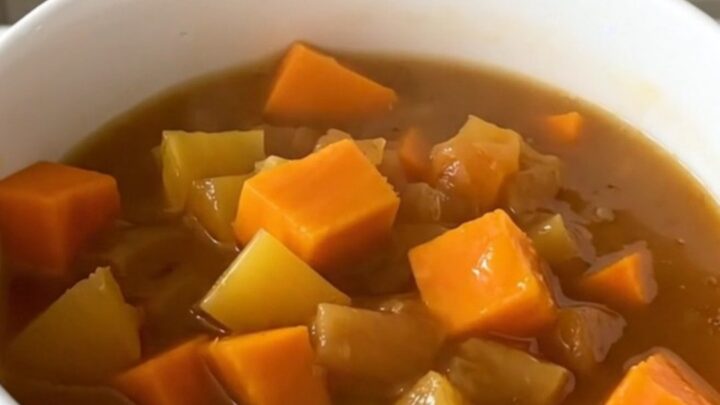
- Slow cook and serveCover the slow cooker and cook on the low setting for approximately 4 hours, or until the vegetables are tender and the stew has a glossy appearance. Once finished, remove the thyme sprig before serving the stew hot in bowls.Look for Vegetables are fork-tender and the liquid has reduced into a glossy, fragrant sauce.Tip Do not lift the lid during the first few hours to maintain the consistent cooking temperature inside.
After four hours, the stew should be piping hot and fragrant. The vegetables must be fork-tender. Check the consistency of the liquid; it should be slightly thickened and glossy.
Remove the thyme sprig carefully before serving. The stew should look vibrant and inviting, with the distinct colors of the autumn vegetables preserved in the reduced cider broth, ready to be ladled into warm serving bowls.
Common mistakes
A common mistake is chopping the vegetables into uneven sizes, which leads to some pieces being overcooked while others remain hard. Another frequent error is opening the slow cooker lid too often; doing this releases trapped steam and heat, significantly increasing the cooking time and potentially resulting in unevenly cooked vegetables.
Additionally, using too much liquid can dilute the flavors, turning the stew into a thin soup rather than a hearty dish, so stick to the recommended amount of cider for the best consistency.
How to tell it’s done
The stew is finished when the root vegetables—particularly the carrots and parsnips—are tender enough to be pierced easily with a fork. The pumpkin should be soft but still hold its shape. The liquid should have reduced slightly, appearing glossy and aromatic.
Since there are no proteins in this recipe, there is no internal temperature requirement to check, but the visual cues of tender vegetables and a rich, fragrant broth are the primary indicators that the cooking process is complete.
Up next · Part 3 of 3
2 variations · storage & make-ahead · 3 answers · printable card
Tips, FAQ & printable recipe (Part 3)← Back to the ingredients (Part 1)